

Lawmakers in Utah’s state capitol, above, were among the nation’s most active on AI issues. (Photo: Getty Images for Unsplash+)
July 21, 2026 — A report released this morning by the Transparency Coalition has found that 84 new AI-related laws have been passed and/or enacted across 27 states so far in 2026.
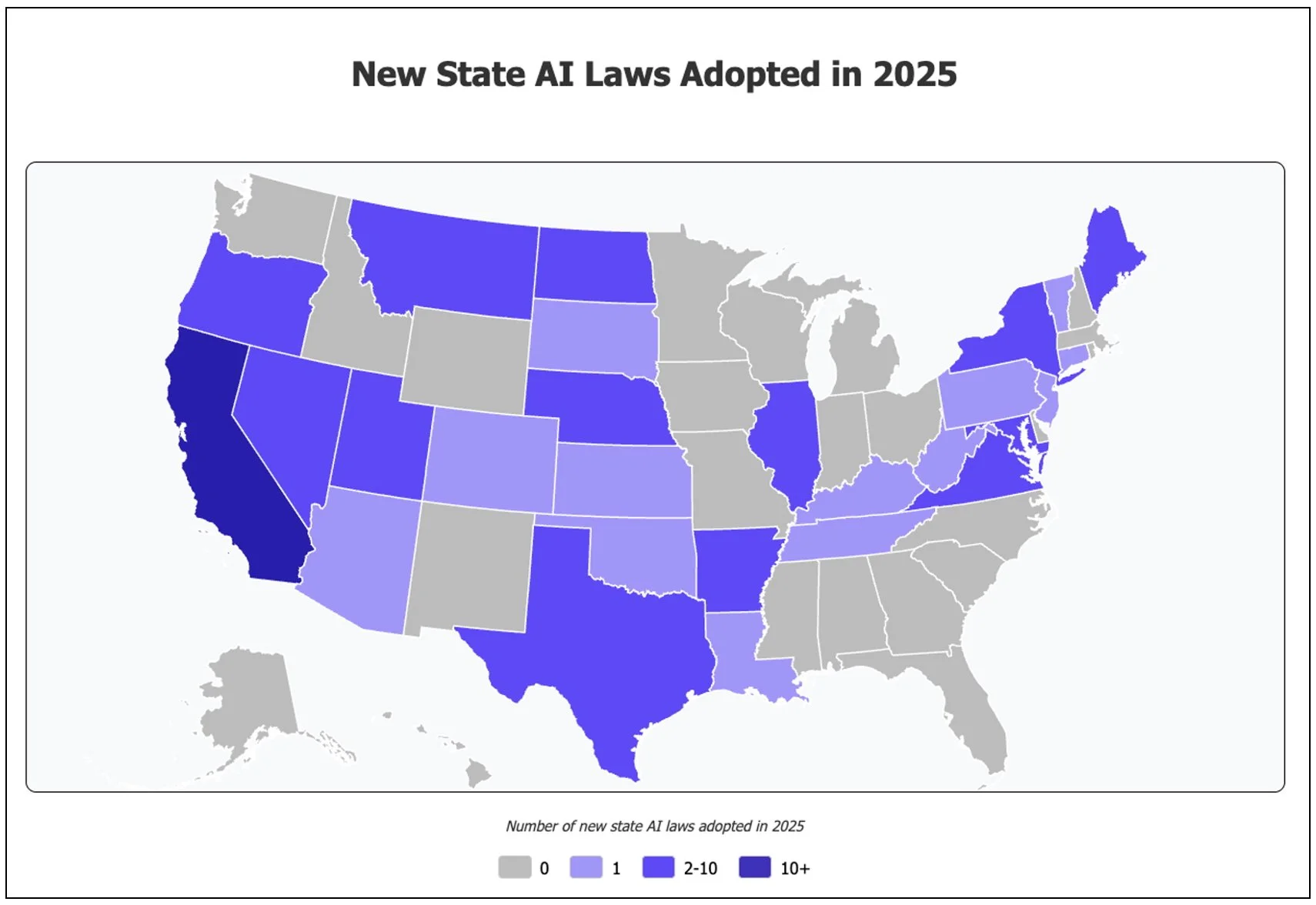
That surpasses last year’s full-year total of 73 AI-related laws adopted in 27 states.
Most state legislatures have concluded their work this year, but a number of larger states have yet to complete their business. Massachusetts, Pennsylvania, and Michigan are still considering AI-related bills, as is California, where 30 AI-related measures are moving forward.
Select the image below to access the full report.
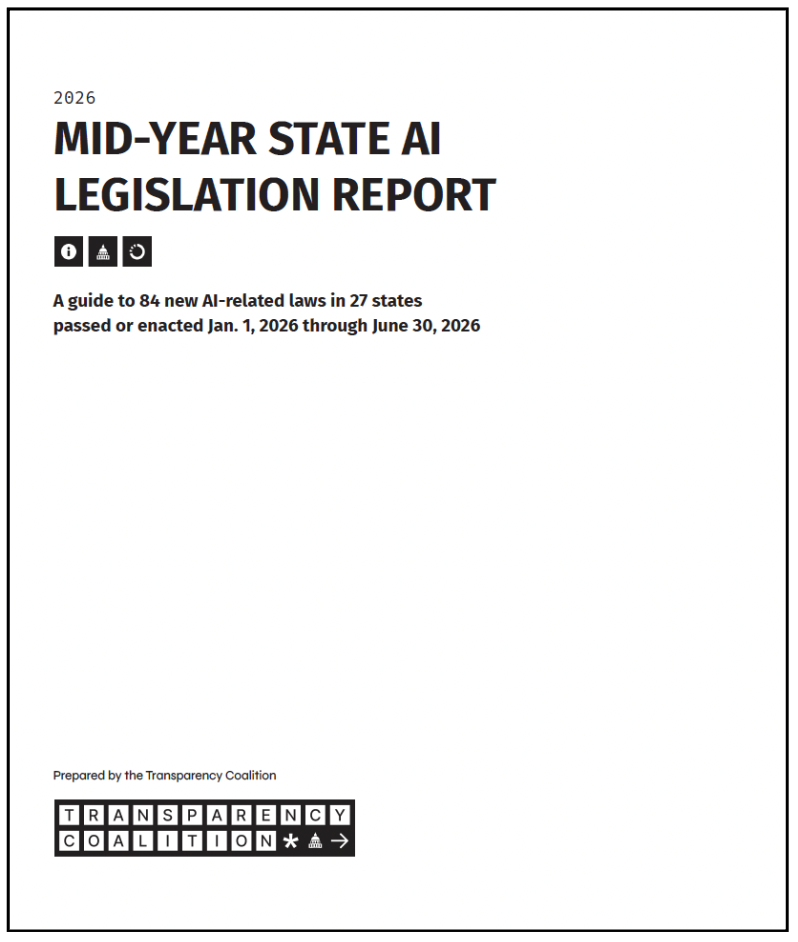
TCAI’s 2026 Mid-Year State AI Legislation Report analyzes all 84 new state AI-related measures passed so far this year.
Top issue: chatbot safety, especially with kids
The report identifies several significant highlights in state AI policy:
Child and chatbot safety: States enacted new requirements for chatbot disclosures, self-harm response protocols, parental controls and protections against sexually explicit content, emotional dependence and addictive engagement features.
Education and children’s digital lives: States adopted measures directing education officials to develop AI use and procurement frameworks, limiting student access to digital devices during the school day and affirming that public school teachers must be human.
Healthcare and mental health: Multiple states restricted the use of AI in health insurance authorization decisions, required review by licensed healthcare professionals or prohibited AI therapy chatbots.
Consumer rights and privacy: Colorado and Maryland prohibited algorithmic or surveillance pricing, while Vermont established protections for neural data.
Frontier model oversight: Illinois joined California and New York in adopting a safety framework for the largest and most powerful AI models. Illinois became the first state to require independent third-party safety audits of frontier models.
Comprehensive AI regulation: Connecticut enacted a 74-page AI and online safety law covering chatbot safeguards, protections for minors, parental controls, AI subscriptions, whistleblower protections, employment decisions and content provenance.
State lawmakers respond to the need
“Too many of the rising AI corporations are revealing themselves to be as ruthless and predatory—if not more so—than their social media predecessors,” Transparency Coalition CEO Rob Eleveld wrote in a foreword to the report.
“The good news is that state lawmakers are responding. The 2026 legislative session proved to be a watershed season. In prior years no more than a handful of lawmakers were willing to take on the tech lobby. This year we’ve seen a groundswell of state legislators stand up bills to protect our kids and demand accountability.”
Eleveld added: “This momentum is broad-based but especially focused on safeguarding minors from addictive and manipulative chatbots. We’re seeing real collective action and movement. Mainstream legislators from both parties are passing measures to protect their citizens from AI harms.”
About the Transparency Coalition
The Transparency Coalition, based in Seattle, is a nonpartisan 501(c)3 nonprofit organization focused on protecting children, consumers, and democracy from the harms of artificial intelligence. The Coalition tracks emerging AI policy and provides education to lawmakers, parents, and the public. Through our advocacy arm, the 501(c)4 Transparency Coalition Action Fund, we work with lawmakers from both parties to support legislation in the public interest.
During the first half of this year, Transparency Coalition experts advised bill authors and provided expert testimony in more than 25 states, working with Republican and Democratic lawmakers alike. TCAI is also collaborating with more than 20 partner organizations across the country, including a growing number focused on children and families.
Today’s release of the 2026 Mid-Year AI Legislation Report continues TCAI’s commitment to provide the most accurate, accessible, and thorough information about AI and AI policy.
For more information:
Our 2025 State AI Legislation Report offers the most comprehensive overview of state AI legislation enacted last year.
We offer ongoing coverage of AI-related bills in all active state legislatures in our weekly AI Legislative Update. Subscribe for free to receive the latest news about AI bill movement every Friday morning.
Check back regularly with our TCAI News page to stay up to date on AI policy and the issues lawmakers are talking about.
Flashback: 2025 AI Legislation report
Support our work today
Your tax-deductible donation will help us continue to produce powerful and practical resources for policymakers, technologists, researchers, and readers like you.