
At session’s end, Utah legislators send nine AI bills to governor’s desk
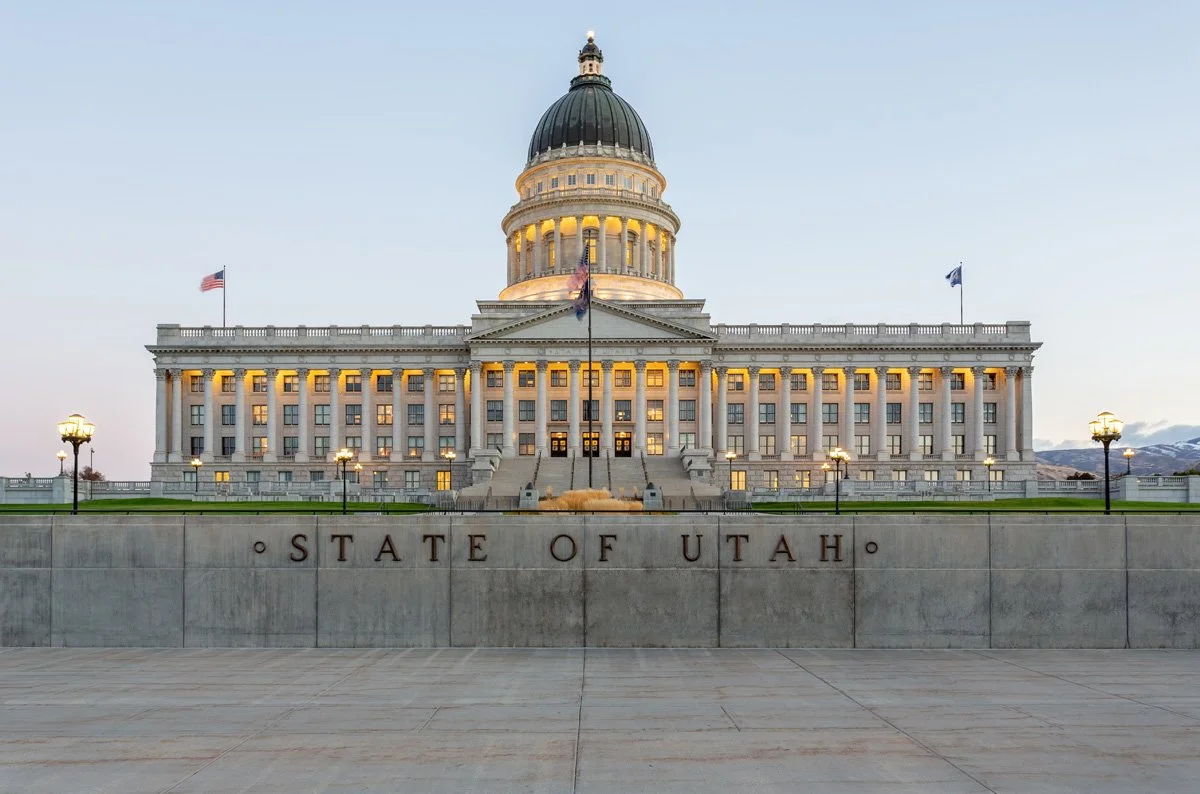
Legislators adjourned sine die last Friday, having passed nine significant AI-related bills. The measures now sit with Gov. Spencer Cox.
March 11, 2026 — Utah lawmakers ended their 2026 legislative session last Friday with a remarkable record of accomplishment on AI policy issues.
Despite hosting one of the nation’s shortest sessions—just under seven weeks—Utah’s elected officials sent nine AI-related bills to the desk of Gov. Spencer Cox.
The bills concern four areas of digital life: The use of AI and digital devices in schools; protection against deepfakes and harmful AI imagery; the use of AI in health practice and health insurance; and age verification and age gating for websites that offer digital material harmful to minors.
Each of the bills still needs to be signed by Gov. Cox and may be subject to his veto. The governor has 20 days to sign a bill, veto it, or allow it to become law without a signature.
We have a concise guide to each of the nine approved bills below.
AI & digital devices in schools
SB 69: bell-to-bell ban on digital devices in school
Utah legislators approved one of the nation’s most sweeping bell-to-bell digital device policies.
The bell-to-bell concept has been embraced by a rapidly rising number of schools, school districts, and states. The concept is simple: Students are not allowed to use any digital device (smart phone, smart watch, or similar) on school grounds during school hours. See this recent Phone-Free Schools Report for more information.
SB 69, sponsored by Sen. Lincoln Fillmore (R) and Rep. Doug Welton (R), codifies that idea for every public school within the state: “A student may not use a cellphone, smart watch, or emerging technology at a school during school hours.”
The bill contains a number of exceptions, as appropriate, including:
the use of school-required devices for instruction;
the use of a digital device to respond to an imminent threat to the health and safety of an individual, or a school-wide emergency;
to address a medical necessity;
an allowance for a parental request for a student to use a device briefly, in a specified area, during non-instructional time.
Schools may, but are not required to, establish policies that extend restrictions on student use of digital devices during non-school hours, including at school-supervised activities.
The bill takes effect on July 1, 2026, so the new bell-to-bell policy would be active for all public schools at the beginning of the 2026-2027 school year.
HB 273: Establishing School Policies on the use of ai
This bill, known as the Balance Act, requires each local education area (LEA), via the State Board of Education, to create model policies regarding the use of technology and artificial intelligence in public school classrooms.
HB 273 was sponsored by Rep. Ariel Defay (R) and Sen. Chris Wilson (R), and drafted with the assistance of the Utah-based Child First Policy Center. The bill expands the established computer science standards to include instruction on artificial intelligence, including AI generally, and the appropriate use of AI as a tool.
The AI core also includes AI awareness and ethical interaction; AI’s role in information filtering and decision-making; screen time management and mental health considerations in digital environments; critical evaluation of digital sources and media literacy skills; and concepts around digital responsibility, privacy, and security.
HB 218: Adding AI to ‘digital skills’ course in grade 7/8
HB 218, sponsored by Rep. Jordan Teuscher (R) and Sen. Mike McKell (R), adds specific concepts around artificial intelligence to the state’s existing required course on digital skills for students in grade 7 and grade 8.
The bill also tasks the State Board of Education with creating an Advisory Tech Council to provide guidance and recommendations on technology education in the state’s public education system.
The digital skills course includes sections on:
digital protection and online ethics;
social media awareness and healthy usage, including the impact on mental health, relationships, and civic discourse;
AI literacy, including capabilities, limitations, ethics, and societal implications;
digital privacy, data protection, and cybersecurity;
identifying and evaluating information credibility;
digital footprint awareness and online communication skills and etiquette;
understanding algorithms and their role in digital experiences;
screen time management for physical and mental health;
intellectual property rights and fair use; and other concepts.
deepfakes and ai disclosure
HB 276: The Digital Voyeurism Prevention Act
HB 276 is also known as the Digital Voyeurism Prevention Act. This significant AI bill enacts deepfake protections and requires AI operators to embed provenance data that will allow users to determine if an image was created or altered through the use of AI.
Sponsored by Rep. Ariel Defay (R) and Sen. Kirk Cullimore (R), the Act:
prohibits AI generation services and platforms from distributing counterfeit intimate images without obtaining and verifying consent from the depicted individual;
establishes civil liability for violations of the act;
establishes safe harbor protections for generation services and covered platforms that implement reasonable safeguards;
requires platforms to implement notice and takedown procedures and disclosure requirements;
requires large online platforms to detect, disclose, and preserve provenance data in distributed content;
establishes requirements for capture device manufacturers regarding latent disclosures in captured content;
requires AI providers to include disclosures in AI-generated content.
The Act would be enforced by the Utah Division of Consumer Protection.
SB 256: Deepfakes and libel/slander using ai
SB 256, sponsored by Sen. Kirk Cullimore (R) and Rep. Jordan Teuscher (R), amends existing provisions related to libel and slander to address artificial intelligence and digitally manipulated content.
The bill clarifies that defamation law applies to content created through artificial intelligence other technological means. The bill limits recovery to actual damages if the publisher removes the content within 10 days after receiving notice, and establishes an exclusive right to consent to the use of an individual’s personal identity.
The bill also expands the definition of “abuse of personal identity” to include unauthorized distribution and trafficking in identity-replication tools.
HB 289: including AI imagery in definition of CSAM
HB 289, sponsored by Rep. Ariel Defay (R) and Sen. Calvin Musselman (R), updates the existing statutes and definitions of Child Sexual Abuse Material (CSAM) to include “apparent child sexual abuse material,” which means a visual depiction, generated or created through the use of artificial intelligence or generative artificial intelligence.
AI use in health practice and insurance
SB 319: Human oversight in health insurance preauthorization decisions
SB 319, sponsored by Sen. John Johnson (R) and Rep. Katy Hall (R), updates requirements for health insurance preauthorization decisions to include restrictions around the use of AI.
The bill requires an insurer to:
post information about preauthorizations on the insurer’s website;
disclose whether the insurer uses artificial intelligence in the process of reviewing a request for authorization;
require an individual reviewing an adverse preauthorization determination to use independent medical judgment and not rely solely on recommendations from any other source;
defines a maximum time in which an insurer is required to make an authorization or adverse preauthorization determination;
provides minimum periods that an authorization must be valid for health care services to treat chronic or long-term care conditions;
amends requirements for reporting to the Insurance Department related to preauthorization statistics, including information related to prescription drugs;
requires an insurer to provide certain information in a notice regarding an adverse preauthorization determination.
SB 150: Limiting the use of Ai in medical scope of practice
SB 150, sponsored by Sen. Evan Vickers (R) and Rep. James Dunnigan (R), is a bill regarding healthcare practices regulated by the Utah Office of Professional Licensure Review, and includes restrictions on the use of AI.
As regards the use of AI, the bill specifies that when considering an “innovation” (upgrade in technology), the definition of innovation specifically does not include an upgrade in technology that solely functions to provide advice or treatment to a patient without an interaction between a healthcare practitioner and patient.
Online age verification
SB 73: Online age verification requirements
SB 73, sponsored by Sen. Calvin Musselman (R) and Rep. Steve Eliason (R), enacts an online age verification requirement that applies specifically to publishers or distributors of digital material harmful to minors.
The bill specifies: “A commercial entity that knowingly and intentionally publishes or distributes material harmful to minors on the internet from a website that contains a substantial portion of material harmful to minors shall perform reasonable age verification methods to verify the age of an individual attempting to access the material.”
If signed, the bill would take effect May 6, 2026.
Keep up with AI legislation
