
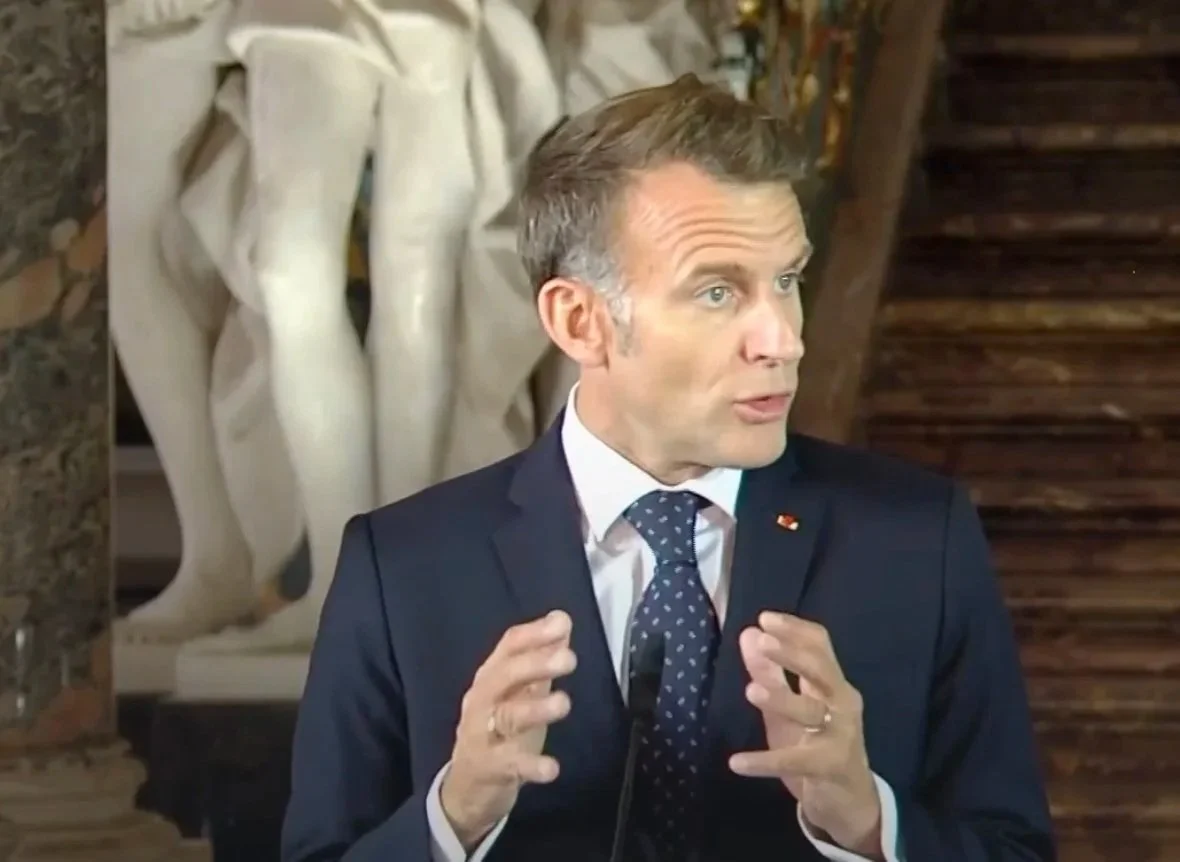
French President Emmanuel Macron, above, has been a vocal advocate for the social media restrictions, which will affect kids under the age of 15.
July 23, 2026 — In a move that has caught the attention of parents, families, and policymakers worldwide, France’s parliament earlier this week approved a new law restricting access to social media access for anyone under 15.
The measure must still undergo scrutiny from the nation’s Constitutional Council and be signed by President Emmanuel Macron. Macron has vocally advocated for the ban, making it one of the central reforms of his final term in office.
If the law goes into effect—possibly as soon as September—France will become the first EU country to prohibit children from using apps like Instagram, Facebook, and TikTok. Late last year Australia became the first country in the world to require TikTok, YouTube, Snapchat and other social platforms to remove accounts owned by children under 16.
The French proposal also contains a nationwide bell-to-bell smartphone policy. Mobile phones would not be allowed in high school beginning at the start of the school year this fall. A similar bell-to-bell policy is already in effect in primary and middle schools.
"I had committed to this, and it's now been voted into law: social media will be banned for under-15s starting this school year,” Macron wrote on an X post.
How the new rule would work
The new law would be enforced in two stages. Kids younger than 15 would be prohibited from creating new accounts starting on September 1, 2026. Starting in January 2027, social media platforms would be required to shut down existing accounts owned by users under 15.
The Guardian quoted France’s digital minister, Anne Le Hénanff, who said before the vote that the policy and timeline was realistic, “because age-verification tools already exist” to make it happen. “For four months, all of us in France will have to prove our age,” she said. “If someone is under 15, the account will be closed.”
Social media platforms will be required to use age verification systems to filter out underage users. The New York Times noted: “There are exceptions that would allow young people to access online encyclopedias or other digital services with an educational purpose. The law does not provide for penalties against children or parents. Nor does it set out explicit penalties against the providers.”
A global movement to get kids off social media apps
France is the first EU nation to adopt this policy, and others are likely to soon follow. Italy, Portugal, and Spain are all considering similar measures. The European Union is also considering a new social media policy for kids.
In the U.K., former Prime Minister Kier Starmer’s government was seriously considering a ban on social media for kids under 16 as late as last month. But with Starmer now out of office and Andy Burnham stepping into the PM’s role earlier this week, it’s unclear where things stand.
The movement to get kids off social media apps and hold tech companies accountable for their addictive products has gained strength at astonishing speed.
The New York Times noted that when a group of British parents first gathered to share their concerns about the risks their kids faced online, “the government made it clear that it had no interest in passing new laws on the issue.”
“It always felt like a long way off,” Daisy Greenwell, a founder of Smartphone Free Childhood, told the Times. “But then the political winds changed.”
Indeed: France’s new social media restrictions passed by wide margins in Parliamentary votes on Tuesday.
In the United States, the bell-to-bell phone free schools movement has found widespread success by pressing the issue with local state lawmakers. According to the Phone-Free Schools State Report Card, 24 states have now adopted some form of bell-to-bell policy restricting access to phones and other digital devices during the school day.
learn more about kids and aI

Two years ago, when Daisy Greenwell and a group of fellow British parents first gathered to share concerns about the risks their children faced online, the government made it clear, she said, that it had no interest in passing new laws on the issue.
“It always felt like a long way off,” said Ms. Greenwell, a founder of Smartphone Free Childhood, a British charity. “But then the political winds changed.”
Now, Prime Minister Keir Starmer’s government is weighing whether to introduce a ban on social media platforms for children under 16, as public opinion in Britain has coalesced around the idea that more needs to be done to keep children safe online.
Mr. Starmer said last week that the question was not whether his government would act but what it would do, and that a decision would come “very quickly.”
Last December, Australia became the world’s first country to bar anyone under 16 from using many social media apps. Britain and Canada moved toward similar measures last month, while Italy, Poland, Portugal, Spain have all drafted laws. The European Union is expected to introduce E.U.-wide measures in September.
"I had committed to this, and it's now been voted into law: social media will be banned for under-15s starting this school year. Thanks to the members of parliament. Now it's up to the Constitutional Council to rule, and then it's time for action to make this measure concrete and protect our children online."
, making it the first EU country to bar children from apps such as TikTok.
The president, Emmanuel Macron, has championed the ban as a key reform of his final term in office and pledged to enforce it by September.
“France is leading the way in Europe when it comes to protecting our children and teenagers,” Macron said in a video posted on social media, hailing “a major step forward”.
He thanked members of parliament for backing the legislation on Tuesday.
“The Constitutional Council must now rule on it, and then it will be time to take action to make this measure a reality and protect our children online,” he added on X.
tk tk tk tk tk tk