Illinois lawmakers send landmark AI frontier model safety bill to Gov. Pritzker
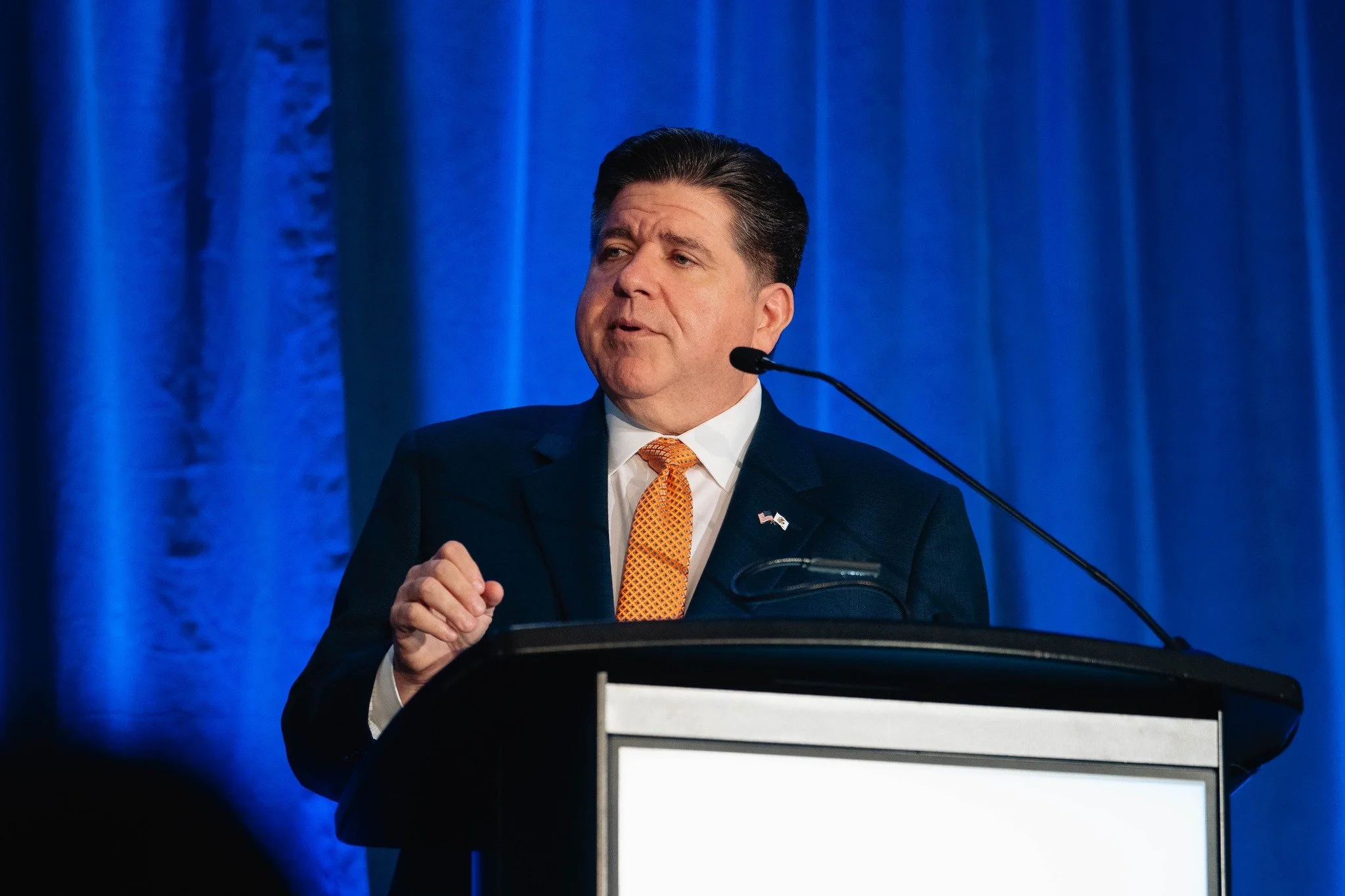
Illinois legislators have approved SB 315, a significant frontier model safety bill, and sent it to the desk of Gov. J.B. Pritzker, above. The Artificial Intelligence Safety Measures Act would be the first in the nation to require third-party audits of frontier model safety protocols.
May 27, 2026 — Legislators in the Illinois House of Representatives gave unanimous 110-0 approval this afternoon to SB 315, the Artificial Intelligence Safety Measures Act. The Senate previously approved the bill on May 21. The measure now goes to the desk of Gov. J.B. Pritzker, who has said he will sign the bill into law.
The Act would set a new standard for regulating the largest and costliest AI models, known as frontier models. Illinois would become the third state to set frontier model standards, following New York’s RAISE Act and California’s SB 53, the Transparency in Frontier AI Act.
The Act would require frontier AI companies to publish and annually update a plan to address catastrophic risks from their AI models. It also requires annual independent third-party audits of safety issues—the first such requirement in any state AI law.
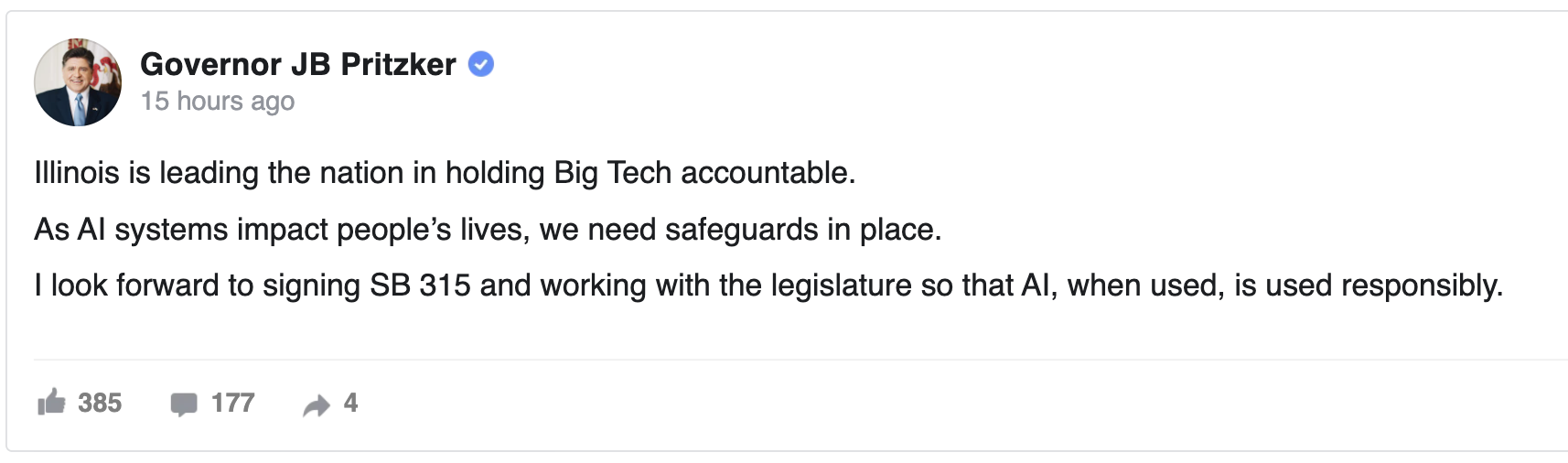
Illinois Gov. Pritzker posted this shortly after final passage of the bill on Wednesday.
Creating a roadmap for responsible innovation
Sen. Mary Edly-Allen (D-Lake County), the measure’s primary sponsor, spoke to the bill’s purpose and need earlier this month. “Artificial intelligence can be a powerful tool for good, but currently there are minimal guardrails in place. It's like the ‘Wild, Wild West,’” she said. “Illinois needs to create a roadmap for responsible innovation to prevent catastrophic risks”
“Senate Bill 315 is not about stopping innovation, but balancing the great promise of AI with its potential harms,” she added. “This bill will require large AI developers, like ChatGPT and Claude, to provide transparency and undergo independent, third party audits and honor whistleblower protections.”
Bill Overview: Illinois SB 315, The AI Safety Measures Act
SB 315 is a frontier model catastrophic-risk safety measure. Its primary sponsor is Sen. Mary Edly-Allen, with Rep. Daniel Didech leading the bill in the House. It draws some elements from the earlier frontier safety laws enacted in California and New York, while adding new measures unique to the Illinois bill.
It would require large frontier developers to create, implement, publish, and annually update a frontier AI framework addressing catastrophic-risk assessment, mitigations, cybersecurity, internal governance, third-party evaluations, and risks from internal use of frontier models.
It would also require transparency reports before deploying new or substantially modified frontier models, as well as summaries of catastrophic-risk assessments.
The bill mandates annual independent third-party audits and establishes access, reporting, retention, and publication requirements for audit results.
Frontier developers would be required to report critical safety incidents and submit periodic summaries of internal-use risk assessments.
The bill also directs the Illinois Emergency Management Agency and Office of Homeland Security, in consultation with the Attorney General, to administer reporting mechanisms, issue guidance, and prepare annual reports.
SB 315 provides whistleblower protections and internal reporting processes for covered employees, and establishes civil penalties for violations and clarifies that no private right of action is created.
A Top priority bill for tcaF
Steve Wimmer, the Transparency Coalition’s Senior Policy and Technical Advisor, has been working with lawmakers in Springfield on language and technical issues in SB 315, which TCAI regards as one of the most important pieces of legislation in 2026.
Rep. Didech, the bill’s House sponsor, told NBC News earlier today: “This piece of legislation is designed to put up some guardrails and make sure we have some safeguards in place to protect against some of the worst catastrophic risks.”
The Illinois legislature is scheduled to adjourn this coming Sunday, May 31. There are still nine AI-related bills active in either the House or Senate.
More Illinois AI Policy news