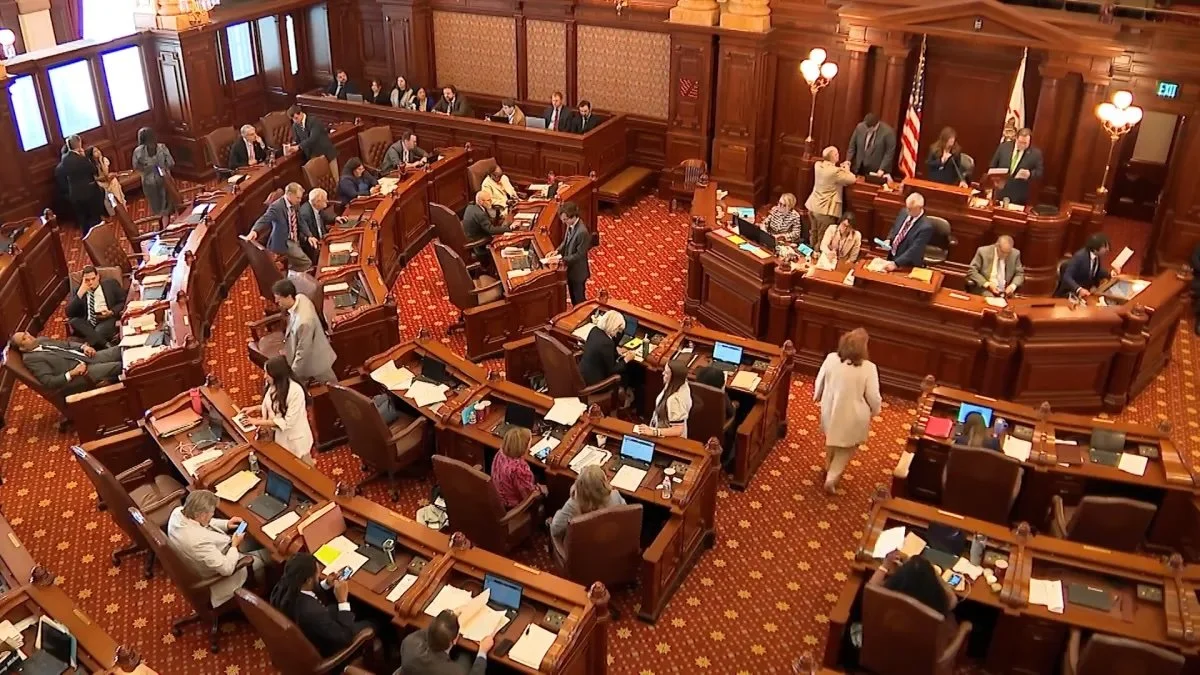
The Illinois State Legislature worked through the night, past their midnight deadline, to wrap up business and adjourn at 4:30 a.m. on Monday morning, June 1.
June 1, 2026 — Illinois lawmakers stretched their final weekend past the actual definition of weekend, working through the night until at last declaring sine die at 4:30 a.m. Monday morning.
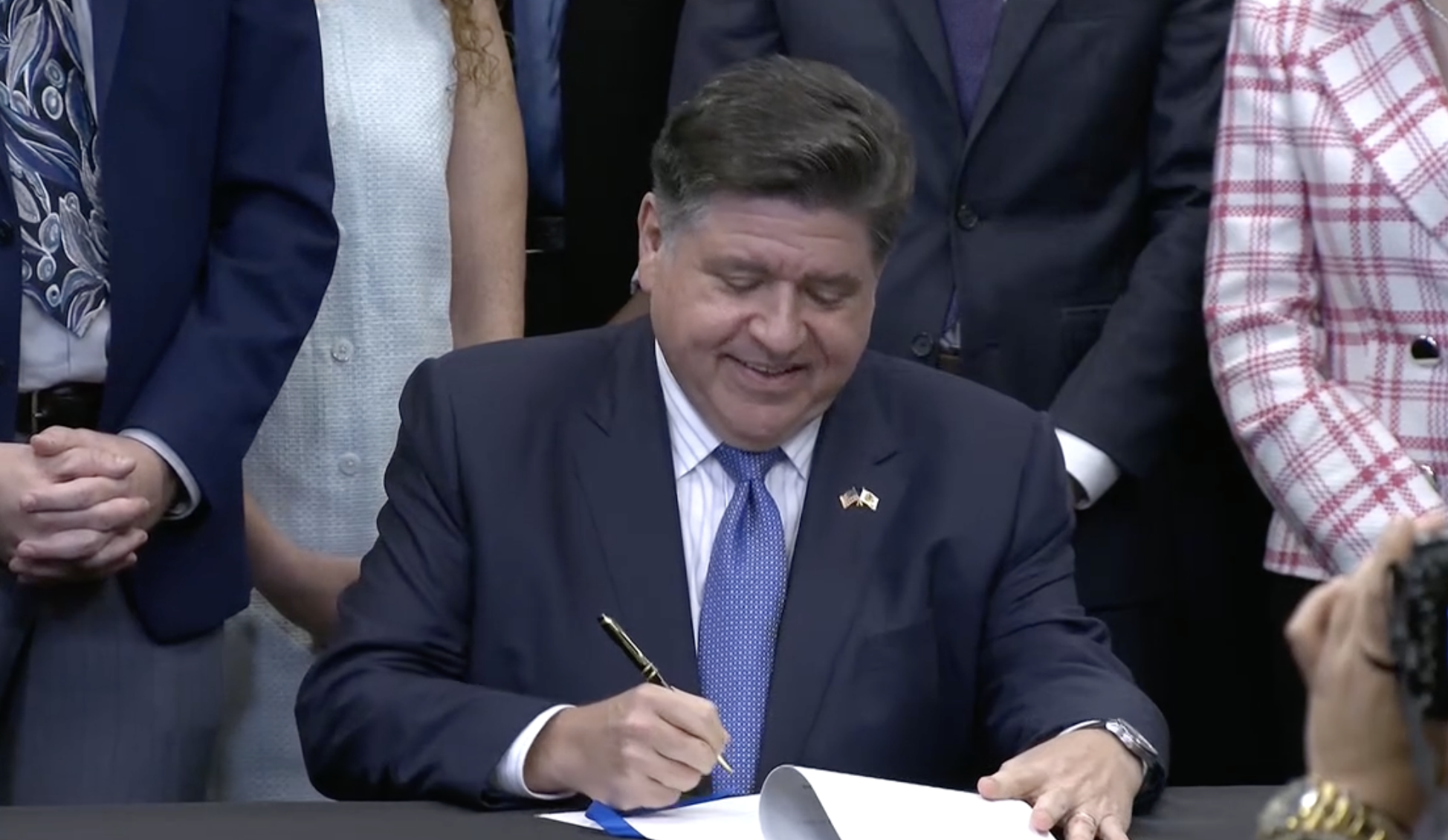
In the end, the legislature accomplished quite a lot on the AI policy front. Five AI-related bills were approved and sent to Gov. J.B. Pritzker, including the landmark SB 315 frontier model safety bill.
Five AI bills sent to Gov. Pritzker
The five bills given final approval were:
SB 315: The Artificial Intelligence Safety Measures Act
SB 318: The Prohibition on Bots Purchasing Tickets Act
SB 343: Prohibiting Rental Property Price Fixing with AI
SB 2909: Prohibiting the Use of AI for Teacher Evaluations
SB 3114: Restricting the Use of AI in Health Care Approvals
Overview of the five AI bills approved
SB 315: THE Artificial Intelligence Safety Measures Act
This is a frontier model catastrophic-risk safety measure.
It would require large frontier developers to create, implement, publish, and annually update a frontier AI framework addressing catastrophic-risk assessment, mitigations, cybersecurity, internal governance, third-party evaluations, and risks from internal use of frontier models.
It would also require transparency reports before deploying new or substantially modified frontier models, as well as summaries of catastrophic-risk assessments.
The bill mandates annual independent third-party audits and establishes access, reporting, retention, and publication requirements for audit results.
Frontier developers would be required to report critical safety incidents and submit periodic summaries of internal-use risk assessments.
The bill also directs the Illinois Emergency Management Agency and Office of Homeland Security, in consultation with the Attorney General, to administer reporting mechanisms, issue guidance, and prepare annual reports.
SB 315 provides whistleblower protections and internal reporting processes for covered employees, and establishes civil penalties for violations and clarifies that no private right of action is created. Sponsors: Sen. Edly-Allen, et al.
SB 318: THE Prohibition on Bots Purchasing Tickets Act
This bill prohibits the use of an AI bot to (1) purchase tickets in excess of posted limits for an online ticket sale; (2) use multiple Internet protocol addresses, multiple purchaser accounts, or multiple email addresses to purchase tickets in excess of the posted limit for any single online ticket sale; or (3) circumvent or disable an electronic queue, waiting period, pre-sale code, or other sales volume limitation system associated with an online ticket sale.
The bill also prohibits a ticket reseller from making any false representation likely to mislead a consumer into believing that the reseller is affiliated with, endorsed by, or acting on behalf of an artist, team, event venue, or event organizer.
SB 318 also requires an operator of a venue or ticket issuer to disclose the number of tickets for an event that are withheld from sale any time it offers tickets for that event for sale. Sponsor: Sen. Stadelman, et al.
SB 343: Prohibiting Rental property Price Fixing with ai
This bill amends the Illinois Antitrust Act, making it a violation of the Act to contract with any other person who is, or would be, a competitor for the purpose or with the effect of fixing, controlling, or maintaining rental pricing, fees, or any other rental term for residential rental units.
The bill also prohibits engaging in price coordination for residential rental units, including through the sale, licensure, or provision of any service or product that involves price coordination of residential rental units.
SB 343 makes it a violation of the Act to engage in price coordination or use, subscribe to, or contract with a service that involves price coordination for residential rental units in the State, including through the sale, licensure, or provision of any other service or product that involves price coordination of residential rental units. Sponsors: Sen. Guzman, et al.
SB 2909: PROHIBIting the Use of AI for teacher evaluations
This bill would prohibit an evaluator from using an artificial intelligence tool to assign a numerical score or qualitative rating for any component of a teacher's evaluation or any evaluation task that requires professional judgment.
Under the terms of the bill, an evaluator would be allowed to use an artificial intelligence tool to support the evaluator in administrative tasks. Sponsors: Sen. Belt, et al.
SB 3114: restricting the use of AI in health care approvals
This bill prohibits a health care payor from implementing any policy or using any algorithm or other automated process, system, or tool that bypasses the evaluation of all information included by the billing health care professional to downcode a claim.
SB 3114 provides that a health care payor may use an automated process to identify claims that may justify a downcoding determination. All downcoding determinations must be made or reviewed by a natural person.
The bill prohibits a health care payor from downcoding a claim based solely on the reported diagnosis codes, and sets forth provisions concerning notification requirements and the dispute process for downcoded claims.
SB 3114 also prohibits a health care payor from using downcoding practices in a targeted or discriminatory manner against health care professionals who routinely treat patients with complex or chronic conditions. Sponsor: Sen. Koehler, et al.