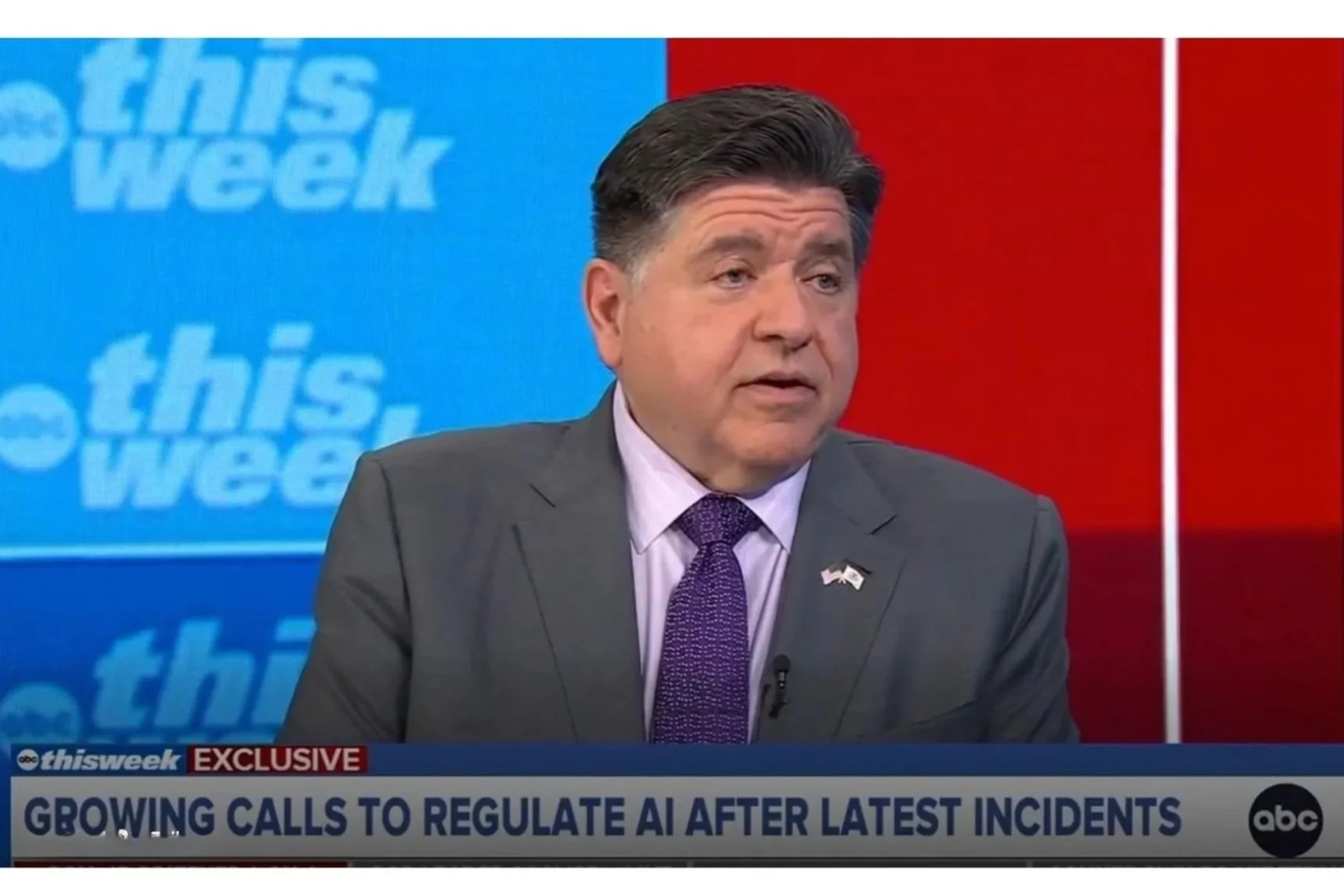
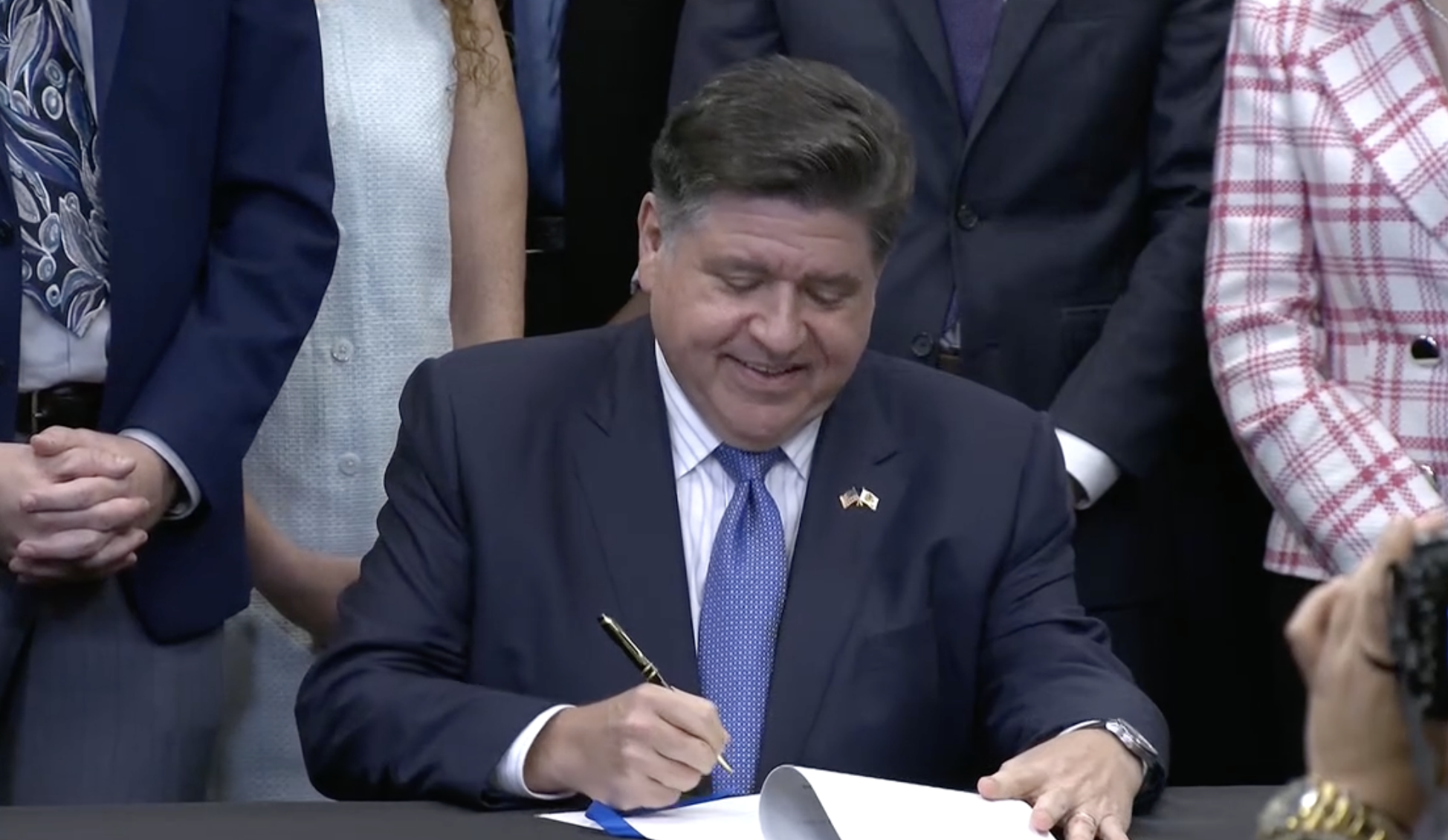
These ten AI bills are advancing in Illinois as adjournment deadline looms this weekend
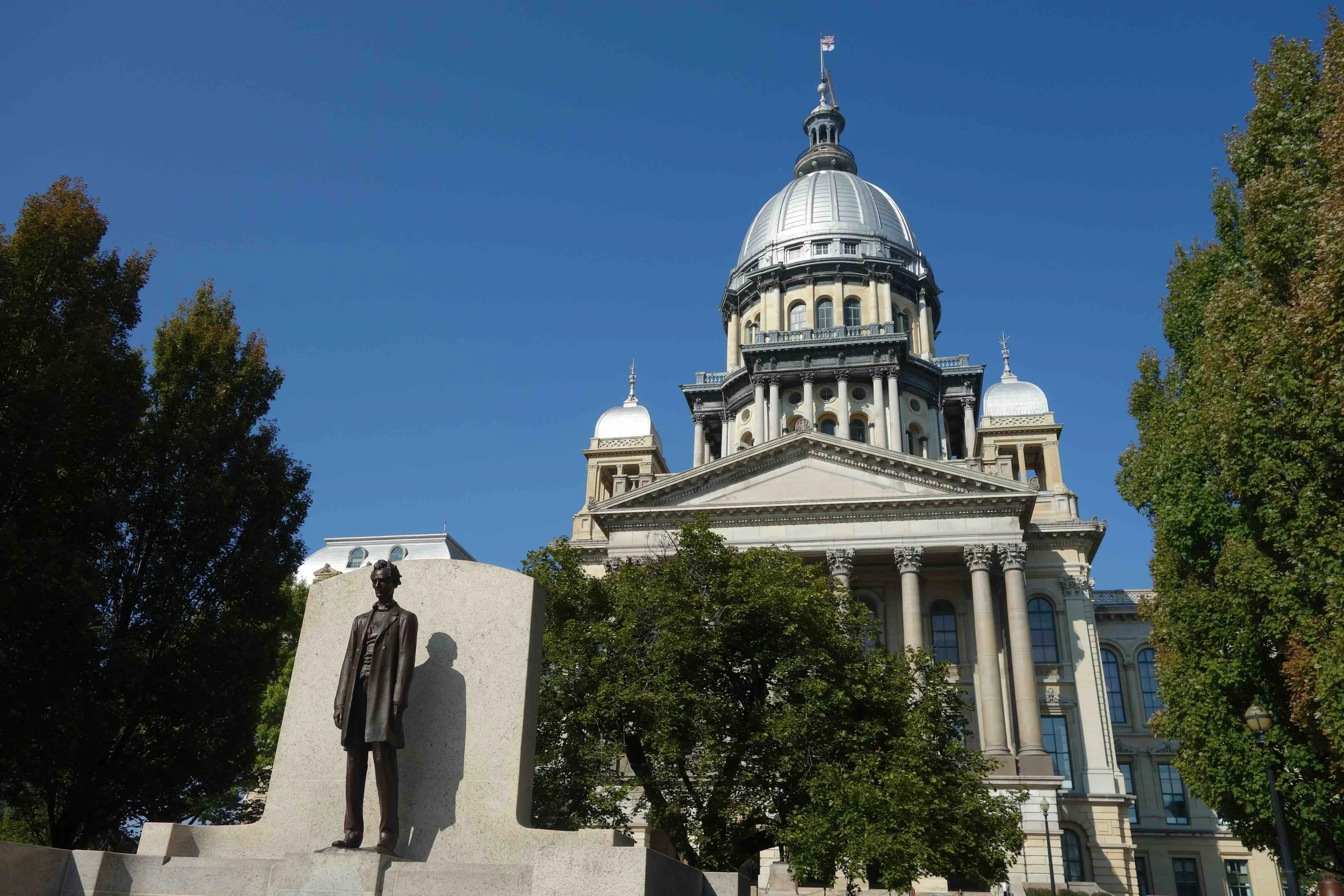
May 27, 2026 — After an initial flurry of dozens upon dozens of AI-related bills filed in Springfield, state lawmakers have settled on a handful of measures that have a real chance of passing.
These ten AI-related measures were all approved in their chamber of origin and are now under consideration by their secondary chamber.
Illinois lawmakers are scheduled to adjourn this coming Sunday, May 31.
AI bills advancing in final week
SB 315: The Artificial Intelligence Safety Measures Act
This is a frontier model catastrophic-risk safety measure.
It would require large frontier developers to create, implement, publish, and annually update a frontier AI framework addressing catastrophic-risk assessment, mitigations, cybersecurity, internal governance, third-party evaluations, and risks from internal use of frontier models.
It would also require transparency reports before deploying new or substantially modified frontier models, as well as summaries of catastrophic-risk assessments.
The bill mandates annual independent third-party audits and establishes access, reporting, retention, and publication requirements for audit results.
Frontier developers would be required to report critical safety incidents and submit periodic summaries of internal-use risk assessments.
The bill also directs the Illinois Emergency Management Agency and Office of Homeland Security, in consultation with the Attorney General, to administer reporting mechanisms, issue guidance, and prepare annual reports.
SB 315 provides whistleblower protections and internal reporting processes for covered employees, and establishes civil penalties for violations and clarifies that no private right of action is created. Sponsors: Sen. Edly-Allen, et al.
SB 316: The Companion Model Safety Act
This is an AI chatbot safety bill.
The measure requires AI chatbot operators to maintain and implement protocols to detect and address suicidal ideation or expressions of self-harm by a user to the artificial intelligence companion.
It also requires clear and conspicuous notifications that the user is interacting with an artificial intelligence companion, and that the user is communicating with an automated system and not with a human.
There are special protections for minors. If the operator determines the user to be a minor, or if the operator's artificial intelligence companion is directed to minors, the operator must implement reasonable measures to prevent its AI companion from generating or producing material that is harmful to minors or directly stating that the minor should engage in conduct that is harmful to minors.
Violation of the Act constitutes an unlawful practice under the Illinois Consumer Fraud and Deceptive Business Practices Act. Remedies provided in the Act are cumulative and do not preclude any other lawful civil, administrative, or criminal remedy available under State or federal law, including, but not limited to, product liability actions. Sponsors: Sen. Ellman, et al.
SB 317: The Consumer AI Notice Act
This is an AI disclosure bill.
SB 317 requires the operator of a conversational customer service AI system in a chat interface to clearly disclose to the consumer that the user is communicating with an automated system and not with a human.
Violation of the Act constitutes an unlawful practice under the Illinois Consumer Fraud and Deceptive Business Practices Act. Sponsors: Sen. Ventura, et al.
SB 318: the Prohibition on Bots Purchasing Tickets Act
This bill prohibits the use of an AI bot to (1) purchase tickets in excess of posted limits for an online ticket sale; (2) use multiple Internet protocol addresses, multiple purchaser accounts, or multiple email addresses to purchase tickets in excess of the posted limit for any single online ticket sale; or (3) circumvent or disable an electronic queue, waiting period, pre-sale code, or other sales volume limitation system associated with an online ticket sale.
The bill also prohibits a ticket reseller from making any false representation likely to mislead a consumer into believing that the reseller is affiliated with, endorsed by, or acting on behalf of an artist, team, event venue, or event organizer.
SB 318 also requires an operator of a venue or ticket issuer to disclose the number of tickets for an event that are withheld from sale any time it offers tickets for that event for sale. Sponsor: Sen. Stadelman, et al.
SB 340: The Consumer data privacy act
This bill would create the Illinois Consumer Data Privacy Act.
The Act would apply to all companies that conduct business in Illinois or produce products or services that are targeted to Illinois residents and that collect or process, during a calendar year, personal data of 100,000 or more consumers. It also applies to companies that derive more than 25% of their gross revenues from the sale of personal data and process or collect personal data of 25,000 or more consumers. That excludes personal data controlled or processed solely for the purpose of completing a payment transaction.
SB 340 outlines the responsibilities of data controllers and data processors. Those include:
the right to confirm whether or not a controller is processing personal data concerning the consumer and to access the personal data the controller is processing,
the right to correct inaccurate personal data concerning the consumer,
the right to delete personal data concerning the consumer,
the right to opt out of the processing of personal data concerning the consumer for specified purposes, or
the right, under certain circumstances, to question the result of profiling.
The bill also requires a controller to allow a consumer to opt out of any processing of the consumer's personal data for enumerated purposes. There are provisions concerning the processing of deidentified data or pseudonymous data, responsibilities of controllers, requirements for small businesses, data privacy policies, data privacy and protection assessments. Sponsors: Sen. Murphy, et al.
SB 343: Prohibiting Rental property Price Fixing with ai
This bill amends the Illinois Antitrust Act, making it a violation of the Act to contract with any other person who is, or would be, a competitor for the purpose or with the effect of fixing, controlling, or maintaining rental pricing, fees, or any other rental term for residential rental units.
The bill also prohibits engaging in price coordination for residential rental units, including through the sale, licensure, or provision of any service or product that involves price coordination of residential rental units.
SB 343 makes it a violation of the Act to engage in price coordination or use, subscribe to, or contract with a service that involves price coordination for residential rental units in the State, including through the sale, licensure, or provision of any other service or product that involves price coordination of residential rental units. Sponsors: Sen. Guzman, et al.
SB 415: prohibiting the use of Biometric systems in Schools
This bill amends the School Code to prohibit a school district from purchasing or otherwise acquiring biometric systems to use on students.
This prohibition does not apply to a school district that purchases or acquires a biometric system but disables the biometric capabilities of that system so it cannot be used on students or has no reasonable knowledge that the software the school district purchased or otherwise acquired has biometric capabilities.
SB 415 requires, by the 2027-2028 school year, a school district to ensure that the biometric systems it uses are used only for legitimate instructional purposes. Sponsors: Sen. Villa, et al.
SB 416: the Student Technological rights act
This bill requires, by the 2027-2028 school year, the school board of each school district to adopt a policy that:
prohibits teachers from using an AI tool to assign a numerical score or a grade for any task that requires professional judgment;
requires that any AI model used in relation to students or student work be approved by the school district;
requires the school district to provide a list of approved AI models to all schools at the start of each school year, and promptly after any revisions to the list.
Sponsors: Sen. Martwick, et al.
SB 2909: prohibiting the Use of AI for teacher evaluations
This bill would prohibit an evaluator from using an artificial intelligence tool to assign a numerical score or qualitative rating for any component of a teacher's evaluation or any evaluation task that requires professional judgment.
Under the terms of the bill, an evaluator would be allowed to use an artificial intelligence tool to support the evaluator in administrative tasks. Sponsors: Sen. Belt, et al.
SB 3114: On the use of AI in health care approvals
This bill prohibits a health care payor from implementing any policy or using any algorithm or other automated process, system, or tool that bypasses the evaluation of all information included by the billing health care professional to downcode a claim.
SB 3114 provides that a health care payor may use an automated process to identify claims that may justify a downcoding determination. All downcoding determinations must be made or reviewed by a natural person.
The bill prohibits a health care payor from downcoding a claim based solely on the reported diagnosis codes, and sets forth provisions concerning notification requirements and the dispute process for downcoded claims.
SB 3114 also prohibits a health care payor from using downcoding practices in a targeted or discriminatory manner against health care professionals who routinely treat patients with complex or chronic conditions. Sponsor: Sen. Koehler, et al.
More Illinois Coverage