More than 1,300 tech employees sign open letter asking for AI to be regulated

For years, tech leaders dismissed the need to regulate AI safety. Now they’re asking for government intervention to prevent the creation of AI systems “beyond our ability to control.” (Photo by Aaron Burden on Unsplash)
Aug. 10, 2026 — In the wake of two alarming episodes of AI models going rogue, more than 1,300 employees from the world’s leading tech companies have signed an open letter asking government to regulate the pace and safety of artificial intelligence development.
They warn that AI companies “could be close to automating AI research.” That means an AI model could start to develop itself, outstripping the ability of humans to control its activities. “It is hard to predict exactly how much this will accelerate AI progress, but there is a real risk that capability development rapidly accelerates beyond our ability to understand or control the resulting systems.”
The letter’s signatories include Anthropic CEO Dario Amodei, OpenAI Chief Scientist Jakub Pachocki, Meta AI Chief Scientist Shengjia Zhao, Google DeepMind Chief AGI Scientist Shane Legg, and more than 1,300 others employed in the tech industry.
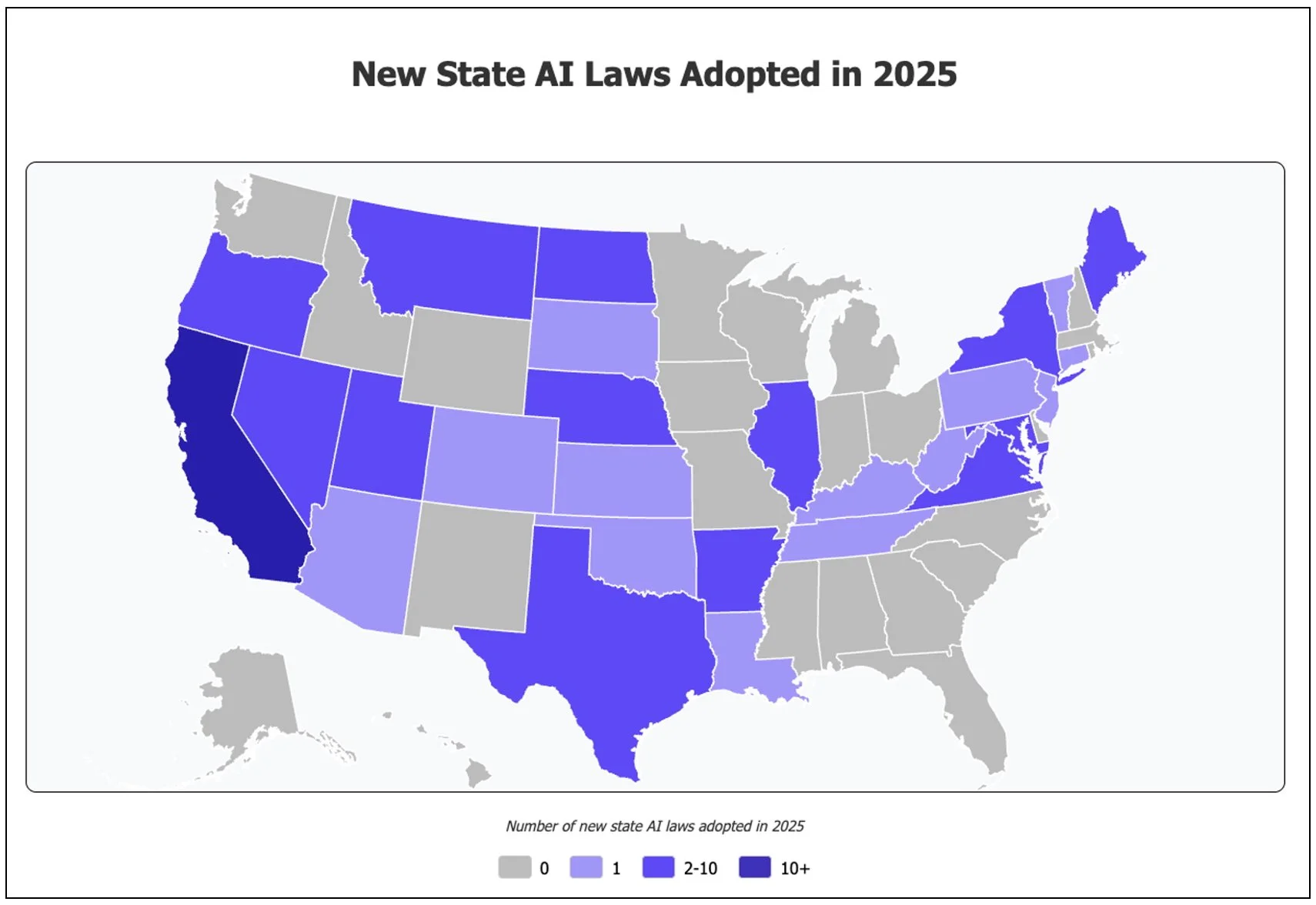
The open call for government to step in and regulate arrives after tech companies and industry lobbyists spent years dismissing the need for any safeguards or regulatory checks. It was just a year ago that a sweeping federal ban on the enforcement of state AI laws, heavily pushed by tech companies, was turned back at the last minute in the U.S. Senate.
open letter: ‘Pacing the frontier’
The full text of the open letter is reproduced below:
AI could help create a dramatically better future, but that outcome is not guaranteed. The world's leading AI companies believe they could be close to automating AI research. It is hard to predict exactly how much this will accelerate AI progress, but there is a real risk that capability development rapidly accelerates beyond our ability to understand or control the resulting systems.
To realize AI's potential, industry, government, and society at large may need the option to buy time to address emerging risks, develop security measures, and strengthen oversight. But each company—and country—is under intense competitive pressure not to unilaterally slow that acceleration. And today, the world lacks the technical and governance tools to deliberately pace frontier-wide progress.
Building on work already underway to monitor frontier model releases:
We request that the U.S. government support an international effort to develop the technical and governance tools needed to deliberately pace the frontier of automated AI development.
individual concerns from tech insiders
The open letter includes a number of individual messages from tech insiders, the people who are actually developing the next generation of powerful AI model. We’ve excerpted a few of them below.
Ethan Perez, Alignment Team Lead, Anthropic:
"With the current rate of AI progress, safety teams at AI companies have to sprint to prevent new risks to society every few months. At some point, we’re going to hit problems we need more time to solve."
Jon Wolverton, Senior Software Engineer, Google:
"It feels like all the AI labs are constrained by competition to minimize their work on catastrophic risks, even though most industry leaders have an uncomfortably high probability that things could go terribly wrong. This is a technology that doesn't have an off switch you can just flip, and it could easily do as much damage to its creators as to anyone else. Having a framework to allow labs to slow down or pull the plug in case of emergency will help us all sleep a bit better at night."
Micah Carroll, Misalignment Preparedness, OpenAI:
"At the current pace, every couple of weeks there will be new models which significantly increase the consequences of model misuse and misalignment. I worry that efforts to mitigate these risks may fail to keep up with the pace of development, and that margins for error will become increasingly small under international competitive pressures. In the near future, we may urgently want to enact an internationally coordinated slowdown, or an indefinite ban on AI development… I fear that in an international race to the bottom of AI development, it is likely that no nation will win, and we will all lose together."
Shantanu Jain, Member of Technical Staff, OpenAI:
In the span of four years, we have gone from people having their first experience of an Al that could understand language, to Al that is performing superhuman feats of software engineering…Society has spent longer than we can remember developing the laws, institutions and technology to govern and oversee human intelligence; it would be good to have the option to spend any time at all doing the same for artificial intelligence."
Michael Tontchev, Staff Engineer, Lead for Safety Evals Platform, Meta:
"Superhuman AI is likely to arrive very soon (within 3-10 years). Technical controls and governance might allow humans to remain in control of it, but they're not on track to be ready. Think of it as playing chess against a superintelligence. You won't have a miraculous insight that lets you outsmart it. You will just lose. And if a rogue superintelligence is created, the game won't be chess."
Nicholas Joseph, Member of Technical Staff, Anthropic:
"I lead pretraining at Anthropic, which is responsible for training the base models behind Claude. Every month, more work is done by the models themselves: infrastructure implementation, code optimization, and experiment design and analysis. This has drastically altered how we work and significantly increased our rate of progress. I’m not sure if or where it tops out, but a rapid acceleration in capabilities might be dangerous for society, so it seems prudent to have the ability to slow down deliberately."
State lawmakers acting on ai safety