Study finds nearly half of tech companies not complying with California’s AI detection law
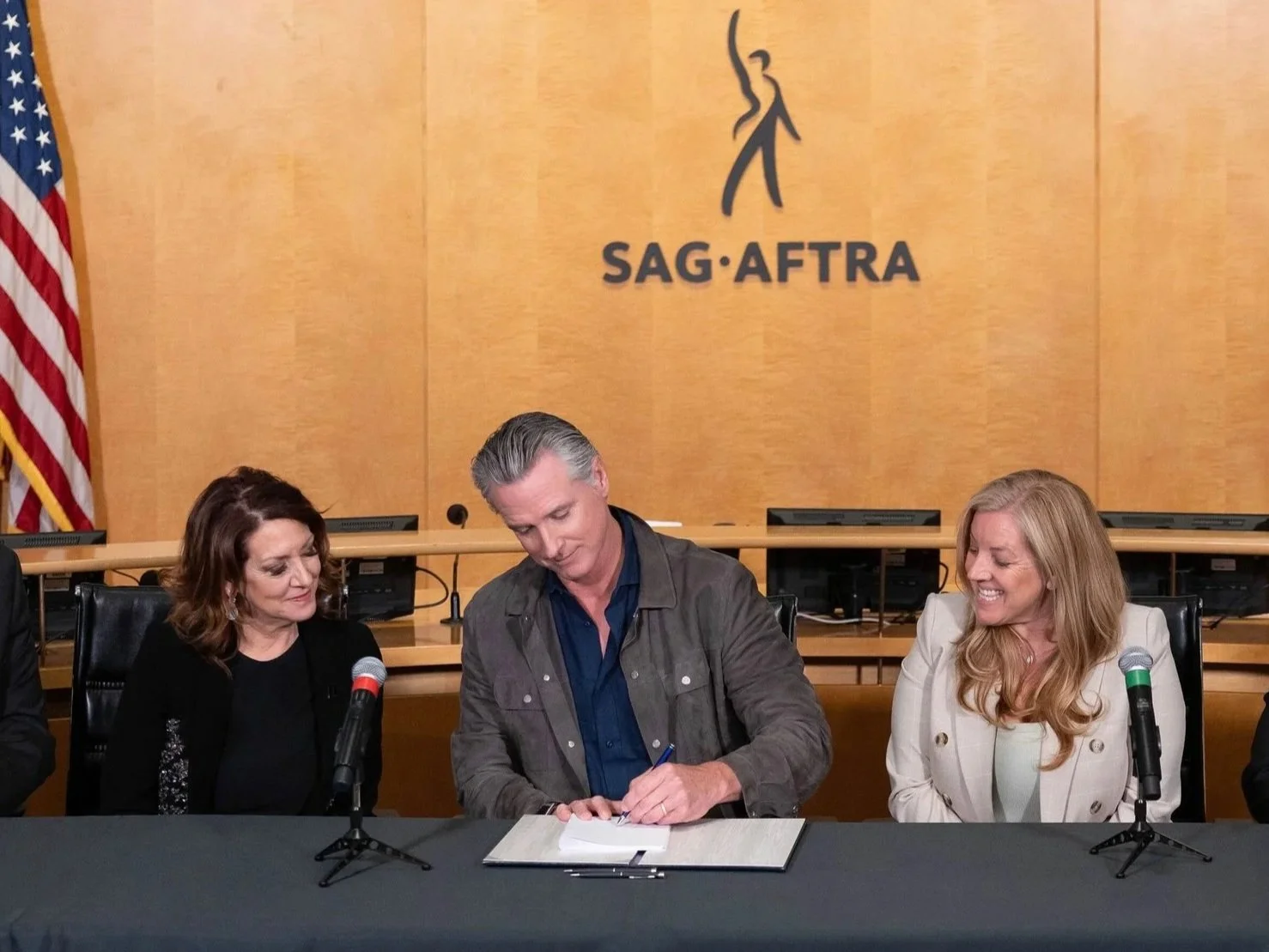
Google was among seven AI companies complying with California’s new AI Transparency Act. Google’s SynthID verification tool (image above) is still in development but is available for users to test the provenance of various images. A recent test found six other companies noncompliant with the new law—including xAI/Grok, Midjourney, and Suno.
Aug. 13, 2026 — New laws in California and the European Union require AI systems to embed detection tools in their outputs. These laws, which went into effect on Aug. 2, require companies that operate Gen AI tools to provide a detector that people can use to determine if a piece of content was created or modified by their AI.
Which raises the question: Which companies are complying with the law?
The investigative site Indicator, working with the nonprofit WITNESS, recently published one of the first tests of the new requirements.
They analyzed 13 AI companies affected by the new California law, the California AI Transparency Act. Of those 13, only seven had a dedicated detection tool available. That means nearly half of the AI companies affected by the new law are already out of compliance.
read the full investigation here
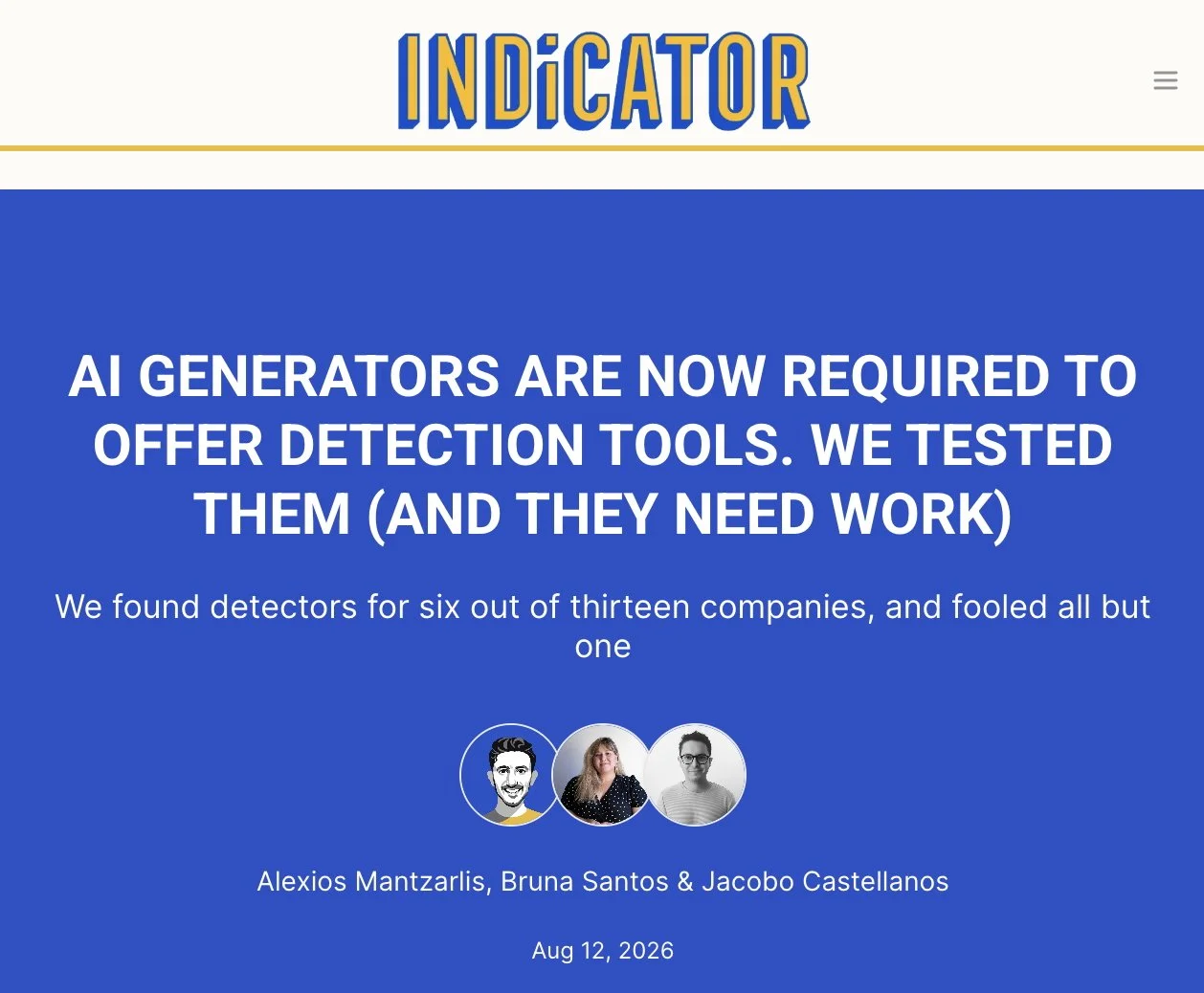
Indicator partnered with WITNESS to test the AI products offered by 13 companies in California.
Click on image at left to read the full story on Indicator.com.
these 13 companies were tested
In California, any AI provider with at least 1 million monthly users must now make a detector available.
The Indicator/WITNESS team tested 13 companies covered by the new California law: Google, Meta, Microsoft, OpenAI, Adobe, Grok, Midjourney, Mistral, HeyGen, Synthesia, ElevenLabs, Suno, and TikTok.
Anthropic was not included because its products do not generate photorealistic images or video. The California law covers images, video, and audio, but not text.
finding the detector tools
The Indicator team of Alexios Mantzarlis, Bruna Santos, and Jacobo Castellanos searched for detector tools on company websites. They followed up by contacting each company to confirm or request a link.
Indicator initially found tools for only six of the 13 companies: Adobe, ElevenLabs, Google, Meta, TikTok, and OpenAI. Microsoft was later given credit for an inspection tool built into Microsoft Designer, its graphic design product.
Grok, Synesthesia, Suno, HeyGen, Midjourney, and Mistral did not have a detector tool available.
testing the detector tools
Where a detector tool was available, the Indicator/WITNESS team tested their reliability.
They wrote:
“Across the seven detectors we ran a total of 243 tests using 85 files. We tested four original files and four edited files from each company’s AI generator, as well as four and four from other AI tools. We also tested six non-synthetic files, two of which we tampered with to add forged AI credentials to test for possible false positives.”
Most detectors “cleared the minimum bar of detecting their own, unedited content,” the team found.
When the team tested the detector tools using edited files, “results naturally degraded,” they wrote. “Only Google and OpenAI’s detectors resisted all attempts to tamper with files after generation and correctly identified that the content originated from their platforms.”
penalties for noncompliance
The new California law, which was passed in 2025 as SB 942, carries a civil penalty of $5,000 per violation per day.
Learn more about AI disclosure