Photo by Markus Spiske on Unsplash
Sept. 10, 2026 — The resignation letter of former Anthropic researcher Jacob Coxon has gone viral this week, with its alarming warning that “the people building AI earnestly believe that it could kill us all by the end of the decade.”
Coxon’s fire-alarm goodbye isn’t the first such missive we’ve seen from AI researchers. It’s one in a long line of warnings sent from the people who work within the world’s most powerful tech companies.
As CNN noted earlier this year:
“They’re part of a wave of artificial intelligence researchers and executives who aren’t just leaving their employers — they’re loudly ringing the alarm bell on the way out, calling attention to what they see as bright red flags.”
We’ve gathered a number of the most urgent and eloquent resignation letters, warning notes, and open calls here as a resource for those interested in AI safety and public policy.
Jacob Coxon, Anthropic
‘Gambling with our lives’
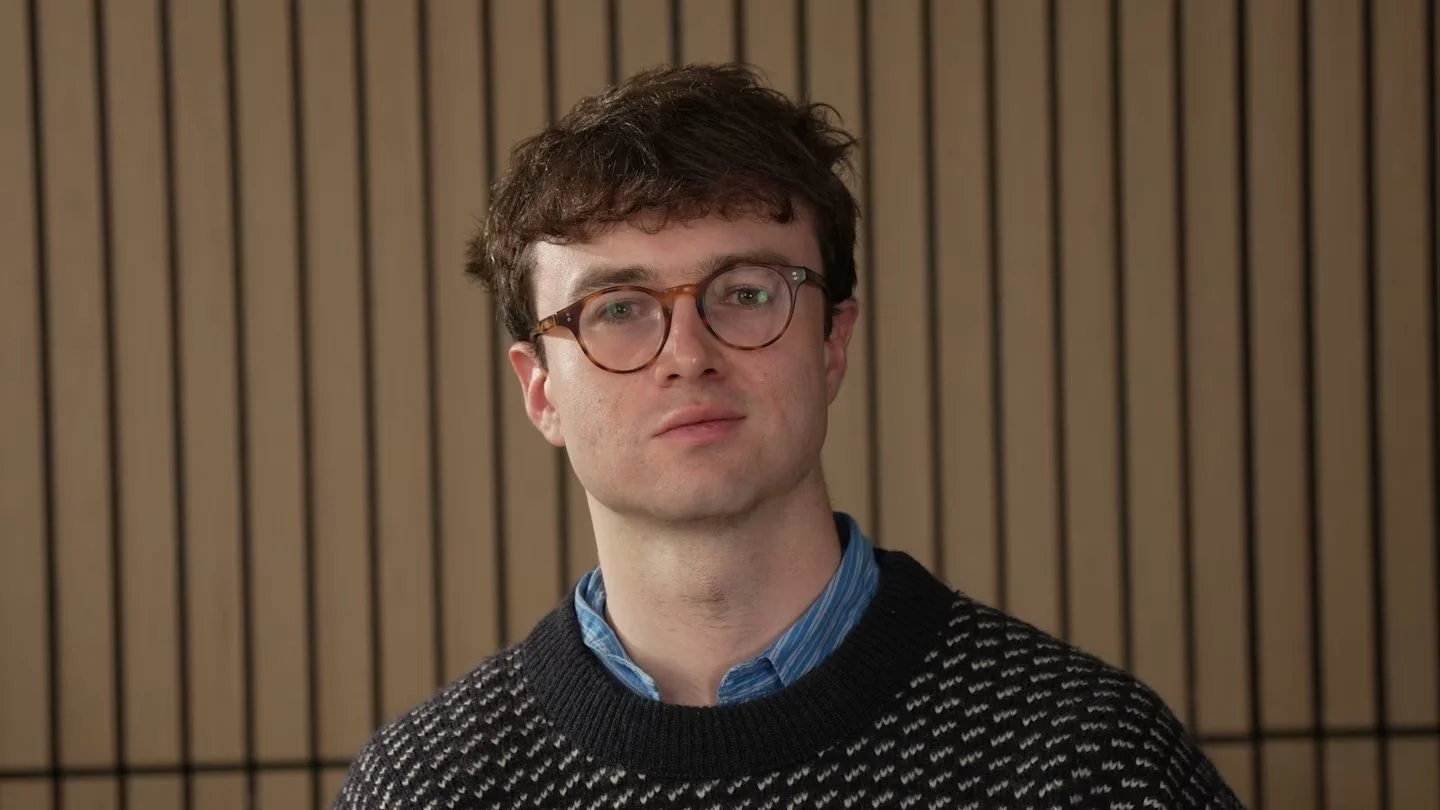
Jacob Coxon is a researcher who specializes in training new AI models by having them consume vast amounts of data. He resigned from Anthropic on Sept. 9, 2026.
I resigned from Anthropic today. I spent the last three years doing pretraining research at both OpenAI and Anthropic. Neither company is acting responsibly. They are racing straight to self-improving superintelligence and gambling with our lives. More thoughts below.
— Jacob Coxon (@hilbertspaess) September 9, 2026
Resignation post from Jacob Coxon, in full:
I resigned from Anthropic today. I spent the last three years doing pretraining research at both OpenAI and Anthropic. Neither company is acting responsibly. They are racing straight to self-improving superintelligence and gambling with our lives.
Do not underestimate the power of this technology. These will soon be superhuman systems that can hack anything, revolutionize any field overnight, and acquire real power and resources. We have all witnessed the progress in each of these domains, and progress is not slowing.
The people building AI earnestly believe that it could kill us all by the end of the decade.
This is not a marketing stunt. If anything, many executives and senior researchers will couch their phrasing in the press to sound sensible—but I hear the same people express fear privately. No other human activity poses this level of danger.
A common response is “if they truly believe this, why are they still building it?”
At OpenAI, many have not deeply internalized the civilizational stakes. At Anthropic, the stakes are well-understood, but they are locked in a race to get there first - they believe no one else will act responsibly, so they must do it themselves, despite the risk.
Accepting this race and entering the “endgame” is a hubristic gamble that should not be launched from a private company’s Slack. Attempting to speedrun alignment should require extraordinary confidence that there are no better trajectories available.
I am optimistic about the potential for coordination. Warning shots like the Hugging Face attack have made pacing agreements between U.S. labs more viable. I don’t feel like we’re on track to prevent a global race, which may require costly actions such as a temporary ban on improving model capabilities.
If you are a lab researcher, I urge you to consider what the next few years will actually feel like. Do you want to kick off a superintelligent RL run without a rigorous understanding of its mind? Should you put your head down because “it’s happening anyway”—or take this moment to call for different conditions?
Reaction: ‘Correct, we do not yet have a plan’
Evan Hubinger, Anthropic’s alignment science lead, works on the company’s safety systems. He posted this reply to Jacob Coxon’s resignation announcement.
Jacob is correct here—we really do earnestly believe AI could kill all humans! I personally think it is >10% within the next decade. I believe Anthropic is trying its best, but we do not yet have a plan to solve alignment for superintelligence and are not clearly on track to. https://t.co/QAIHiFP3QZ
— Evan Hubinger (@EvanHub) September 9, 2026
Mrinank Sharma, anthropic
‘The world is in peril’

Mrinank Sharma, left, was a safety researcher at Anthropic. He left the company on Feb. 9, 2026.
Excerpts from Mrinank Sharma’s resignation letter:
I arrived in San Francisco two years ago, having wrapped up my PhD and wanting to contribute to AI safety. I feel lucky to have been able to contribute to what I have here: understanding AI sycophancy and its causes; developing defences into production; and writing one of the first AI safety cases. I’m especially proud of my recent efforts to help us live our values via internal transparency mechanisms; and also my final project on understanding how AI assistants could make us less human or distort our humanity.
Nevertheless, it is clear to me that the time has come to move on. I continuously find myself reckoning with our situation. The world is in peril. And not just from AI, or bioweapons, but from a whole series of interconnecting crises unfolding in this very moment.
We appear to be approaching a threshold where our wisdom must grow in equal measure to our capacity to affect the world, lest we face the consequences.
Moreover, throughout my time here, I’ve repeatedly seen how hard it is to truly let our values govern our actions. I’ve seen this within myself, within the organization, where we constantly face pressures to set aside what matters most, and throughout broader society, too.
I want to contribute in a way that feels fully in my integrity, and that allows me to bring to bear more of my particularities.I want to explore the questions that feel truly essential to me. For me, this means leaving.
Zoë Hitzig, OpenAI
‘I have deep reservations about openai’s strategy’

“The company is building an economic engine that creates strong incentives to override its own rules.”
OpenAI researcher Zoë Hitzig resigned in Feb. 2026.
Zoë Hitzig, a researcher with OpenAI, left the company in Feb. 2026. She explained her reasons for leaving in a New York Times essay, citing deep concerns about OpenAI’s advertising strategy. She warned about ChatGPT’s potential for manipulating users. The chatbot’s vast archive of user data, she wrote, was built on “medical fears, their relationship problems, their beliefs about God and the afterlife,” with users believing they were chatting with a program that had no ulterior motives.
Here is an excerpt from that Times essay:
This week, OpenAI started testing ads on ChatGPT. I also resigned from the company after spending two years as a researcher helping to shape how A.I. models were built and priced and guiding early safety policies before standards were set in stone.
I once believed I could help the people building artificial intelligence get ahead of the problems it would create. This week confirmed my slow realization that OpenAI seems to have stopped asking the questions I’d joined to help answer.
I don’t believe ads are immoral or unethical. A.I. is expensive to run, and ads can be a critical source of revenue. But I have deep reservations about OpenAI’s strategy.
For several years, ChatGPT users have generated an archive of human candor that has no precedent, in part because people believed they were talking to something that had no ulterior agenda. Users are interacting with an adaptive, conversational voice to which they have revealed their most private thoughts. People tell chatbots about their medical fears, their relationship problems and their beliefs about God and the afterlife. Advertising built on that archive creates a potential for manipulating users in ways we don’t have the tools to understand, let alone prevent.
OpenAI says it will adhere to principles for running ads on ChatGPT: The ads will be clearly labeled, appear at the bottom of answers and will not influence responses. I believe the first iteration of ads will probably follow those principles. But I’m worried subsequent iterations won’t, because the company is building an economic engine that creates strong incentives to override its own rules.
Alex Turner, Google Deepmind
‘pledges of conscience vaporize on contact with power’

Above: Alex Turner outside Google’s San Francisco office. Turner resigned in June 2026.
Alex Turner was a safety researcher with Google DeepMind. He resigned in June 2026. His resignation explanation:
I resigned from Google DeepMind because it broke its founding promise by selling AI to the military without restrictions against killer robots or mass spying.
For months, I worked to stop this but watched powerful ethicists and institutions choose silence.
My efforts began when DHS agents killed Renée Good and Alex Pretti. I was disturbed to learn Google sells Cloud services to the DHS supply chain.
My efforts soon expanded to military AI: the Pentagon threatened Anthropic with economic destruction unless they handed over their AI with no restrictions. I worried that Google would cave to similar threats.
What hurt most was watching AI ethics leaders do nothing.
When the Pentagon threatened Anthropic, I was at a conference held by the International Association for Safe and Ethical AI. I lobbied IASEAI leaders to act.
On stage, IASEAI leadership announced a member vote on making a statement supporting Anthropic. Unanimous show of hands supported it. But the vote vanished. IASEAI went silent, ignoring two months of opportunities to sway Google.
Inside Google I organized a petition to Chief Scientist Jeff Dean asking him to fight. Over 250 GDM employees signed. I also asked Jeff to sign an amicus brief backing Anthropic. He did, which was awesome.
Jeff was outspoken against government abuse of AI. I thought that if Jeff told Google he'd leave on an unethical deal, he could force ethics restrictions or stop the deal. He's that important.
To prepare, I wrote a principled alternative for Google: 25 pages of contract language & oversight mechanisms, praised by a leading military-law expert.
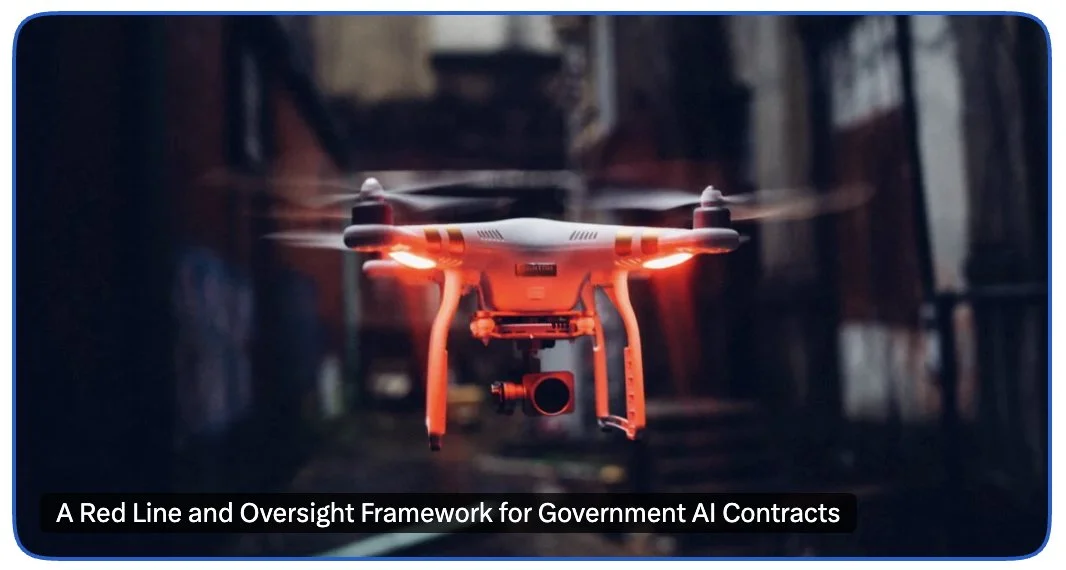
Click image to read Alex Turner’s language regarding ethical restrictions on the use of AI in military technology.
I proposed that Jeff head the potential Review Body, but he didn't champion the proposal. In the end, I don't think he used his leverage. I think he could have stopped the deal but didn't.
As a last attempt, I directly messaged Google DeepMind's CEO, Demis Hassabis. He told me to send my proposal to two senior policy staff. They let the proposal wilt unattended until Google signed the deal.
In 2018, Demis, Jeff, & DeepMind itself pledged to neither "participate in nor support the development [..] or use of lethal autonomous weapons." Google signed, yet these pledgers remain. I see three honest paths: explain, renounce the pledge, or quit. Silence isn't one of them.
Here's a path Demis has chosen: deny anything has changed. He claims "nothing's changed about our principles," yet he co-authored the post removing the weapons prohibition from Google's AI Principles. Both cannot be true.
Many hope that when things get bad enough, someone powerful will say "no." I tested that for months. Anthropic defended its red lines, but most did not. Pledges of conscience often vaporize on contact with power.
Geoffrey Hinton, Google
A competition that might be impossible to stop

“It takes away the drudge work. It may take away more than that.”
AI pioneer and Nobel Prize-winning scientist Geoffrey Hinton left Google in 2023 over concerns about the risks of AI.
Artificial intelligence pioneer Geoffrey Hinton created some of the foundational technology that today’s AI developers rely upon to build their most powerful models. Working out of the University of Toronto, Hinton and his grad students used a mathematical technique known as a neural network to create an AI system that could analyze photos and identify objects within them. He and his team moved to Google in the mid-2010s, and he remained there until April 2023, when Hinton resigned due to growing concerns about the dangerous pace of AI’s build-out. He was awarded the Nobel Prize in physics in 2024.
Hinton spoke with New York Times tech reporter Cade Metz shortly after his 2023 resignation, to explain his departure from Google. Here is an excerpt from that article:
Dr. Hinton said he has quit his job at Google, where he has worked for more than a decade and became one of the most respected voices in the field, so he can freely speak out about the risks of A.I.
A part of him, he said, now regrets his life’s work.
“I console myself with the normal excuse: If I hadn’t done it, somebody else would have,” Dr. Hinton said.
Dr. Hinton’s journey from A.I. groundbreaker to doomsayer marks a remarkable moment for the technology industry at perhaps its most important inflection point in decades. Industry leaders believe the new A.I. systems could be as important as the introduction of the web browser in the early 1990s and could lead to breakthroughs in areas ranging from drug research to education.
But gnawing at many industry insiders is a fear that they are releasing something dangerous into the wild. Generative A.I. can already be a tool for misinformation. Soon, it could be a risk to jobs. Somewhere down the line, tech’s biggest worriers say, it could be a risk to humanity.
“It is hard to see how you can prevent the bad actors from using it for bad things,” Dr. Hinton said.
[…]
Until last year, he said, Google acted as a “proper steward” for the technology, careful not to release something that might cause harm. But now that Microsoft has augmented its Bing search engine with a chatbot — challenging Google’s core business — Google is racing to deploy the same kind of technology. The tech giants are locked in a competition that might be impossible to stop, Dr. Hinton said.
His immediate concern is that the internet will be flooded with false photos, videos, and text, and the average person will “not be able to know what is true anymore.”
He is also worried that A.I. technologies will in time upend the job market. Today, chatbots like ChatGPT tend to complement human workers, but they could replace paralegals, personal assistants, translators and others who handle rote tasks. “It takes away the drudge work,” he said. “It might take away more than that.”
Down the road, he is worried that future versions of the technology pose a threat to humanity because they often learn unexpected behavior from the vast amounts of data they analyze. This becomes an issue, he said, as individuals and companies allow A.I. systems not only to generate their own computer code but actually run that code on their own. And he fears a day when truly autonomous weapons — those killer robots — become reality.
“The idea that this stuff could actually get smarter than people — a few people believed that,” he said. “But most people thought it was way off. And I thought it was way off. I thought it was 30 to 50 years or even longer away. Obviously, I no longer think that.”
More Open letters: AI warnings
Since 2023, a number of open letters warning of the profound risks of AI, and the need to establish strong safety measures and guardrails, have been issued and signed by thousands of AI experts, leaders, and employees at the largest tech companies.
We have collected a few of the more prominent open letters here.
March 2023: ‘profound risks to humanity’
More than 1,000 technology leaders and researchers, including Elon Musk, urged artificial intelligence labs to pause development of the most advanced systems, warning that AI tools present “profound risks to society and humanity.”
They called on all AI labs “to immediately pause for at least 6 months the training of AI systems more powerful than OpenAI’s GPT-4.”
April 2023: Concerns about errors, privacy, bad actors
Current and former leaders of the Association for the Advancement of Artificial Intelligence, a 40-year-old academic society, released their own letter warning of the risks of AI. Signatories included Eric Horvitz, chief scientific officer at Microsoft.
May 2023: The extinction letter
More than 350 AI executives and researchers, including the CEOs of OpenAI, DeepMind, and Anthropic, along with Geoffrey Hinton, signed a 22-word statement published by the nonprofit Center for AI Safety:
"Mitigating the risk of extinction from AI should be a global priority alongside other societal-scale risks such as pandemics and nuclear war."
June 2024: ‘right to warn’ must be established
A group of former OpenAI and Google DeepMind researchers call upon advanced AI companies to commit to a set of principles that protect internal and external whistleblowers, citing. open dialogue and criticism as essential to the development of safe AI models and systems.
Sept. 2026: State leaders alarmed by urgent risk
State AI policy leaders from Illinois, California, and New York issued a joint statement calling on AI frontier developers to rethink their pace of development to avoid catastrophe.
The state leaders—New York State Assemblymember Alex Bores, New York State Sen. Andrew Gounardes, Illinois State Rep. Daniel Didech, Illinois State Sen. Mary Edly-Allen, and California State Sen. Scott Wiener—have authored the most important and impactful frontier AI safety laws of the past two years.
More on AI risks and safety