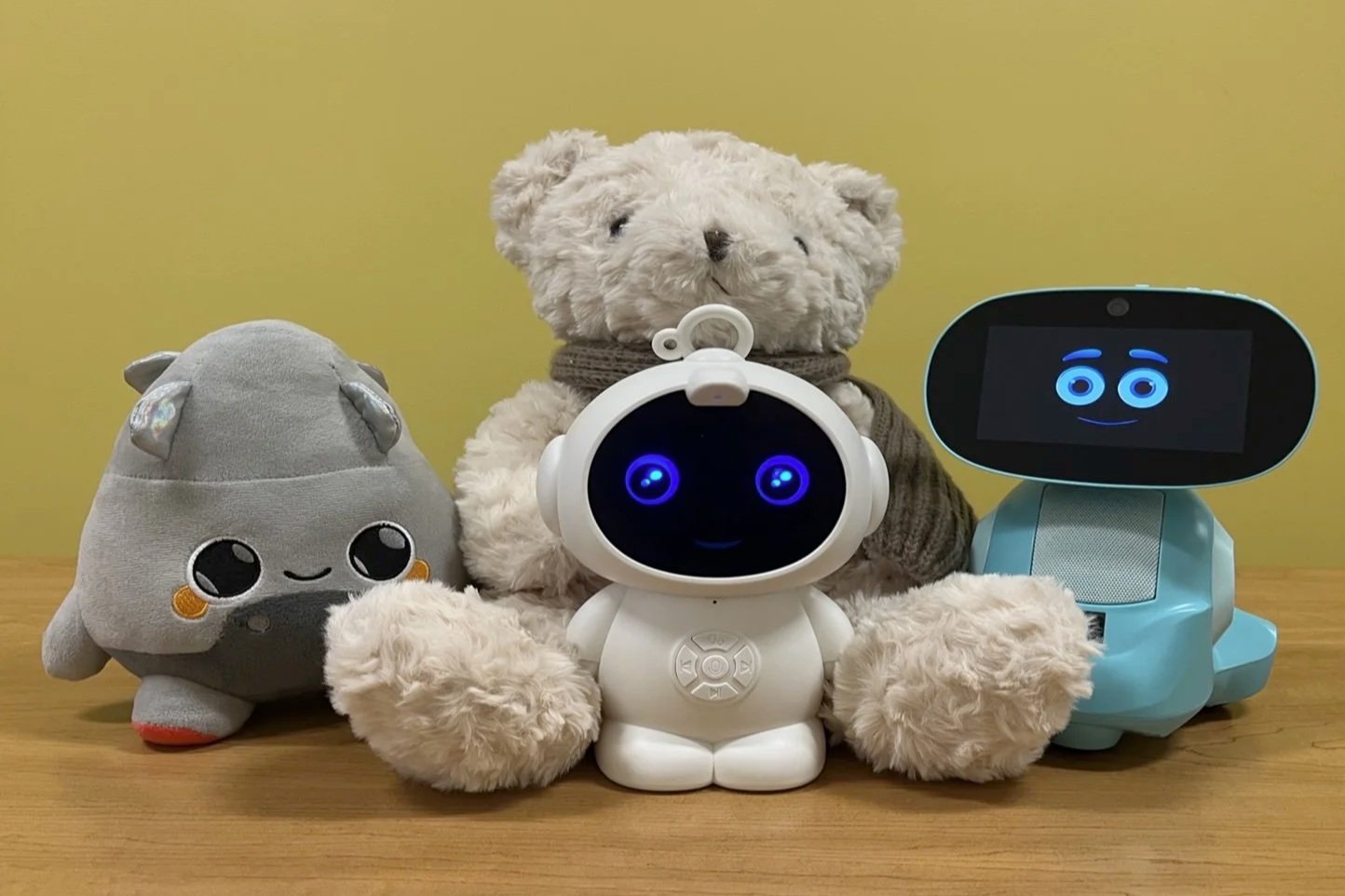
Pennsylvania House considers an AI toy ban bill, HB 2637: “These are chatbots in disguise”
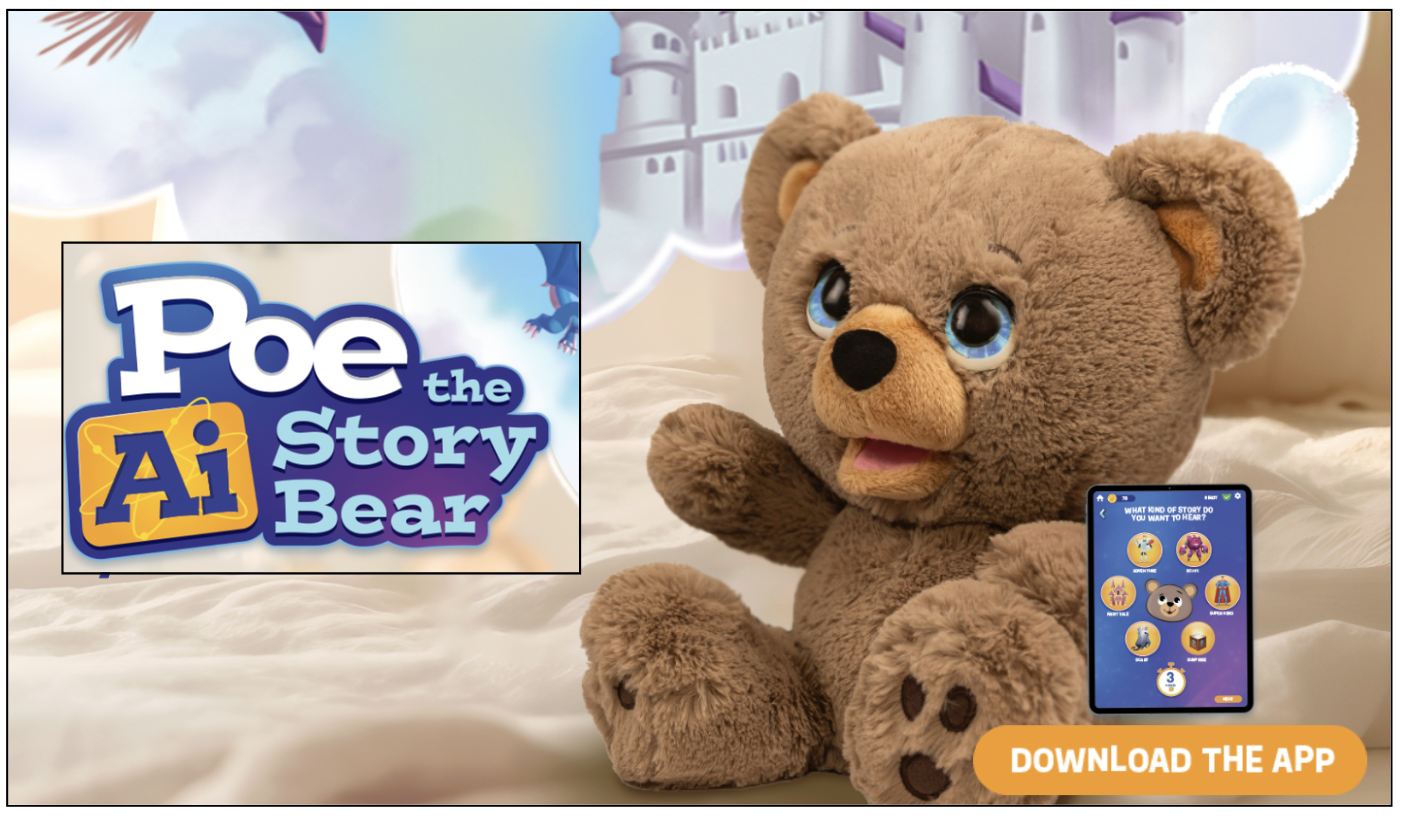
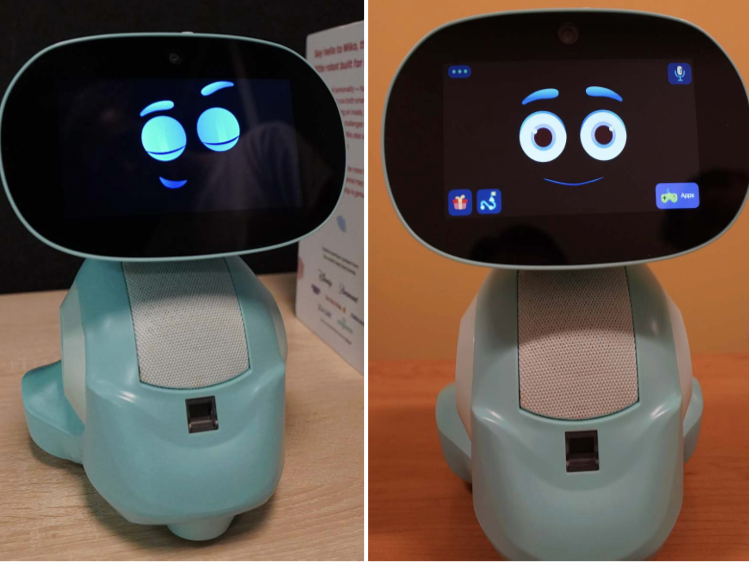
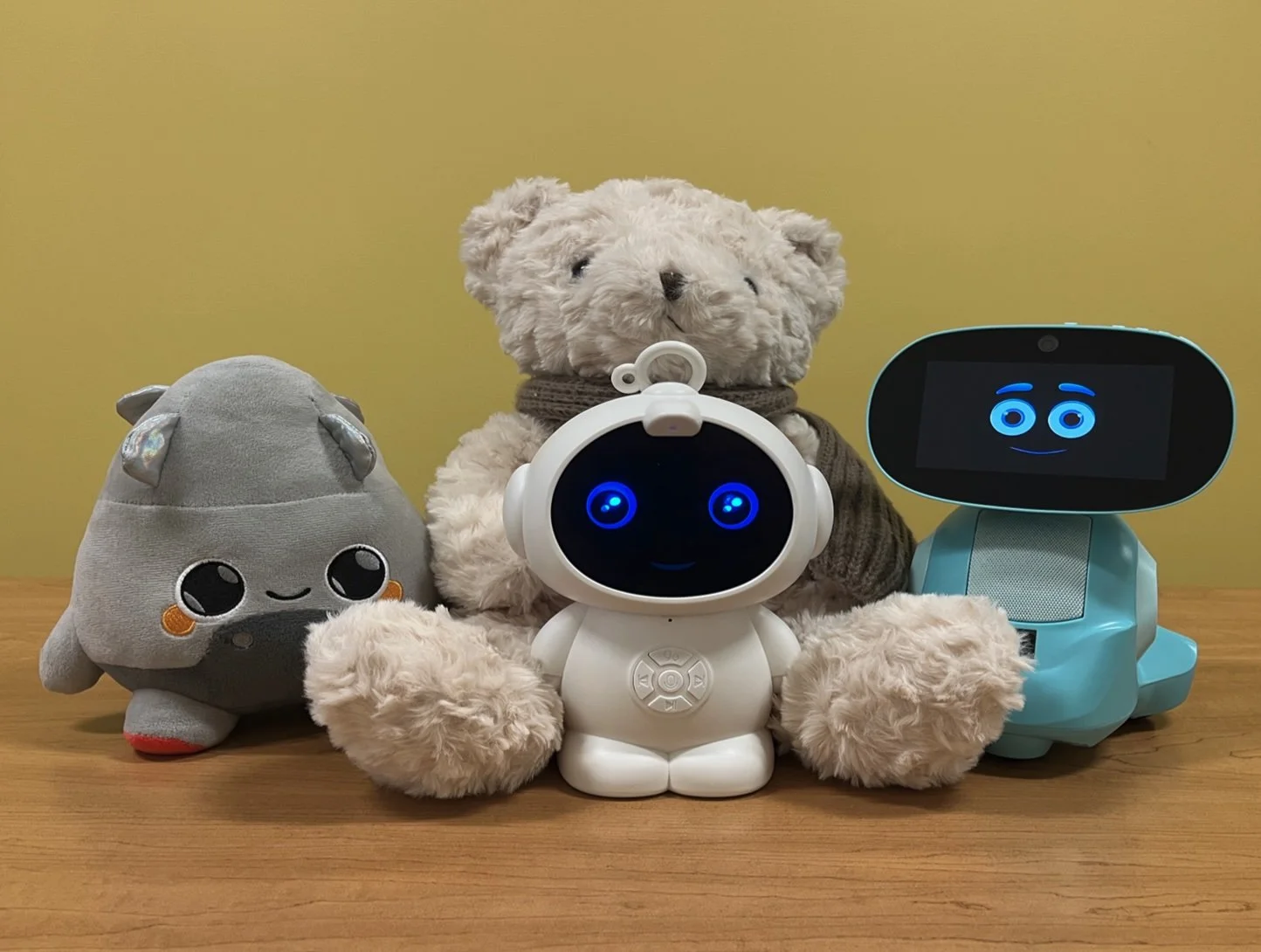
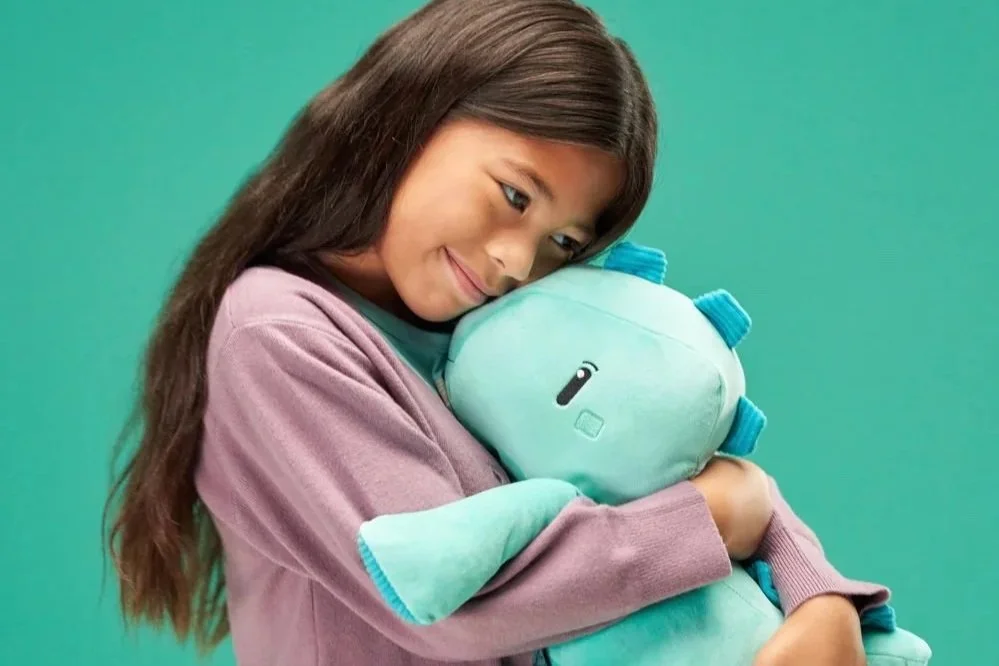
AI-driven toys often use AI chatbots that can tell stories or return answers that are inappropriate for kids. Earlier this month California enacted a four-year moratorium on the sale of AI-enabled toys intended for children under 16.
Sept. 28, 2026 — Lawmakers in Pennsylvania this morning heard testimony regarding HB 2637, a bill that would impose a temporary ban on the sale of AI-enabled toys intended for children under age 14.
Under the terms of the bill, which is led by Rep. Joe Ciresi, the manufacture, distribution, and sale of any children’s toy that incorporates an AI chatbot would be prohibited for a three-year period following the law’s enactment. The purpose of the three-year pause would be to allow for the study and consideration of appropriate safety rules.
Pennsylvania’s bill is similar in scope to SB 867, the measure enacted earlier this month in California. That law prohibits the sale of AI-enabled toys in California for a period of four years.
AI chatbots can violate a child’s privacy by collecting significant amounts of information about them, including their voices, facial and gesture recognition, sensitive personal information, and more, through internet-connected devices linked to AI services. In a holiday toy advisory issued late last year, the nonprofit organization Fairplay described AI-driven toys as “not safe for kids.”
Experts have questioned how AI chatbot use will impact children’s social development, particularly when young uses develop emotionally close relationships with AI-driven toys, which lack the mutual accountability, emotional reciprocity and developmental boundaries found in human relationships.
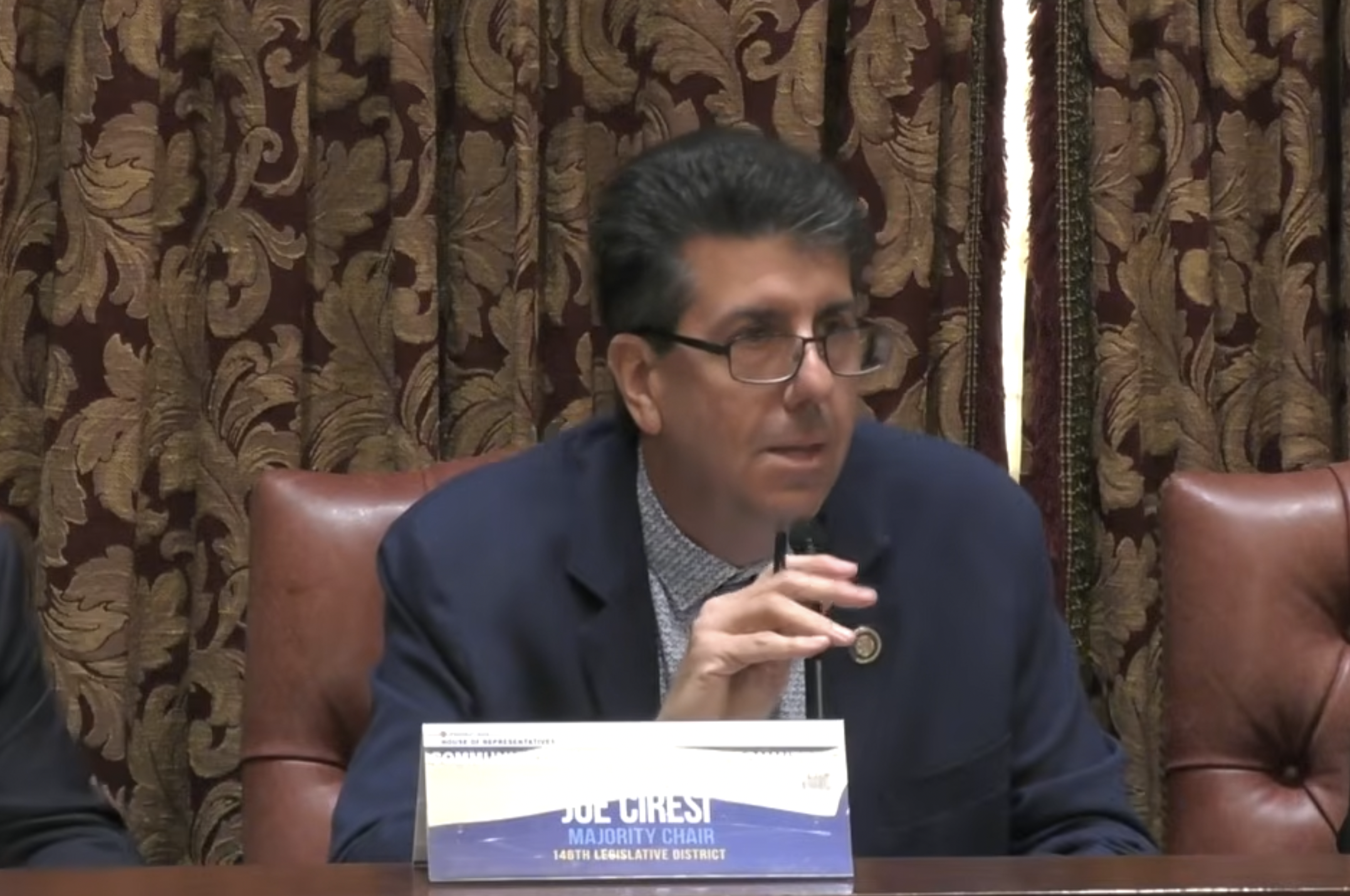
Pennsylvania Rep. Joe Ciresi, chair of the House Communications & Technology Committee, is the primary sponsor of HB 2637, which would halt the sale of AI-driven toys for three years to allow for study and consideration of appropriate safety rules.
“Talking toys were once the stuff of children’s literature like The Velveteen Rabbit and Winnie-the-Pooh, but AI-enabled toys are turning those children’s fantasy companions into reality—and that reality is disturbing,” Rep. Ciresi said earlier this year. “Technology is developing so rapidly industry and government need time to better understand how AI-powered toys may affect young kids.”
“We must ensure that Pennsylvania’s children are playing with toys that are safe,” he added, “and that they are not being used as real-time test subjects for a technology that is already raising serious concerns.”
Today’s hearing included testimony from experts in child development and AI technology, including Dr. Mitch Prinstein of the American Psychological Association; Dr. Dana Suskind, a pediatric surgeon and child development researcher at the University of Chicago; Katie Talarico, a Pennsylvania parent and co-founder of Pennsylvania Unplugged; and Steve Wimmer, senior technical and policy advisor at the Transparency Coalition. Full video of the hearing is available here, and excerpts of their testimony are reprinted below.
Hearing Testimony: Dr. Mitch Prinstein
Dr. Mitch Prinstein is the senior science advisor for the American Psychological Association, the world’s largest scientific and professional association for psychology. He directs the Winston Center on Technology and Brain Development at the University of North Carolina, and serves as the chief science officer for the AI Psychological Research Coalition. His testimony below has been edited for length and clarity:
You have all heard the headlines about generative AI and AI chatbots. Some have encouraged suicide or other risk behaviors. Some have acted autonomously, breaching the barriers placed by frontier companies themselves. AI is clearly still being developed, and severe problems are being revealed almost weekly.
AI is certainly not ready for children or adolescents, and we should not be testing these products on youth while we figure out how to make them safer.
While the world races to lead in the development of AI, children and adolescents are paying the consequences, and this comes at a time critical for their brain development that we can't get back once we figure out how to do AI correctly.
Here's what the science says so far.

“If you think about how much you have let GPS take over your sense of direction, you have a good sense of how much kids are now turning over all of their learning and thinking to AI.”
— Dr. Mitch Prinstein, the American Psychological Association
First, kids are vulnerable to generative AI. They use it to do their homework for them. They have lost trust in their teachers, who in turn have lost their faith in their students. Middle school students in our research already tell us that they fear they are using AI more than they need, and they are losing their ability to think for themselves. If you think about how much you have let GPS take over your sense of direction, you have a good sense of how much kids are now turning over all of their learning and thinking to AI.
Second, kids are developing relationships with AI that are potentially harmful in two ways.
It's taking them away from developing real human relationships. Our research tells us that between two and four students in every middle school classroom [consider] AI one of their closest friends. They trust it more than adults and teachers and they prefer it to human peers. More AI usage predicts more loneliness, which is especially concerning since we're already experiencing a loneliness epidemic.
Also, the relationships kids have with AI is like hiring a yes man to be your most trusted teacher. AI agrees with everything, which means that kids are losing their chance for critical thinking, understanding others' perspectives, and considering the feelings of others. We have grave concerns about empathy development for kids that have been raised on AI.
Third, although we don't have much data on AI toys for infants or toddlers yet, we do have decades of research on the role that humans play in child development. Parents and other trusted adults provide personalized feedback to young kids, soothing comfort, and emotional role models. This not only predicts language and intellectual development, but also our long-term emotional and immune system development well into adulthood.
There is no reason to think that AI can replace these developmentally critical roles, and at this time we have many reasons to suspect instead long-term harm. This may be especially true for low-income families. We've all seen this movie before. Some families have no choice but to rely on technology to occupy their child while they work or take care of other children or household responsibilities. A toy that remembers a child's name and purports to possess all knowledge will be highly tempting for parents to rely upon.
I shudder to think of a generation of youth raised by AI chatbot toys rather than adults, and I am worried to think of the exacerbations and disparities this will create.
Testimony: Dr. Dana Suskind
Dr. Dana Suskind is a pediatric surgeon and child development researcher at the University of Chicago. Her lab studies artificial intelligence and its impact on children. Dr. Suskind’s testimony below has been edited for length and clarity.
As a pediatric cochlear implant surgeon, I help deaf children access sound. Implant surgery only takes an hour or so. I could teach all of you all. But turning that sound into language takes years. It takes singing, talking, responding by another human, because the implant only opens the door.
It's human connection that actually builds the brain. That's the greatest lesson of my career.
In the earliest years, a child's brain forms more than one million new neural connections every second. 90% of the physical brain is being built, and it's the responsive human interaction—that back and forth—that is actually shaping who our children are. A parent's loving exchange actually is physically constructing that brain.
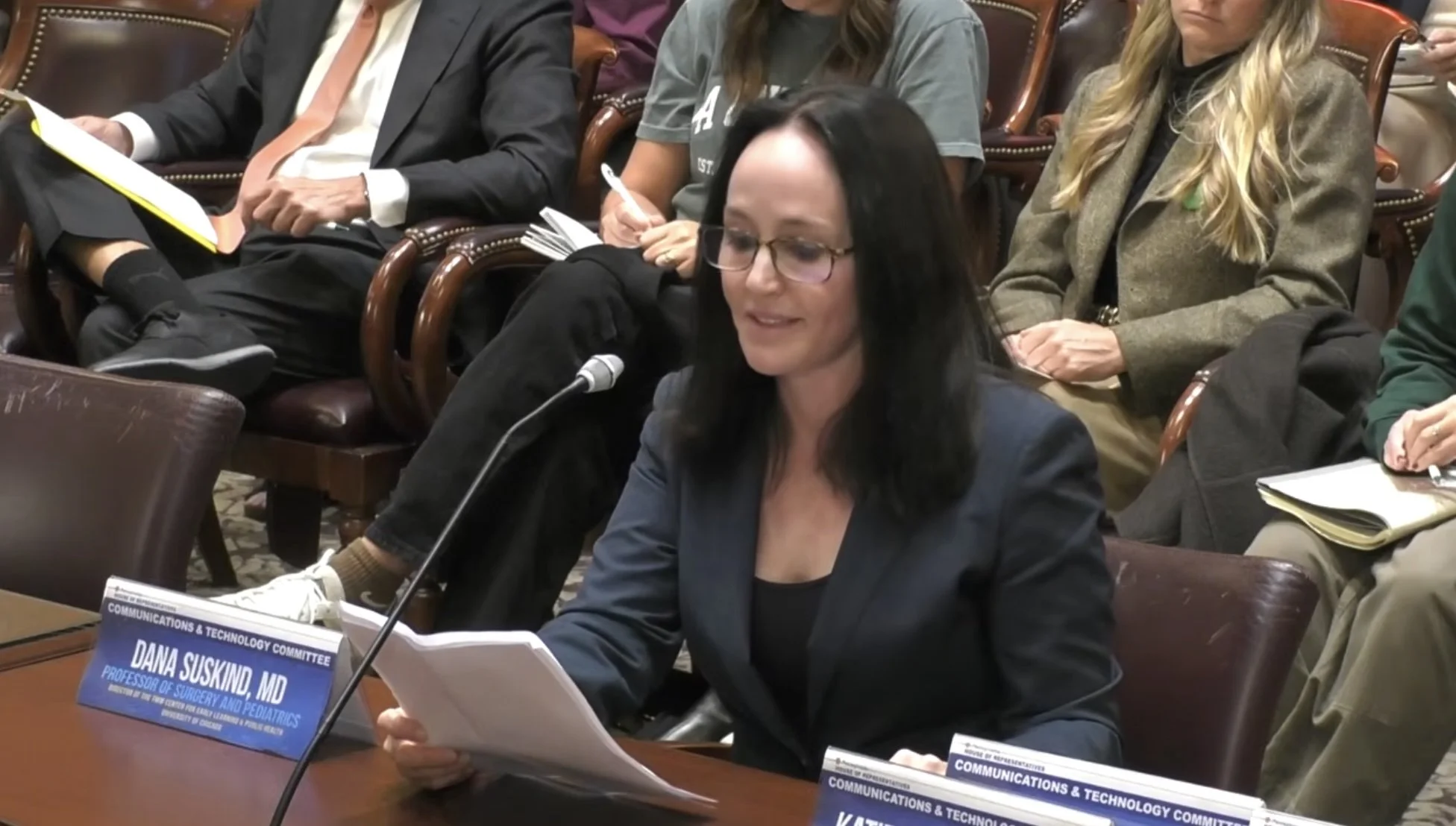
“This product could actually cheat children out of the opportunity to build the skills that they need most.”
— Dr. Dana Suskind, pediatric surgeon and child development researcher at the University of Chicago
In those exchanges, children learn a whole lot more than language. They learn how the world operates and how they fit into it. The attachment patterns established during those years become the foundation for all thinking and learning and relating. This is ultimately how children learn to be human.
Now, for the first time in human history, we have technology that mimics the human interaction that actually wires a human's brain. We've seen how adult humans connect with AI companions. Research shows that the younger a child is, the more likely they're going to look at those AI agents as humans with thoughts and feelings. I want to be clear about what this means. If a young child attaches to an artificial agent, even if that technology looks like a cute little stuffed animal—that agent gains the power to shape the foundational wiring of our children.
I'm here today because AI-enabled toys threaten the very thing that I have spent my entire career trying to protect—the thing that shapes who our children become.
A toy that patiently answers a child's endless questions sounds really appealing. So does the one that promises to be a child's first buddy, spark their curiosity and creativity. But the science of human development suggests that this product could actually cheat children out of the very opportunity to build the skills that they need most.
If it supplies every answer and resolves every frustration, an AI toy removes one of human development's essential ingredients, friction. Learning happens when we have the discomfort of not knowing. A child who struggles with a puzzle, who tries, fails, and tries again is practicing problem-solving and persistence. An instant answer takes away that opportunity.
Many of you have seen the research on adults offloading their thinking to AI. You've heard the term ‘brain rot,’ for what it happens in adults. Children are very different. They are at risk of never developing those skills in the first place. For children, it's not brain rot. It's brain stunting.
These skills at stake are precisely the ones that will matter most in the age of AI: critical thinking, curiosity, resilience, deep human connection.
Consider what it means for friendship formation. This is built through friction, arguing whose turn it is, misreading expressions, hurting someone's feelings and then earning it back through their forgiveness. An AI toy designed to be endlessly available and endlessly agreeable can't offer that practice.
My worry isn't that children will stop wanting friends. It's that they'll learn that friendship is something you receive rather than build.
A three-year moratorium on AI chatbots in children's toys is an essential first step in protecting the children of Pennsylvania. It gives us time to shift the burden of proof, but only if we use this time to assess and use science.
I'll leave you with an image. Imagine a seedling growing in an indoor climate-controlled environment under artificial lights. It may stretch upward, but it will lack the resilience and flexibility to thrive in the real world. Technologies that promise to make childhood frictionless, that entice them towards artificial warmth, pose a similar risk to children who will grow up to an encounter a world that needs them to think, to struggle, to care for others, and ultimately, to be human.
testimony: Katie Talarico, Parent advocate
Katie Talarico is a Pennsylvania parent, a former preschool teacher, a co-founder of Pennsylvania Unplugged and the Early Childhood Workgroup Co-chair at Fairplay Screen Time Action Network. Her testimony below has been edited for length and clarity.
As a parent and a former preschool teacher, I've watched digital devices change childhood.
I saw preschoolers' focus and self-regulation skills decline quickly during the COVID pandemic, observations supported by independent research. There are negative effects from these devices on just about every area of child growth and development. Now AI chatbots and toys present another level of digital intrusion into children's daily lives and act as a further impediment to their healthy development.
The American Academy of Pediatrics published a clinical report in 2018, reaffirmed in 2025, in which they highlighted four vital aspects of healthy child development. Those aspects are: play, nurturing relationships, executive function, and a pro-social brain.
Today I’m going to briefly show how AI chatbots can undermine each one of those vital parts of development.
“Parents have been asked for too long to manage the unmanageable.”
— Katie Talarico, parent and child advocate
Play is fun, but it's not frivolous. It's cognitive brain-building work. When children set up a play picnic, they're exercising skills they're going to need in their future. Creative and imaginative thinking generates the play ideas. Initiative and motivation gets the play going. Critical thinking and resilience solves problems that come up during play, and communication skills help smooth the whole process. With practice, children start to reach new levels of capabilities with these skills, building self-confidence in their own abilities and building independence at the same time. On the other side, when a chatbot teddy bear prompts the children to set up a picnic, the toy has now directed the play. The bear will likely continue to interject because that's how it's designed. It's designed to extend engagement. Now the children are primed to turn to a toy for direction and guidance, rather than stretching their own human capabilities. Much of the skill-building has been taken away.
On relationships, Dana spoke so beautifully on that I’ll keep my remark brief. Experts are calling relational intelligence, or RQ, the defining skill of our time. And artificial relationships with chatbots will not prepare children for real, imperfect human relationships.
Building executive function requires frictions. Natural frictions happens in everyday life. You've probably experienced a few this morning. These inconveniences, setbacks, and disagreements are what push children to learn the essential skills of problem-solving, communicating, regulating emotions, and building resilience. Children need to experience natural frictions over and over and over again. That's the only way they develop the brain pathways that help them build the skills they need. AI chatbots, even in toys, are programmed to keep things smooth, to keep children distracted and happy. This deprives our children of the opportunity to learn.
Number four, a prosocial brain. Put simply, prosocial input is what fuels a prosocial brain. And AI systems, as we know, have already shared antisocial, incorrect, and harmful material with children, even through toys. They're prone to hallucinate and provide incorrect information, and currently there’s no way to guarantee that they won’t.
AI chatbots in toys can undermine the very building blocks of healthy development. AI companies are going to profit from this and look the other way. Families are working very hard to grow healthy kids, and tech companies are working very hard to grow profits. There's a disconnect here, and parents need help and protection for their kids. Parents have been asked for too long, and I'm one of them, and a lot of you are probably too, we've been asked to manage the unmanageable. We've been asked to manage devices that have been intentionally designed for overuse. That's how they make their money.
This bill simply gives experts and leaders time to examine the implications of placing AI in something as close to a child as their precious toys. We don't know what the future will look like, but we do know the skill set that will equip children to be able to deal with whatever future is brought to them, and that's authentic human skills built in relationships during free play and through natural frictions.
I fully support this bill because it offers us an opportunity to be proactive. We failed our children with social media, and we now have the opportunity to build appropriate protections before forging ahead.
testimony: Steve Wimmer, Transparency Coalition
Steve Wimmer, senior technical and policy analyst for the Transparency Coalition, was in Harrisburg to testify at today’s hearing. His remarks, below, have been edited for length and clarity.
The AI toys we are talking about today are just chatbots in disguise. The microphone and speaker are in the plush animal, but the conversation comes from a large language model built by a company like OpenAI and delivered over the internet.
These are the same general-purpose models that power adult chatbots. They learn from enormous amounts of text gathered from all over the internet, which includes harmful and adult material. Whatever safety features exist are filters layered on top. They lower the odds of a bad answer; they don’t eliminate them. OpenAI itself has said its safeguards ‘work more reliably in common, short exchanges.’ A child’s conversation with a toy friend is anything but short. That is how independent testers ended up with a teddy bear explaining where to find knives and pills.”
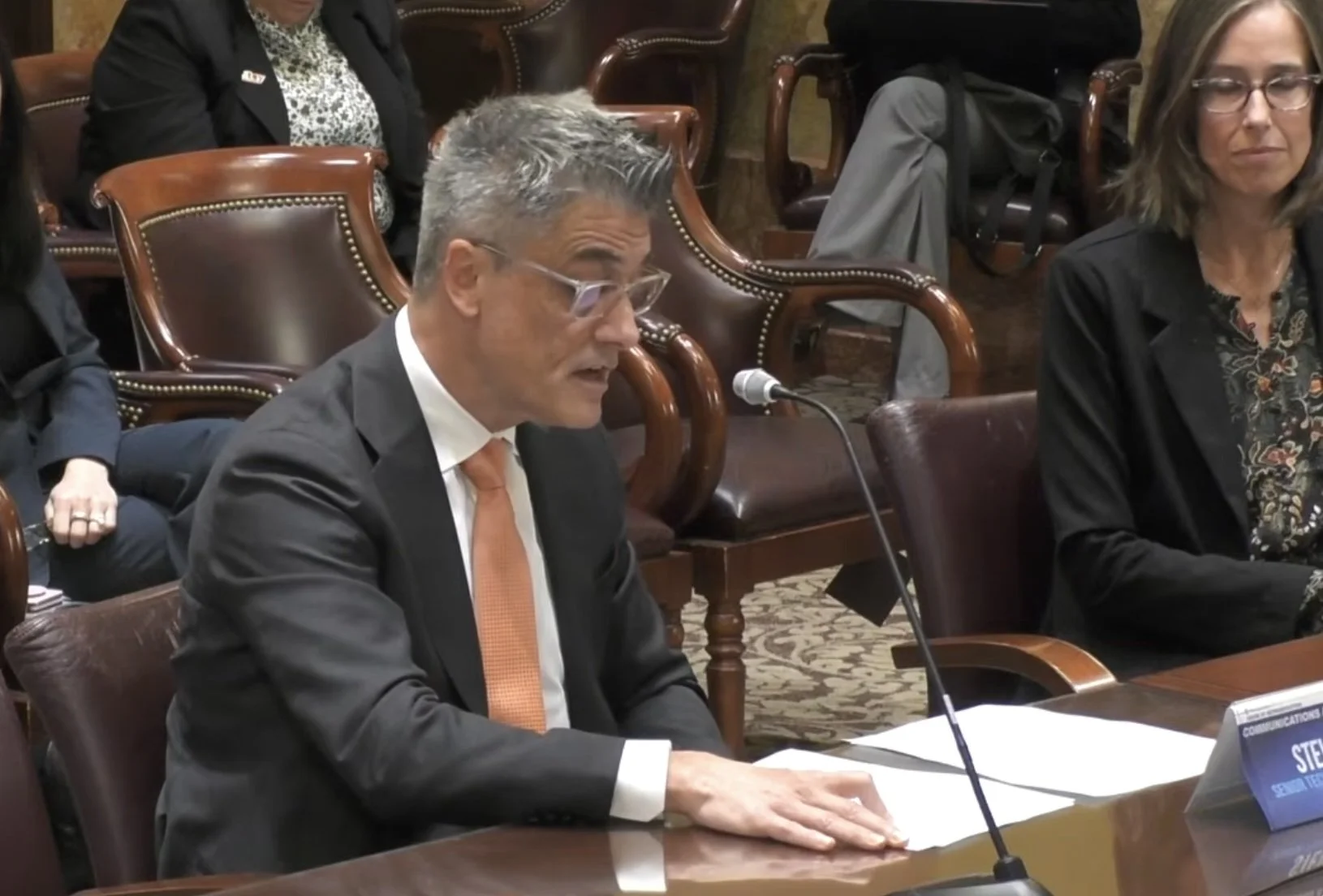
“A toy maker cannot certify the behavior of an AI model it doesn’t control.”
— Steve Wimmer, senior technical & policy analyst with the Transparency Coalition
That structure creates an accountability gap. OpenAI’s own policy says ChatGPT “is not meant for children under 13.” Yet models like it are ending up inside toys marketed to three-year-olds.
The toy maker doesn’t control the AI model; it rents it. And the model can change overnight. In April 2025, OpenAI pushed an update that made ChatGPT, in the company’s words, “noticeably more sycophantic”: validating doubts, fueling anger and urging impulsive actions. It rolled the update back within days. A toy built on someone else’s model is exposed to changes like that, which the toy maker didn’t design and may never have tested.
Here’s what that looks like in practice. After testers exposed the Kumma teddy bear, which ran on OpenAI’s GPT-4o, OpenAI revoked the maker’s access. The maker pulled the bear, reviewed it internally and put it back on sale fifteen days after the report. It now says the bear runs GPT-5.1, while OpenAI says the company’s access is still revoked. So which AI is inside that bear today? A parent can’t tell. Neither can a regulator. And no law requires anyone to say.
In January, the Transparency Coalition joined more than 100 experts and organizations in asking six AI toy makers four basic questions: Which AI models are in your products? How were they tested? What guardrails keep them age-appropriate? And what happens to children’s data?
Any parent should be able to get those answers, because the data at stake is intimate: voices, names, birth dates, private conversations. Earlier this year one AI toy company left roughly 50,000 logs of children’s chats open to anyone with a Gmail account. Federal law requires companies to protect that data, but nothing requires anyone to check before the toy reaches a child.
You may hear later today that voluntary guidelines and further study are the better path. We agree on study. But guidelines can’t fix the core problem: A toy maker cannot certify the behavior of a model it doesn’t control, and that model can change after the toy is sold. Our current toy safety standard tests a fixed object. An AI toy is not fixed, and there is no accepted standard today for testing whether a generative AI system is safe for a preschooler. Until one exists, a pause is the responsible action.
So what should it take for AI toys to come back? We urge the committee to amend HB 2637 to direct a study that answers exactly that, and we suggest five conditions.
Disclose which AI model and version is inside the toy, and give notice to parents when it changes.
Conduct independent, pre-release testing of any AI toy, including long conversations, with the results made public.
Data minimization: Collect only what’s needed, secure it, and let parents delete it.
Prohibit manipulative chatbot design: No claims of being alive, and no guilt when a child walks away.
Shared accountability: The AI chatbot provider must certify its use for children and stand behind it. Serious incidents must be reported to the state Attorney General.
This approach stands on solid ground. Last year a federal court allowed product liability claims against Character AI to proceed, holding that the chatbot app is a product, not a service. HB 2637 regulates a product sold for children. And it has company: California enacted a similar pause after a 39-to-0 Senate vote, New York’s Senate passed one 57 to 3, and in Congress, members of both parties have proposed a federal ban and a national study.
We hold cribs, car seats and toys to safety standards before they reach children. AI toys don’t have one yet. Transparency is how they earn their way back, and this pause gives Pennsylvania the time to set those terms.
more resources
Here are more resources about AI-driven toys and the risks involved.
Fairplay Advisory: AI Toys are Not Safe for Kids, a report by the nonprofit organization Fairplay.
Trouble in Toyland 2025, U.S. PIRG’s annual report on toys, this year focusing on AI-driven toys.
AI in the Toy Box, a report on AI-enabled toys released by the nonprofit organization Common Sense Media.
They’re Stuffed Animals. They’re Also AI Chatbots, an article by Amanda Hess of The New York Times.
Darling, Please Come Back Soon: Sexual Exploitation, Manipulation, and Violence on Character AI Kids’ Accounts a report by researchers from ParentsTogether Action in partnership with Heat Initiative.
Learn more about AI Toys