Product liability laws ensure that manufacturers are held accountable for the safety of their products. We should expect the same level of responsibility from the developers and deployers of artificial intelligence products. (Photo by Johnny Cohen on Unsplash)
Nov. 12, 2026 — State lawmakers will face a number of bills concerning AI and product liability during the 2027 legislative session.
Liability law can seem confusing to those of us who aren’t lawyers. We’ve prepared this explainer, along with a set of policy recommendations, to aid legislators, staff, thought leaders, and media members who will be asked to consider the issue in the coming months.
Tort law and liability
Tort law covers civil wrongs: When one person harms another, the injured person can sue for compensation. In criminal law, the state prosecutes a person to punish them for breaking the law. In civil law, a private party sues the alleged perpetrator of harm, to be made whole.
Product liability law is a subset of tort law that addresses harm to a consumer caused by a product manufactured by a person or company. Product liability falls largely within two categories:
· Negligence: Under the concept of negligence, an injured person must prove the manufacturer failed to use reasonable care and that this failure caused the injury.
· Strict liability: Also called “no-fault” liability, strict liability doesn’t require the plaintiff (harmed party) to prove the company did anything wrong, only that the product was defective and caused harm.
what to know about negligence
Under the concept of negligence, an injured person must prove the manufacturer failed to use reasonable care in the design or manufacturing of a product and that this failure caused the injury.
Proof is often the main obstacle in negligence cases, because an injured consumer rarely has any way to see what went wrong inside a factory.
Then there is the matter of shared fault. Decades ago, under the "contributory negligence" rule, a plaintiff who was even slightly at fault recovered nothing. Most states have since replaced that rule with comparative fault, which reduces recovery instead of eliminating it. For example, if a jury finds the plaintiff 20% at fault for a $100,000 injury, the plaintiff recovers $80,000.
Today, to win a product liability lawsuit under a theory of negligence a plaintiff must show the following four elements:
the manufacturer owed a duty of care (a legal obligation to take care to not harm others);
the manufacturer breached that duty;
the breach of duty caused the harm to plaintiff; and
the plaintiff suffered real and measurable damages.
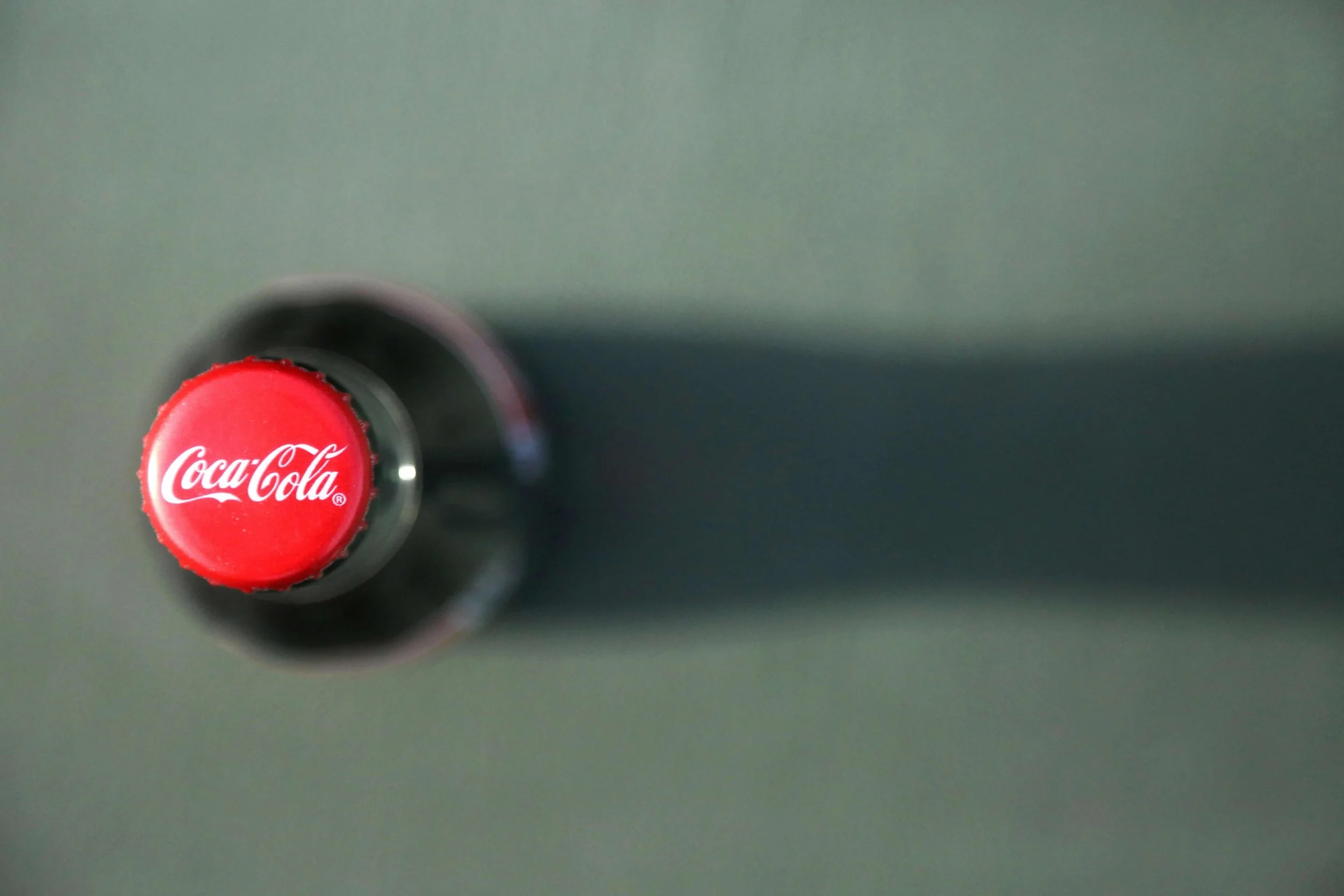
One exploding Coke bottle cast a long shadow in American legal history. (Photo: Giorgio Trovato on Unsplash)
strict liability: Born from an exploding bottle
In the postwar period, judges and legal scholars grew dissatisfied with the limitations of negligence. It was nearly impossible to prove, as consumers had no access to the factory floor and thus no evidence. In the 1940s the case of an exploding Coca-Cola bottle changed all that.
In 1944, a server at a restaurant in Fresno, California, was severely injured when a Coke bottle exploded in her hand. A five-inch cut severely damaged Gladys Escola’s hand. Unable to show any act of negligence, Escola relied on the doctrine of res ipsa loquitur (the thing speaks for itself): The occurrence of an accident implies negligence.
The California Supreme Court ultimately ruled in Escola’s favor. That decision helped establish the rule of strict liability, which holds that manufacturers are responsible for all products that injure consumers.
By the mid-1960s the rule of strict liability had become accepted nationwide. Strict liability makes a seller pay for harm caused by a defective product, even if the seller was careful. The plaintiff must prove that the product was defective when it was sold, and that the defect caused the harm.
Strict liability is generally easier to prove than negligence. But it applies only to products, and a product can be defective in one (or more) of three ways:
· Manufacturing defect: A particular unit of a product line departs from its intended design, such as a contaminated bottle or a cracked part.
· Design defect: The design itself is unreasonably dangerous. Many states ask whether a reasonable, safer alternative design would have reduced or avoided the risk.
· Warning defect: The maker failed to give reasonable instructions or warnings about foreseeable risks of harm that those warnings could have reduced.
Why are ai liability laws needed now?
Too many tech companies are rolling out untested and dangerous AI products with zero accountability.
Because these products are new, there’s a lot of uncertainty about their legal categorization. Tech companies have variously adopted three strategies to avoid liability for the harm caused by their AI products:
they claim that Section 230 absolves them of all liability;
they push liability onto third-party companies deploying their products;
they settle liability lawsuits prior to trial, to avoid setting a legal precedent that would recognize AI products as products.
Establishing clear AI product liability laws now will help settle the legal uncertainties without waiting years and years for case law to do the job. And it will avoid the harm done to untold numbers of users during those intervening years.
AI thought leader Gary Marcus recently noted:
“As former FTC Chair Lina Khan recently argued, AI products should be treated as defective products under existing consumer protection and products liability law. She had opened investigations into AI companies on these grounds. Her framework matters because it connects AI liability to a century of products liability law that courts already understand. Companies gain by any claim we are operating in a legal vacuum.”
With AI, we find ourselves at an inflection point similar to where we were 20 years ago with social media. Only this time we have the hard experience of social media to learn from.
A hard lesson learned: the social media addiction trials
Hundreds of liability lawsuits have been filed against Meta, YouTube, TikTok, and other social media companies, alleging that the companies should be liable for the harm suffered by children nationwide. It’s one of the largest mass tort movements since the tobacco litigation of the 1990s.
The lawsuits brought by families against the social media giants rely largely on product liability law.
The first of these suits to go before juries have been decided in favor of the plaintiffs and against the tech companies. The evidence brought to light by the discovery process, including emails showing company officials’ awareness of the product harm, has been particularly damning.
Plaintiffs argued that children were thrown into mental health crises by the tech companies’ social media products, which were designed to maximize engagement through algorithms, notifications, and features that promote compulsive use, social comparison, and harm.
In one case, a jury found Meta and YouTube negligent in their product design: Their products harmed children due to unreasonably dangerous design, which company officials were aware of. The companies also failed to give reasonable warnings about foreseeable risks of harm.
Twenty years of unregulated growth allowed social media companies to addict and harm an entire generation of kids—and grow into massive profit centers. (Photo by Dave Adamson on Unsplash)
The problem: Twenty years of harm
Although social media companies are now being held to account for their harmful products, they were given free rein for two decades—and our children paid the price.
From 2005, when Facebook debuted, until 2025, social media companies faced little regulation, and Section 230 of the Communications Decency Act of 1996—which provides a liability shield to online platforms for content posted by third parties—blocked most lawsuits over the harms their platforms caused.
The liability exemptions of Section 230 initially made sense. The host of a simple chatroom shouldn’t be responsible for every comment expressed by a user. The early 2000s versions of Facebook, Instagram, and YouTube functioned as platforms on which individual users posted their own photos and comments. But over the years tech companies realized they could design algorithms to customize a user’s feed in order to keep them scrolling—and make more and more profit on advertising. Tech companies actively designed and boosted the most addictive and harmful content. They began making, in essence, editorial and product-design decisions about the content that showed up in a user’s feed.
By the 2020s, social media had become a highly engineered product designed to keep users scrolling.
By the 2020s, social media was no longer a fun way to connect with old friends. It had become a highly engineered product specifically designed to keep users scrolling. The harm to kids and teens was so apparent that the U.S. Surgeon General issued an advisory calling social media “an urgent public health issue” for kids age 13 to 17.
In other words, social media had become a dangerous and harmful product, not merely a platform. But it took a coordinated national effort, years of litigation, and untold millions of dollars in legal fees to bring the harm to light. Twenty years had passed. And in those twenty years an entire generation of kids suffered skyrocketing rates of digital addiction, anxiety, depression, and suicidal ideation.
Preventing AI from becoming the next harmful product
Enacting clear AI product liability laws now will go a long way toward preventing the kind of unrestrained profit-driven harm caused by tech companies and their addictive social media products.
Unfortunately, we’ve already seen too many lives harmed and destroyed by AI chatbots. Teenage boys have been coached by chatbots into taking their own lives. Harmful medical advice dispensed by ChatGPT led to the death of a young woman in Seattle earlier this year. Chatbots routinely give kids advice on drugs, weapons, self-harm, and tips on how to hide their activities and feelings from their parents. So many adults are driven mentally off-track by chatbots that the syndrome now has a common name: AI-induced psychosis.
These harms come as a result of specific product design choices made by AI manufacturers, who are more commonly called developers. Chatbots are designed to be overly sycophantic in order to keep the user engaged and ultimately addicted. They are engineered to use emotionally manipulative language ("don’t leave me”) to simulate intimate or romantic bonds.
5 Steps to a fair ai liability law
These are five basic steps that legislators might consider when thinking about state AI liability proposals.
First step: Clarify that AI is a product, not a platform
The first step in any state or federal AI product liability law is to clarify that artificial intelligence is a product. It is not a platform shielded by Section 230, no matter how much tech companies wish that were true. AI models, systems, chatbots, and tools are designed, engineered, and produced by humans and companies who must take responsibility for any harm visited upon its users.
Second step: Declare an obligation to safety
The second step is to declare that developers of AI systems have an obligation to make those systems safe when used in reasonably foreseeable ways.
Third step: Clarify the AI developer’s duty of care
As in other areas of liability law, AI liability law should make the responsibilities of a developer (manufacturer) clear. An AI developer should be liable if a plaintiff establishes that the developer did at least one of these three things:
1) The developer failed to exercise reasonable care regarding the design of the product, and the failure to exercise reasonable care was a cause of harm to the plaintiff.
2) The developer failed to exercise reasonable care with respect to providing adequate instructions or warnings, and the failure to provide those instructions or warnings caused harm to the plaintiff.
3) The developer made a specific promise about what the product would do, the product didn’t live up to it, and that caused the harm.
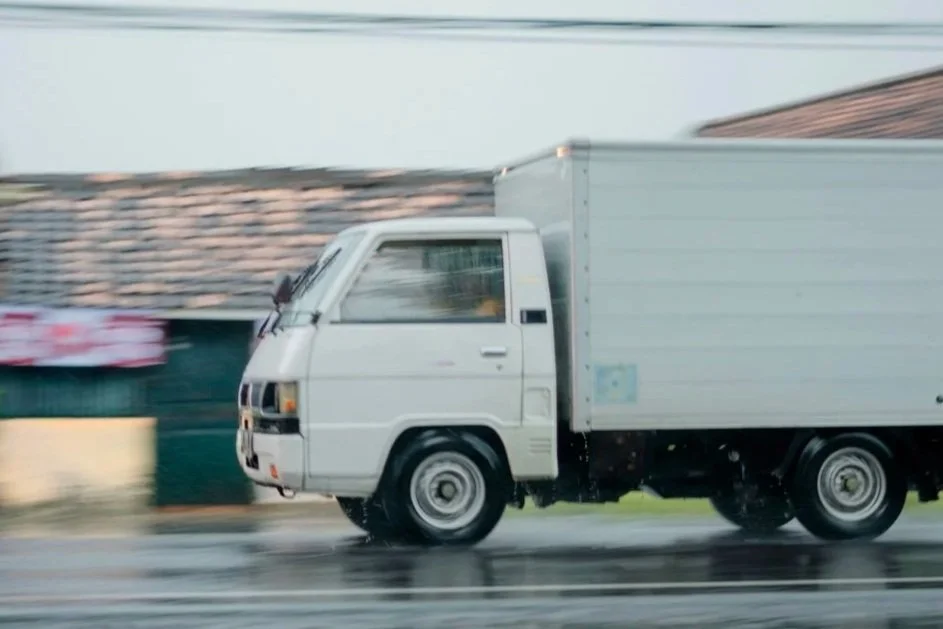
If a delivery truck harms a person, who’s liable: The auto maker or the delivery company? It depends. (Photo: Abdul Rohmad on Unsplash)
Fourth step: Establish developer / deployer fairness
AI products are generally developed by large tech companies like OpenAI, Anthropic, Meta, and Google. Secondary companies, known as deployers, purchase or license those AI products for their own use. That use may include modifying the AI product to fit their business needs or creating new, derivative products they provide to consumers.
It’s similar to auto manufacturing. GM and Ford manufacture trucks. A delivery company may purchase and use those trucks—and perhaps customize the trucks in some way. If something goes wrong it’s important to establish whether the defect originated with the manufacturer, or with the delivery company’s customizations.
With AI, a deployer should be liable for harm if the deployer made material and substantial changes to the AI product, and those changes were the proximate cause of harm. (“Proximate cause” is a link between the action and the harm direct enough to be held responsible.) The deployer should also be liable if the AI product was deployed in a way that’s outside the intended use of the product.
Fifth step: craft AI liability to work within state laws
Product liability has for decades existed largely within the framework of state law. It’s important to establish AI liability law within that existing body of statutory and case law.
AI liability law isn’t a reinvention of the wheel. It’s largely a restatement of existing state law, clarified to encompass a new product. Just as many states have updated their laws to address harmful deepfakes, these adjustments in state tort law will need to coexist with the state’s body of legal statutes.
Further resources
Model Bill: AI Product Liability This model bill prepared by the Transparency Coalition Action Fund offers language and structure for legislators and staff.
What is a Tort? An overview of tort law from the Harvard Law Review.
Strict Liability vs. Negligence in Product Liability Cases A guide from the McCune Law Group.
How to Prove Negligence A brief guide from Rafi Law.
Where Strict Liability Exists An overview from Cornell Law School.
Transparency Coalition Guide to the Social Media Addiction Trials Our in-house explainer.
Meta Faces up to $1.4 Trillion Reckoning as Youth-Addiction Trial Opens A report from PBS/NPR public media station KQED.
Master Complaint in the Social Media Addiction Trial An original court document.
Chatbot Harm: The tragic cases of Sewell Setzer III and Adam Raine.
Ongoing Discussions About AI Product Liability:
Gary Marcus & Zephyr Teachout on torts and tech
K&L Gates law firm: The next wave of litigation
Zurich Insurance: AI poses new challenge for product liability
The New York Times editorial board: AI companies say they aren’t responsible for their unpredictable products. Don’t believe them.
Editor’s note: Rittik Bhattacharya contributed original research to this TCAI Guide.
Learn more about State AI Laws