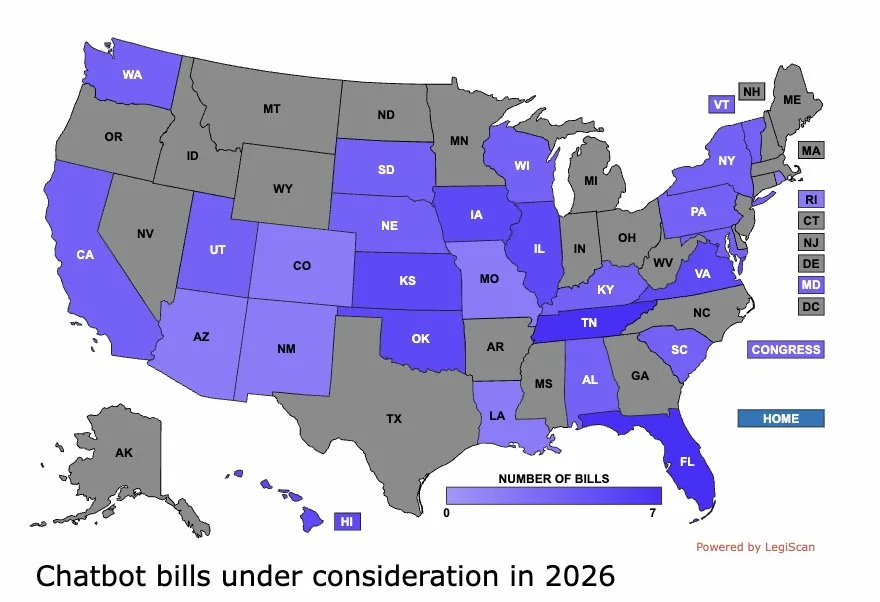
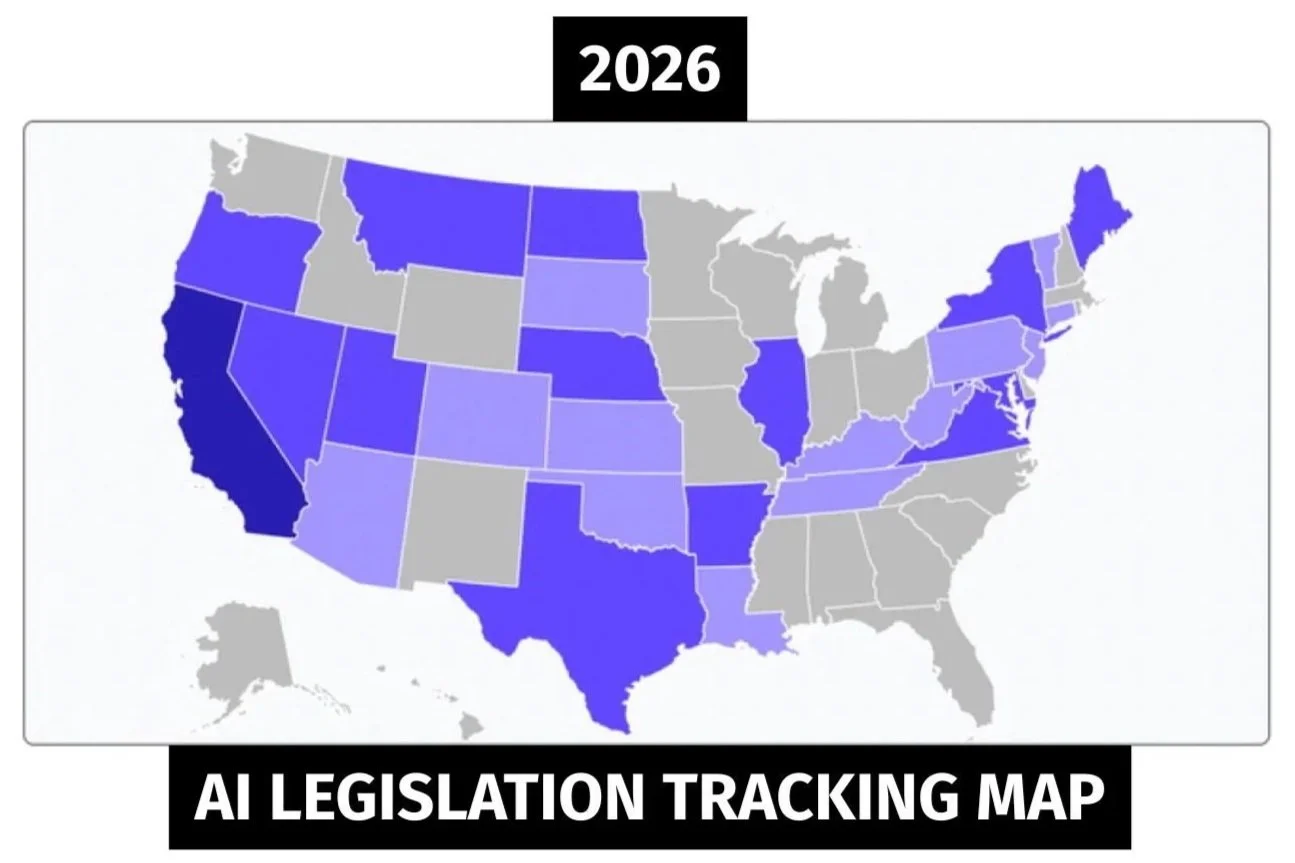
During the state legislative season TCAI offers weekly updates every Friday on a variety of AI-related bills making progress in around the nation.
Get your weekly update delivered via email every Friday morning by subscribing to the AI Legislative Update newsletter:
AI bill action this week
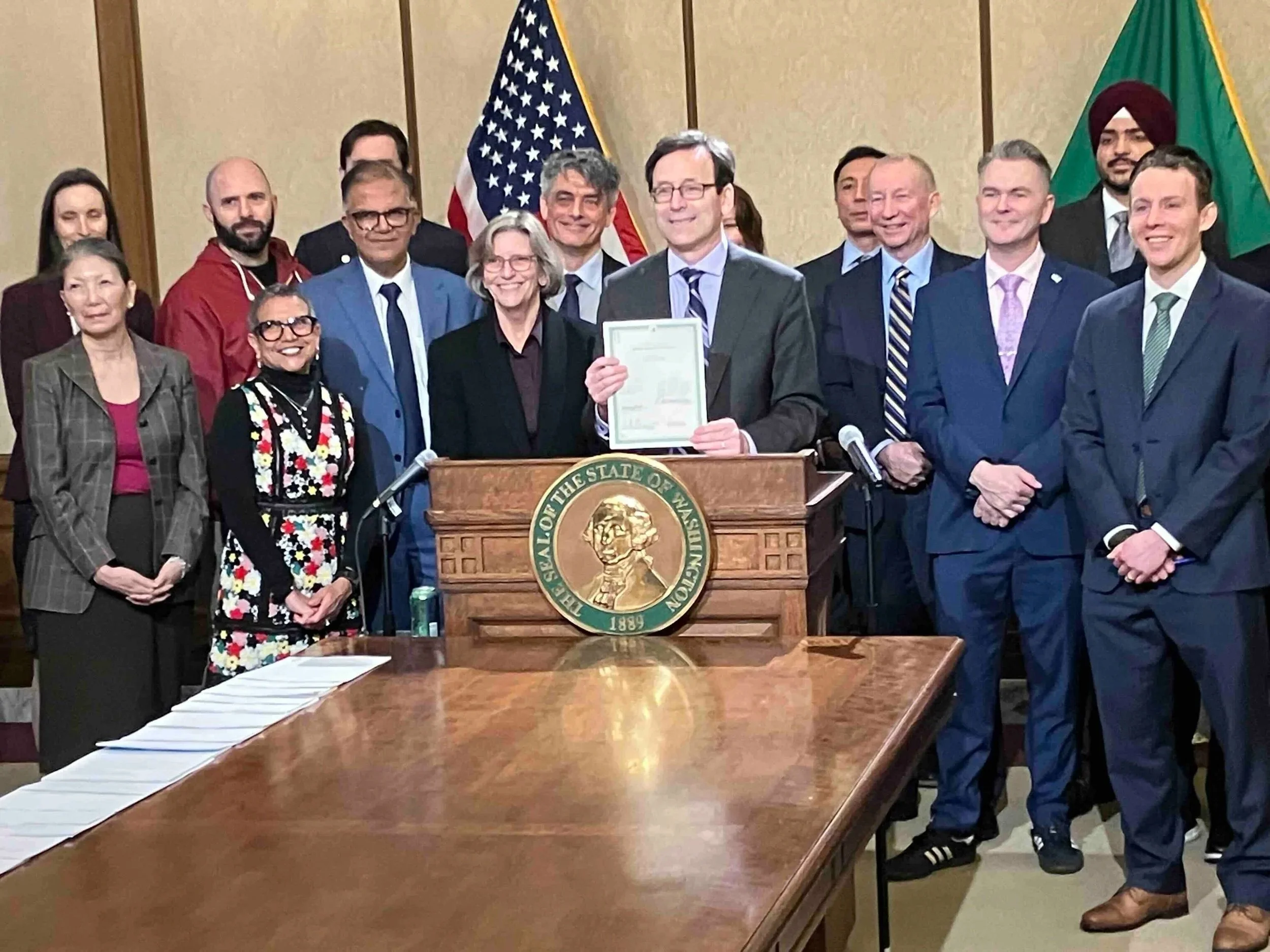
Washington: The Evergreen State led the AI policy news this week, with two significant bills passing on the eve of the legislature’s March 12 adjournment. HB 1170 (AI disclosure) and HB 2225 (chatbot safety for kids, disclosure and self-harm protocols for all) both were given final approval on Thursday night. See our complete story about HB 1170 here, and HB 2225 here. Also given final approval on Thursday night: SB 5395 (AI use in health insurance).
Utah: The Beehive State passed so many AI-related bills in its short session that we devoted an entire post to it. Check out all nine bills in our story here.
Virginia: Legislators passed three significant AI-related bills this past week, with one more still in play as the legislature nears its scheduled adjournment on Saturday, March 14. Moving on to Gov. Spanberger’s desk: HB 580, which concerns artificial intelligence fraud and abuse; HB 797, which create a framework for independent verification organizations (IVO) to assess artificial intelligence systems; and SB 245, which requires social media platform operators to exercise reasonable care to avoid any heightened risk of harm to a minor.
Hawaii:HB 1782, Hawaii’s leading chatbot safety bill, was passed by the House on Tuesday, March 10, and now moves to the Senate. Hawaii’s legislature is scheduled to adjourn on May 7.
Kentucky: More kids digital safety action: Kentucky’s HB 227 would require social media companies to verify user age and prohibit the use of addictive algorithms for minors. Following committee approval on Feb. 18, HB 227 was by the full House 96-0 on March 9. The bill is now with the Senate.
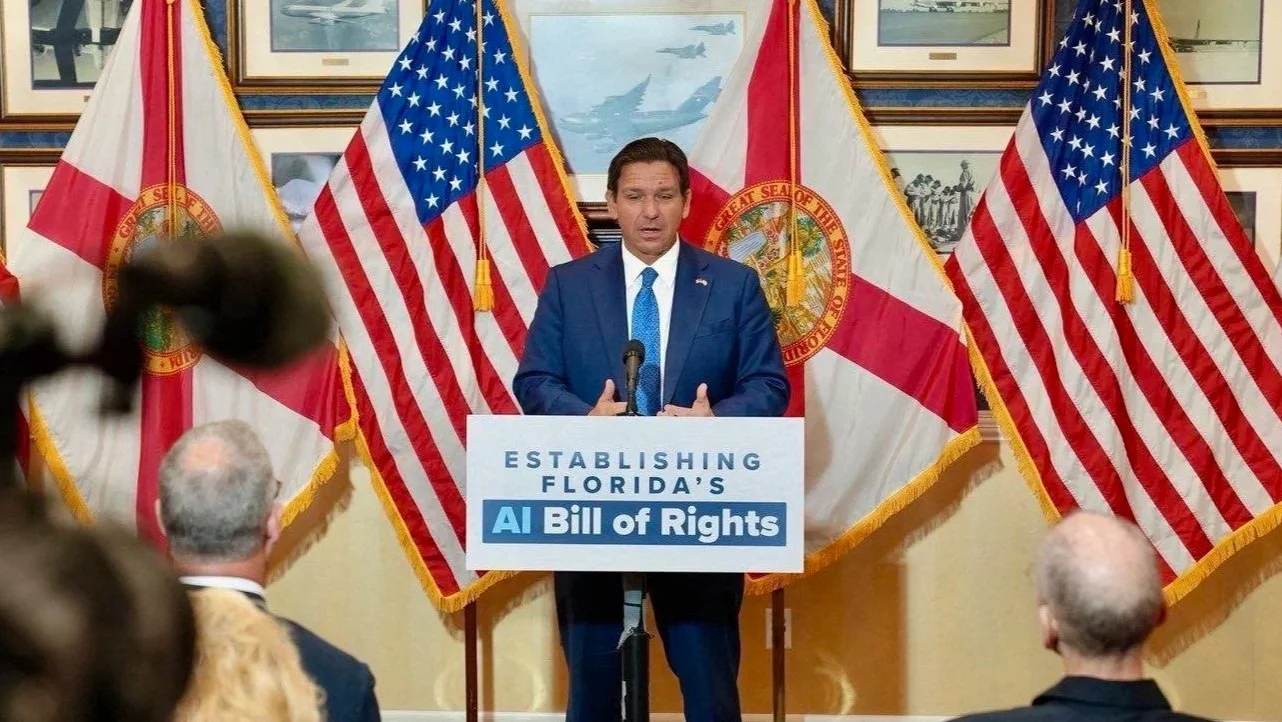
Florida: Gov. Ron DeSantis’s AI Bill of Rights (SB 482) was approved by the full Senate, 35-2 on March 4 but looks to be stalling in the House. The Florida legislature is scheduled to adjourn this Friday, March 13.
alabama
Alabama’s 2026 session is scheduled to adjourn on March 27.
On Feb. 12, state legislators approved JR 51, which creates an AI and Children’s Internet Safety Study Commission. (Rep. Ben Robbins)
Alabama has several other AI-related bills in play, but nearly all have languished in committee and seem unlikely to pass prior to adjournment. One exception: SB 63, on the use of AI in health care insurance, which passed the Senate and is now with the House.
SB 63 would regulate the use of artificial intelligence in determinations of coverage by health care plans. Passed by the Senate on Feb. 19, now pending with the House Committee on Insurance. (Sen. Orr.)
HB 324 requires an age verification systems required for chatbots, safeguard protocols, therapy chatbot requirements established, private right of action. Stalled in committee. (Rep. Moore)
HB 325 is an AI chatbot disclosure bill; unfair or deceptive trade practice for failing to notify consumer about AI chatbot. Stalled in committee. (Rep. Moore)
SB 129 would require the disclosure of artificial intelligence-generated content. Stalled in committee. (Sen. Melson.)
HB 171 and HB 173 concern addictive algorithm feeds in social media, and sets limits on notifications to minors. Both stalled in committee. (Rep. Robbins.)
Arizona
Adjournment scheduled May 25. AI-related bills in play:
SB 1786 concerns the required inclusion of provenance data in video, image, or audio created or altered by generative AI. Approved by full Senate on March 3, sent to House. Now nearing third reading in the House. (Sen. Petersen)
HB 2311 is a kids chatbot safety bill, approved by the full House on Feb. 24, passed its second reading with the Senate on March 9. (Rep. Rivero)
HB 2592 would require every state agency to identify opportunities to implement AI systems that reduce administrative burdens, and eliminate regulations that restrict the adoption of AI systems. Passed by the full House on Feb. 25, read second time in the Senate on March 10. (Rep. Wilmeth)
HB 2371 concerns the use of AI-assisted arbitration in divorce proceedings. Passed out of the Rules Committee Feb. 16, approved in a full House vote on March 10. Now with the Senate. (Rep. Martinez)
HB 2133, which would amend the state’s existing statute on the unlawful disclosure of images depicting states of nudity or specific sexual activities. The law would expand to include the “synthetic depiction” of images not allowed under the existing statute. Approved by the House on Feb. 23, passed out of Senate Judiciary Committee on March 4. (Rep. Kupper)
California
AI-related bills are being assigned to committees this month:
SB 1142, the Digital Dignity Act, would clarify that false impersonation includes the use of a digital replica with the intent to impersonate another for purposes of prescribed criminal provisions. The Act would require an AI product, service, internet website, or application to implement and maintain a mechanism by which users can revoke access to their digital replica created by other people using the large online platform’s generative AI tool at any time. Referred to Committee on Privacy, Digital Technologies, and Consumer Protection. (Sen. Becker)
AB 2023 and SB 1119 are placeholder bills concerning chatbots and children’s safety. (Assm. Bauer-Kahan, Assm. Wicks, Sen. Padilla)
SB 1181 is a placeholder bill concerning legislation to protect the mental health, safety, and well-being of children and adolescents in California by addressing the growing impact artificial intelligence and digital technologies have on youths’ mental health development. (Sen. Hurtado)
AB 2169 amends the CCPA to require AI model deployers/operators to allow a consumer to request a copy of the consumer’s personal information, contextual data, and social graph and would require the social media company or model operator to respond to that request within five business days. (Assm. Lowenthal)
AB 2071 would require digital health to be taught as part of existing courses in health education in California schools. Assigned to Education Committee on March 2. (Assm. Hoover)
AB 2025 is a real estate AI disclosure bill that would require the disclosure of AI used to digitally alter any promotional materials regarding the sale of real property. (Assm. Pellerin)
SB 1146 adds artificial intelligence provisions to existing false advertising law around health-related consumer products. Assigned to committee on March 4. (Sen. Gonzalez)
SB 1159 would specify that, for purposes of the California Public Records Act and other open meeting acts, “person,” “interested person,” “participant,” “member of the public,” and any other similar terms do not include artificial intelligence systems, autonomous agents, robots, or other nonhuman entities, whether physical or digital. Assigned to Senate Judiciary Committee on March 4. (Sen. Cabaldon)
SB 1000 modifies existing law regarding AI disclosure and provenance data. (Sen. Becker)
SB 1050 would require disclosure about the use of AI in advertisements. (Sen. Ashby)
AB 1898 would require an employer to provide a written notice to an employee that a workplace AI tool was used to assist the employer in making employment-related decisions or to surveil the workplace. (Assm. Schultz)
AB 1883 is a similar workplace surveillance bill. Assigned to Assembly Labor & Employment Committee on March 2. (Assm. Bryan)
SB 928 is a placeholder bill concerning the protection of California State University employees from the encroachment of artificial intelligence. (Sen. Cervantes)
SB 1015 expands existing law regarding contact with a minor with intent, to include threats or extortion induced through the use of AI-generated deepfake images. (Sen. Strickland)
SB 947 This bill would establish worker protections regarding the use of AI and automated decision systems (ADS). (Sen. McNerney, Sen. Reyes)
SB 300 (Sen. Padilla) was approved in a Jan. 26 third reading vote by the Senate and sent to the Assembly. The bill would strengthen existing laws regarding chatbots, by requiring companion chatbot operators to prevent its chatbot products from producing or facilitating the exchange of any sexually explicit material or proposing sexually explicit content.
SB 719 would amend an existing law that requires the Department of Technology to submit an annual report to the legislature with an inventory of all high-risk automated decision systems used by state agencies. (Sen. Cabaldon.) Approved by Senate on third reading on Jan. 26, sent to Assembly.
AB 1159 would apply the state’s existing student privacy protections (under KOPIPA and ELPIPA) to digital operators with knowledge that the site, service, app, etc, is used for and marketed for school purposes. (Assm. Addis.) Approved by Assembly on Jan. 26, sent to Senate.
SB 813, Sen. McNerney’s bill from 2025, was revived and re-referred to the Senate Appropriations Committee. The bill would establish a California AI Standards and Safety Commission. Approved by Senate in Jan. 27 vote, sent to Assembly.
SB 574, Sen. Umberg’s bill from 2025, was amended and re-referred to the Senate Appropriations Committee. The bill would establish protections and standards for attorneys licensed by the state, with regard to their use of AI. Approved by Senate on Jan. 29, sent to Assembly.
SB 867 (Sen. Padilla) would prohibit the inclusion of companion chatbots in toys. It is with the Senate Rules Committee awaiting further assignment.
SB 903 concerns the use of AI and the transcription of patient information in professional mental health therapy. (Sen. Padilla) Now with Senate Rules Committee.
Colorado
AI-related bills in play and moving:
HB 1263, a chatbot safety bill, was introduced by four legislators late last month. The bill includes standard notification requirement, with parental access tools, ban on sexually explicit/emotional dependence content, and prohibition on gamifying engagement. Affects minors (under 18) only. Assigned to House Business Affairs & Labor Committee. (Sen. Camacho, et al)
HB 1195 is concerned with the use of AI related to psychotherapy services. Approved by committee March 4, House second reading on March 9. (Rep. Mabrey, et al)
HB 1139 deals with the use of AI in health care. Approved by committee March 4, House second reading on March 9. (Rep. Joseph, Rep. Lieder)
Bills introduced but languishing:
HB 1210 concerns limitations on the use of intimate personal data to make inferences that affect a person’s financial position. Still with Business Affairs & Labor Committee. (Rep. Bacon, et al., 25 co-sponsors total)
SB 102 concerns measures to ensure accountability for large-load data centers. Remains with original committee. (Sen. Kipp, Rep. Brown)
HB 1030 concerns the facilitation of data center development and utilization of utility resources. Remains with original committee. (Rep. Duran, Rep. Valdez, Sen. Mullica)
Florida
The big news in AI in this state is Gov. Ron DeSantis’ AI Bill of Rights, (filed by Sen. Tom Leek), which was approved by the Senate on March 4. After that burst of support, however, the bill seems to be going nowhere in the House. Unless something surprising happens, it seems unlikely to gain approval with the legislature scheduled to adjourn on Friday, March 13. (X factor: If the state budget isn’t approved by then, the session may extend, but focus on budgetary issues.)
SB 482, the Florida AI Bill of Rights, prohibits a governmental entity from extending or renewing a contract with specified entities; creates the "Artificial Intelligence Bill of Rights"; provides the rights of Floridians relating to the use of artificial intelligence; requires companion chatbot platforms to prohibit a minor from creating new or maintaining existing accounts unless the minor's parent or guardian consents; prohibits artificial intelligence technology companies from selling or disclosing the personal information of users unless the information is deidentified data, among other things. Sponsor: Sen. Tom Leek (R).
Other AI-related bills introduced but effectively killed in committee:
SB 1344 is a chatbot bill: requiring operators to require a companion AI chatbot user to create a user account; requiring operators to take certain actions if the age verification process determines that a user is a minor; requiring operators to protect the confidentiality of age verification information provided by a user. Stuck in committee. (Sen. Burton)
HB 527 would require human decision-making in workers comp claims, prohibiting the use of AI-only decisions. Passed by full House on 108-0 vote on March 5, sent to Senate. Now stuck in Senate Rules Committee. (Rep. Robinson, et al)
SB 344 and HB 281 would prohibit the use of artificial intelligence in the practice of psychology, clinical social work, marriage and family therapy, and mental health counseling, etc. Both stalled in committee. (Sen. Grall, Rep. Hunschofsky, Rep. Trabulsy.)
SB 202 would require that an insurer’s decision to approve or deny a claim be made by a qualified human professional; AI may not be used as the sole basis for decision. Stalled in committee. (Sen. Bradley, et al.)
HB 659 would require operators of companion chatbots to verify the age of users and take specified actions for users who are minors. Stalled in committee. (Rep. Hunschofsky).
Georgia
Georgia’s legislature is scheduled to adjourn on April 6. Of the five AI-related bills under consideration this year, one appears to be moving forward: SB 540, a chatbot safety and disclosure bill.
Moving:
SB 540 is a chatbot disclosure and child safety bill, requiring notification of AI nature, steps to limits certain actions by minors, provide privacy tools, and protocols for response to suicidal ideation or self-harm. Passed by the Senate on March 6, on second reading in the House as of March 10. (Sen. Anavitarte, et al)
Stalled:
SB 488 is a product liability bill, to provide that generative artificial intelligence systems shall constitute personal property for purposes of certain actions for product liability alleging injury to a minor; to provide for liability of product sellers in such actions; and to establish rebuttable presumptions relative to manufacturers and product sellers in such actions. Read second time in the Senate on March 4, tabled on March 6. (Sen. Setzler, et al)
HB 171 would prohibit the distribution of computer-generated CSAM. (Rep. Thomas, et al.) The bill was recommitted to the Senate on Jan. 12, but hasn’t moved since then.
SR 789 is a resolution creating the Senate Study Committee on the Impact of Artificial Intelligence. Remains in committee. (Sen. James, et al)
HB 1351 would require state agencies to provide a notice to employees when using artificial intelligence in personnel matters; and require a governmental agency to issue a disclaimer regarding the use of artificial intelligence. House second reading on Feb. 19 but no movement since. (Rep. Cannon, et al)
Hawaii
Of Hawaii’s six AI-related bills introduced, three seem to be moving:
HB 1782 establishes safeguards, protections, oversight, and penalties for interactions between minors and artificial intelligence companion systems or conversational artificial intelligence services. The bill passed by the House on Tuesday, March 10, and now moves to the Senate. (Rep. La Chica, et al)
SB 3001 requires AI operators to issue certain disclosures to account holders and users, develop protocols to prevent the production of suicidal ideations in account holders and users, establish protections for minor account holders of conversational artificial intelligence services. Passed by the House on March 10, now with the Senate. (Sen. Keohokalole, et al)
HB 2137 is an AI deepfake bill that prohibits certain harmful uses of digital imitations, and requires the disclosure of the use of synthetic performers in advertising. Passed by the House on March 10, now with the Senate. (Rep. Lee, et al)
Languishing:
HB 1787 establishes restrictions on the use of AI for decision-making in health insurance utilization reviews. Remains with House committees. (Rep. La Chica, et al)
SB 2585 requires the Dept. of Health to create and maintain an online clearinghouse, enhanced by AI, of evidence-based treatment and prevention programs. Remains with Senate committees. (Sen. Gabbard, Sen. Chang)
SB 2076 protects a person’s right to publicity from AI deepfakes. Passed second reading on Feb. 6, and referred to committee. (Rep. Wakai, et al)
Idaho
There are four AI-related bills in Idaho, and all seem to be moving:
SB 1227 establishes provisions around the use of Gen AI in public education. Approved by Senate, 26-8-1, on Feb. 2. Filed for third reading on March 10.
SB 1297 establishes the Conversational AI Safety Act, a chatbot safety bill. The bill was scheduled to be heard in executive session in the Senate on March 11-12.
HB 727 amends existing law to include synthetic media in the definition of video voyeurism. Passed by the full House, 68-0-2, on March 3 and sent to the Senate State Affairs Committee. Approved by committee and filed for second reading in the Senate on March 11.
HB 452 establishes the Stop Harms from Social Media Act. The bill would require social media operators to establish measures to confirm the age of users and establish limitations for social media accounts for children. Those limitations would include the use of addictive algorithms. This bill was approved by the House on Feb. 9, and was referred to the Senate’s State Affairs Committee on Feb. 10. No movement since.
ILLINOIS
New this month:
HB 5044 creates the Chatbot Provider Liability Act, which would designate chatbots as products for the purpose of strict liability. Provides that a chatbot provider has a duty to ensure its use does not cause injury to a user. Assigned to Judiciary Committee. (Rep. Gong-Gershowitz)
HB 5003 amends the Wellness and Oversight for Psychological Resources Act. Provides that the prohibitions on unauthorized therapy services under the Act shall not apply to artificial intelligence-assisted therapy or psychotherapy services provided exclusively within a qualified research program. Assigned to Health Care Licenses Committee. (Rep. Morgan)
More than a dozen AI-related bills are active in Illinois:
HB 4705 and SB 3261 create the AI Public Safety and Child Protection Transparency Act. HB 4705 sent to House Judiciary Committee on March 4.
SB 3262 creates the Companion AI Protection Act, regarding companion chatbots.
SB 3263 creates the AI Provenance Data Act.
HB 4711 creates the Provenance Data Requirements Act.
HB 4799 creates the Transparency in Frontier AI Act.
SB 3180 creates the AI Data Privacy Act.
HB 4980 creates the Meaningful Human Control of AI Act. Picked up 18 co-sponsors in February, assigned to Labor & Commerce Committee on March 4. (Rep. Rashid, et al)
SB 3601 creates the Professional AI Oversight Act, which would require the disclosure of AI use to consumers. (Sen. Stadelman)
SB 3702 amends the Nurse Practice Act to add provisions concerning the use of AI in recorded or transcribed encounters; prohibits using AI for nursing services; and other requirements. (Sen. Guzman)
SB 3502 would enact Artificial Intelligence Design Requirements Act, setting provisions concerning product liability actions brought against a developer of an artificial intelligence system for defective design, failure to contain adequate instructions or warnings, and failure to conform to an express warranty. (Sen. Ventura)
SB 3114 enacts the Transparency in Downcoding Act, which applies to the use of AI in health insurance. Stalled in Senate Insurance Committee. (Sen. Koehler, et al)
SB 3312 creates the AI Safety Measures Act, regarding large frontier models and risk.
SB 3368 creates the Chatbot Response Liability Act.
SB 3444 creates the AI Safety Act, regarding frontier models and risk.
HB 4988 amends the Consumer Fraud and Deceptive Business Practices Act to require gen AI operators to display a notification of AI use.
SB 3384 creates the AI Companion Model Safety Act.
Indiana
With Indiana’s legislature scheduled to adjourn on March 14, the state’s two AI-related bills appear unlikely to pass.
HB 1201 would prohibit the use of an artificial intelligence system to impersonate or act as a substitute for a licensed mental health professional. Referred to Committee on Insurance. Stalled in committee. (Rep. Rowray, et al.)
HB 1182 would define digital sexual image abuse and establish the offenses of possession of a digital sexual image and distribution of a digital sexual image. Stalled in committee. (Rep. Bauer, Rep. Haggard.)
iowa
SSB 3013 would declare that the output of an AI system is owned by the individual who prompted that system. Renumbered as SF 2199, it was approved by committee on Feb. 2 but has not moved since. Iowa is scheduled to adjourn on April 21.
Kansas
Kansas lawmakers are scheduled to adjourn on April 10. These AI bills are in play and moving forward:
HB 2518 revises the existing breach of privacy law in circumstances where the offender is 18 or older, and the victim is 13 or younger. Approved by House on Feb. 18 on a 124-0 vote. Next hearing: Senate Judiciary Committee, March 11.
HB 2594, would modify the elements of the crime of blackmail related to threatened dissemination of any videotape, photograph, film or image of another identifiable person, to include images created using artificial intelligence. Approved by House on Feb. 18 on a 124-0 vote. Next hearing: Senate Judiciary Committee, March 11.
SB 405 is a chatbot safety bill that focuses on self-harm and companion chatbots. It received a hearing on Feb. 9 but no vote.
SB 467 would enact the Use of AI in Medical Decisions Transparency Act, requiring that all medical necessity determinations be made by a competent licensed physician or healthcare professional.
SB 499 and HB 2772 are age-appropriate design bills to require businesses to assess and mitigate risks of compulsive use in minors; enacting the Kansas stopping likeness abuse by nonconsensual digital replicas act to create a private right of action for the unauthorized digital replication and distribution of individuals’ digital likeness.
HB 2594 expands the definition of criminal blackmail to include the use of AI imagery. It passed the House on Feb. 19 and now sits with the Senate Judiciary Committee.
HB 2671 establishes the Kansas Community Harmed by AI Technology Act, mandating user accounts and age verification for AI chatbot access, classifying users by age, requiring parental consent for minors, blocking explicit content, and protecting age information.
HB 2592 would create a state AI task force.
HB 6023 opposes the federal preemption of state AI laws.
Earlier: HB 2183 was approved by the legislature on Jan. 27. Gov. Laura Kelly signed it into law on Feb. 6. The new law modifies elements of existing child exploitation statutes regarding the use of AI-generated or modified images.
Kentucky
Kentucky has six AI bills in play. Four are languishing in committee. HB 227, a chatbot safety bill, received unanimous 96-0 support in the House and now sits with the Senate. HB 455, an AI mental health therapy bill, was approved by the House and now sits with the Senate.
HB 227 would require social media companies to verify user age and prohibit the use of addictive algorithms for minors. Approved by committee on Feb. 18, approved by full House 96-0 on March 9, now with Senate. (Rep. Lockett, et al)
HB 641 and HB 455 concern the use of AI mental health therapy chatbots. HB 641 remains in committee, while HB 455 (Rep. Banta et al) was approved by the House on Feb. 23 and is now with the Senate.
HB 559 would establish consumer rights relating to social media and artificial intelligence data. Remains with committee. (Rep. Grossl).
HB 318 would establish personal property rights in an individual’s name, image, and likeness. (Rep. Grossberg)
HB 33, the Kentucky Price Fairness Act, would prohibit the practice of surveillance pricing, which utilizes AI and other technologies. Remains with committee. (Rep. Moore, et al.)
Louisiana
Bills in play:
HB 197, concerning the use of AI by health care providers. Referred to the Committee on Health and Welfare on March 9. (Rep. Domangue)
HB 230 would require the disclosure of AI content. Referred to the Commerce Committee on March 9. (Rep. Bayham)
Maine
Two AI-related bills have been introduced:
LD 2162, would regulate and prevent child access to AI chatbots with human-like features and companion interfaces. Tabled on March 4. (Rep. Gramlich, et al.)
LD 2082 would regulate the use of AI in providing certain mental health services. Recommended for passage on March 4. (Sen. Kuhn, Sen. Pierce.)
Maryland
Six AI-related bills have been introduced:
HB 1220 would establish a data broker registry. (Del. Solomon)
HB 184 and SB 8 are complementary bills that offer protections against the harms of AI deepfakes. (Del. Pasteur, Sen. Hester et al.)
HB 148 would prohibit the practice of surveillance pricing and surveillance-based wage setting, which utilize AI technology. (Del. Vogel.)
SB 141 deals with deepfakes in political campaign materials. (Sen. Hester.)
HB 1315 would require certain audits and compliance reviews of an artificial intelligence, algorithm, or other software tool used for medical utilization review include a certain evaluation by a licensed health care professional.
Massachusetts
Several AI-related bills are in play:
S 243 and S 264 are separate AI disclosure bills that require consumer notification for software or computer program that simulates human conversation or chatter through text or voice interactions.
H 76 concerns the dissemination of AI-generated deceptive election-related communications. (Rep. Farley-Bouvier.)
S 301 would establish the Massachusetts Information Privacy and Security Act. (Sen. Finegold.)
H 666 would require public schools to have a policy regarding the use of personal electronic devices on school grounds and during school activities. (Rep. Peisch, Rep. Lipper-Garabedian.)
Michigan
Michigan has these AI bills in play:
HB 4667 is the AI crime bill introduced in 2025 by Rep. Sarah Lightner (R) and carried over to the 2026 session.
SB 760, introduced in late December by Sen. Dayna Polehanki (D), is a kids chatbot safety bill. The bill would prohibit chatbot operators from offering products to minors unless it is not capable of encouraging the minor to engage in self-harm, suicidal ideation, violence, consumption of drugs or alcohol, or disordered eating. The chatbot may not offer mental health therapy to the minor without the direct supervision of a licensed or credentialed professional, and it may not discourage the covered minor from seeking help from a qualified professional or a parent or guardian. The bill contains a number of other prohibited actions, responses, and activities.
Minnesota
Bills in play:
SB 3662, which would expand the definition of “discriminatory effect” to include the use of AI when the practice actually or predictably results in a disparate impact on a particular class of protected persons or creates, increases, reinforces, or perpetuates segregated housing patterns. Referred to Senate Judiciary & Public Safety Committee on Feb. 19. (Sen. Westlin, Sen. Latz)
SB 1886 is an AI disclosure bill. Referred to Senate Judiciary and Public Safety Committee on Feb. 26. (Sen. Quade, Sen. Lucero)
SB 3098 is an algorithmic pricing bill. Assigned to Senate Judiciary and Public Safety Committee on Feb. 26. (Sen. Quade, Sen. Boldon)
SB 1856 concerns the use of AI in medical insurance decisions. Assigned to Judiciary and Public Safety Committee .(Sen. Quade, et al)
mississippi
Approved: HB 1723 defines the term “artificial intelligence.” Approved by full legislature on March 3, sent to governor. (Rep. Ford, Rep. Scott)
Bills that died in committee:
SB 2046 establishes an individual’s right to their own name, image, and likeness. Passed by Senate on Feb. 11, died in House Judiciary Committee on March 3. (Sen. Blackmon, et al)
SB 2050 would require disclosure of the use of AI in political campaign ads. Passed by Senate on Feb. 10, died in House committee on March 3. (Sen. Blackmon, et al)
Missouri
Two Missouri House members, Reps Melissa Schmidt and Rep. Mike Jones (both Republicans), have teamed up to offer a pair of companion bills that create safeguards around AI chatbots for minors.
HB 2031 the Children Harmed by AI Technology Act (CHAT), is a kids chatbot safety bill that includes age verification and parental consent requirements. Sponsors: Rep. Melissa Schmidt (R) Rep. Mike Jones (R).
HB 2032 is a companion bill from the HB 2031 sponsors that prohibits the design and sale of AI chatbots that encourage minors to engage in a variety of harmful and self-harmful actions.
Other AI-related bills in play:
HB 2321 creates the AI-Generated Content Accountability and Privacy Protection Act of 2026. (Rep. Lucas)
HB 1742 establishes provisions related to companion chatbots. (Rep. Miller)
SB 1324 creates regulations of artificially generated online content using artificial intelligence. Heard by General Laws Committee on March 4. (Sen. Hudson)
SB 859 creates the AI Non-Sentience and Responsibility Act. Heard by General Laws Committee on March 4. (Sen. Moon)
HB 2862 is a deepfake bill prohibiting digital impersonation of a person. (Rep. Dolan)
HB 1913 is a deepfake bill concerning intimate digital depictions. (Rep. Williams, Murray)
HB 2239 creates the Artificial Intelligence Data Center Environmental Accountability Act. (Rep. Murray.)
HB 2035 is a bill protecting individuals from AI-generated deepfakes. Sent to House Rules Committee on March 2. (Rep. Farnan.)
HB 1746 and SB 1474 create the AI Non-Sentience and Responsibility Act, which prohibits any AI system from gaining legal personhood. (Rep. Miller, Sen. Nicola.)
HB 2368 and SB 1444 prohibits any individual or entity that developers or deploys AI from advertising or representing that the AI is or is able to act as a mental health professional or is capable of providing therapy services. Heard by Senate General Laws Committee on March 4, House Health/Mental Health Committee on March 5. (Rep. Peters, Sen. Lewis.)
nebraska
AI bills live in the legislature:
Sen. Dave Murman’s chatbot safety bill, LB 939 received a hearing on Feb. 24, but may slow in favor of another AI bill, LB 1083 (Transparency in Artificial Intelligence Risk Management Act), which has been marked as a priority bill. 1083 sponsor Sen. Tanya Storer led last year’s successful Parental Rights in Social Media Act.
LB 939 requires AI chatbot operators to ensure that human-like features are not made available to minors, make regular disclosures to all users, etc. (Sen. Murman)
LB 1083 would create the Transparency in Artificial Intelligence Risk Management Act, create a fund, and change provisions relating to records which may be withheld from the public.
LB 1185 would create the Conversational Artificial Intelligence Safety Act, which would require AI chatbot operators to install safety protocols. (Sen. Bostar)
LB 615 would prohibit distributing deepfakes under the Nebraska Political Accountability and Disclosure Act. (Sen. Cavanaugh.)
LB 172 would prohibit the creation and distribution of AI-generated CSAM. (Sen. Hardin.)
LB 642 concerns algorithm discrimination within AI systems. (Sen. Bostar.)
New hampshire
Bills in play:
HB 1406 would prohibit health carriers from using artificial intelligence to change the clinical judgment of a provider. Passed out of Commerce & Consumer Affairs Committee, 14-0, on March 4. (Rep. Gregg, et al.)
SB 640 concerns the use of artificial intelligence to provide services requiring a professional license. The bill would prohibit the use of an AI system posing as a state-licensed counselor or therapist. (Sen. Pearl, et al.)
HB 1725 would establish the New Hampshire Artificial Intelligence Council. (Rep. Long.)
HB 1124 concerns the right to compute. (Rep. Ammon, et al)
SB 657 creates the Artificial Intelligence Oversight Act, which would establish a division within the state attorney general’s office to monitor and act on artificial intelligence issues that affect consumers. Passed out of committee 3-1 on March 4. (Sen. Kwoka, et al)
NEW Jersey
New Jersey has two bills dealing with AI issues:
S 1802 would require the New Jersey Office of Information Technology to establish minimum requirements for an AI safety test for artificial intelligence technology sold, developed, deployed, used, or offered for sale in the state. Referred to Senate Commerce Committee. (Sen. Singleton, Sen. McKnight.)
SR 52 is a resolution urging generative AI companies to make voluntary commitments regarding employee whistleblower protections. Referred to Senate Labor Committee. (Sen. Mukherji, Sen. Lagana.)
New York
Sen. Kristin Gonzalez introduced S 9051 earlier this month. This is a kids chatbot safety bill that prohibits artificial intelligence chatbots from using features which are considered unsafe for minors; defines terms; specifies what are considered unsafe features; and provides for private rights of action.
Other recent action includes:
A 6578 and S 6955 are companion bills establishing the Artificial Intelligence Training Data Transparency Act, which would require developers of Gen AI models or services to post on the developer's website information regarding the data used by the developer to train the generative artificial intelligence model or service, including a high-level summary of the datasets used in the development of such system or service. 6955 advanced to third reading in Senate on March 4. (Assm. Bores, et al., and Sen. Gounardes.)
A 6540 and S 6954 are companion AI disclosure bills that would require synthetic content creation system providers to include provenance data on synthetic content produced or modified by a synthetic content creations system that such provider makes available. 6954 advanced to third reading in the Senate on March 4. (Assm. Bores, Sen. Gounardes.)
S 933 establishes the position of chief artificial intelligence officer. This bill passed the Senate in 2025 but died in Assembly. Revived Jan. 2026, advanced to third reading in the Senate on March 4. (Sen. Gonzalez, Sen. Gounardes, Sen. Jackson, Sen. Weber.)
S 934 is a disclosure bill that requires the operator of a gen AI system to display a notice to apprise the user that the outputs of the generative artificial intelligence system may be inaccurate. Advanced to third reading in the Senate on March 4. (Sen. Gonzalez, Sen. May, Sen. Webb)
A 222 and S 5668 are companion bills that deal with AI liability: The bills impose liability for misleading, incorrect, contradictory or harmful information to a user by an AI chatbot that results in financial loss or other demonstrable harm. AB 222 is sponsored by Asm. Clyde Vanel (D) and Asm. Jennifer Lunsford (D), while SB is sponsored by Sen. Kristen Gonzalez (D).
SB 9236 expands the definition of false reporting to include communications generated using artificial intelligence. (Sen. Scarcella-Spanton)
A 8595 and S 8331 are companion bills establishing the New York AI Transparency for Journalism Act. It would require Gen AI developers to post information on the developer's website regarding video, audio, text and data from a covered publication used to train the system; allows journalism providers to bring an action for damages or injunctive relief against developers. (Assm. Otis, Sen. Gonzalez.)
S 9028 prohibits employers from engaging in discrimination on the basis of a protected class when using AI for recruitment, hiring, promotion, etc. (Sen. Welk)
A 6545 and S 7263 are companion bills carried over from 2025 that impose liability for damages caused by a chatbot impersonating a lawyer or offering services limited to attorneys licensed by the State of New York. Sponsor: Asm. John Zaccaro (D), et al., and Sen. Kristen Gonzalez (D), et al.
A 9317 is a new chatbot disclosure bill introduced by Asm. Linda Rosenthal (D) that would require companion chatbots to include a warning to consumers.

Ohio
AI-related bills under consideration:
HB 665 is concerned with AI and algorithmic pricing.
HB 524 would impose penalties on entities whose AI models suggest harming one's self or another person. (Rep. Cockley, et al.)
HB 579 would regulate the use of artificial intelligence by health insurers. (Rep. Schmidt.)
HB 525 would regulate the use of AI systems by state-licensed therapists. (Rep. Cockley, et al.)
HB 469 would declare artificial intelligence systems nonsentient and prohibit them from obtaining legal personhood. (Rep. Claggett.)
HB 628 would create an independent verification organization license for verifying artificial intelligence risk mitigation. (Rep. Mathews, et al.)
Oklahoma
More than a dozen AI-related bills are under consideration in Oklahoma, where the legislature re-convened on Feb. 2 and runs through the end of May.
SB 2085 establishes certain rights regarding AI. (Sen. Hamilton)
SB 1967 concerns the use of AI by medical professionals. (Sen. Mann)
SB 2038 concerns the use of AI in health insurance decisions. (Sen. Goodwin)
HB 4348 concerns the use of AI in civil legal proceedings, regarding the duties of attorneys and the authenticity of exhibits. (Rep. Moore)
HB 3545 concerns the permitted and prohibited uses of AI by state agencies. (Rep. Maynard, et al)
HB 3546 prohibits an AI system from being recognized as a legal person. (Rep. Maynard, et al)
HB 3244 includes the use of AI as a factor in the crime of aggravated identity theft. (Rep. Bashore)
HB 4462 concerns the use of AI in health insurance authorization decisions. (Rep. Newton)
SB 1241 prohibits the use of AI bots in ticket sales and purchasing. (Sen. Coleman)
HB 3547 concerns the use of student data for commercial purposes. (Rep. Maynard)
HB 3959 concerns algorithmic pricing and consumer data. (Rep. Munson)
SB 1785 creates the Citizen’s Bill of Rights, which includes certain AI provisions. (Sen. Jett)
HB 3544 concerns AI chatbots and minors. (Rep. Maynard, et al)
HB 3675 concerns the use of AI in health insurance authorizations. (Rep. Provenzano)
HB 4083 concerns AI chatbots, minors, age verification. (Rep. Alonso-Sandoval)
SB 1521 would prohibit the creation of certain artificial intelligence chatbots, and require age verification measures and protections for users. Passed out of Senate Tech & Telecom Committee on Feb. 19, awaiting floor vote. (Rep. Hamilton.)
SB 2037 would require informed consent for use by licensed mental health professionals or health care providers; it would also authorize and prohibit certain uses. (Sen. Goodwin.)
Oregon
Big news in Salem: SB 1546 is an AI chatbot safety bill that won final approval and was sent to the desk of Gov. Tina Kotek on March 5. See full story here.
The legislature adjourned sine die on Monday, March 9.
Final report on bills that did not advance:
HB 4103 creates a commission on AI and a Chief AI Officer within DAS. Approved by House Ways and Means Committee on Feb. 20. It did not receive a full House vote and died in committee.
HB 4054 requires some health insurers to inform health care providers when they use AI to downcode a claim for reimbursement. Committee hearing held on Feb. 6, remains with Information Management & Technology Committee. It did not receive a full House vote and died in committee.

Pennsylvania
Pennsylvania has a number of AI-related bills in play:
HB 2006 is the Artificial Intelligence in Companionship Applications Safety Act. This bill requires safeguards built into companion chatbots, especially concerning suicidal ideation and/or self-harm.
HB 2100 is a bill to regulate the use of mental health chatbots and artificial intelligence by mental health therapists. Sponsor: Rep. Jennifer O'Mara (D), et al.
HB 1857 would require business entities to disclose the use of artificial intelligence in certain consumer interactions, and establish the right of consumers to human review in high-impact decisions. (Rep. Waxman, et al.)
HB 1993 concerns the use of artificial intelligence in mental health therapy. (Rep. Shusterman, et al.)
HR 331 is a resolution urging the Pennsylvania Supreme Court to adopt safeguards governing the use of artificial intelligence by attorneys. (Rep. Krupa, Rep. Banta.)
SB 1090 is an AI disclosure bill that requires certain disclosures and safeguards relating to the use of artificial intelligence. Sponsor: Sen. Tracy Pennycuick (R), et al.
Rhode Island
Under consideration:
S 2195 requires operators of AI chatbots to create safety features regarding suicidal ideation, and physical or financial harm to others. (Sen. Urso, et al)
S 2197 concerns the use of AI in mental health treatments. (Sen. Urso, et al)
S 2266 prohibits the use of algorithmic pricing by landlords. (Sen. Mack, et al)
S 2010 promotes transparency and accountability in AI use by health insurers. (Sen. Ujifusa, et al.)
H 7349 establishes regulations regarding the use of AI in mental health care. Referred to House Health & Human Services Committee, held for further study on March 3. (Rep. Spears, et al)
South carolina
New this month:
HB 5206 concerns the use of AI in health insurance prior authorization determinations. (Rep. Guffey, et al)
South Carolina has a number of AI-related bills in play:
HB 4675 would enact the South Carolina Community Data Protection And Responsible Surveillance Act, concerning stored surveillance data and AI systems used to track vehicles. (Rep. Kilmartin, et al.)
HB 4591 would enact the "Stop Harm From Addictive Social Media Act. The Act would require covered social media platforms to verify the age of account holders, require parental consent for minors, and create default account settings for minors. (Rep. Guffey, et al.)
S 788 concerns the regulation of state-licensed therapists and the use of AI by same. (Sen. Blackmon.)
South Dakota
Under consideration:
SB 170, an AI disclosure bill that requires a notice to consumers interacting with certain chatbots or other human-simulating computer technologies that could mislead or deceive the consumer. (Sen. Larson)
SB 168, a bill to regulate the use of chatbots by minors. (Sen. Larson)
Tennessee
This year’s session is scheduled to run until April 24. Bills now under consideration:
SB 1700 enacts the Curbing Harmful AI Technology (CHAT) Act, a chatbot safety and data privacy measure. (Sen. Akbari) Passed out of Commerce & Labor Committee on March 10, sent to Finance, Ways and Means.
HB 1898 enacts the AI Public Safety and Child Protection Transparency Act. Scheduled for hearing with Commerce / Banking & Consumer Affairs on March 11. (Rep. Zachary)
HB 1946 and SB 1700 enact the Curbing Harmful AI Technology (CHAT) Act. Scheduled for hearing with House Commerce / Banking & Consumer Affairs, March 11. Senate version goes before Commerce & Labor on March 10. (Rep. Love, Sen. Akbari)
HB 2214 concerns the use of AI deepfakes in political campaign materials. Scheduled for hearing in House Elections & Campaign Finance, March 10. (Rep. Powell)
HB 1866 and SB 2010, companion resolutions, create the Regulate AI in Health Care Act. (Rep. Jones, Sen. Kyle)
HB 849 is an AI personhood bill that defines "human being," "life," and "natural person" for statutory construction purposes; excludes from the definition of "person," "life," and "natural person" artificial intelligence, a computer algorithm, a software program, computer hardware, or any type of machine. Scheduled for Judiciary/Civil Justice hearing on March 11. (Rep. Reneau)
SB 1998 concerns algorithmic pricing and consumer protection. (Sen. Lamar) Now with
SB 1999 enacts the Data Center, AI, and Clean Transition Tariff Accountability Act. (Sen. Lamar)
SB 2010 creates the Regulate Artificial Intelligence (AI) In Health Care Act. (Sen. Kyle) Scheduled for hearing by the Commerce & Labor Committee on March 17.
Legislators in Tennessee have introduced a House-and-Senate package to regulate AI chatbots by making it a criminal felony to train an AI model or system to encourage harmful acts including suicide, or to develop an emotional relationship with an individual.
HB 1455 is an AI chatbot safety bill that creates a Class A felony offense for knowingly training artificial intelligence to encourage the act of suicide or criminal homicide, or act in specific manners, including developing an emotional relationship with an individual or simulating a human being, including in appearance, voice, or other mannerisms. Sponsor: Rep. Mary Littleton (R).
HB 1951, similar to HB 1455, creates a new offense of coercive suicide; specifies that a person or entity commits the offense of coercive suicide if such person or entity owns an artificial intelligence system and the artificial intelligence system advises or encourages a person to commit or attempt to commit suicide. Hearing: Finance, Ways & Means on March 11. (Rep. Williams)
SB 1493 is a companion bill to HB 1455. Sponsor: Sen. Becky Massey (R).
Other AI-related bills:
HB 2052 concerns algorithmic pricing and consumer protection. (Rep. Camper)
HB 2054 enacts the Data Center, AI, and Clean Transition Tariff Accountability Act. (Rep. Camper)
SB 1261 would impose requirements for health insurance issuers using artificial intelligence, algorithms, or other software for utilization review. (Sen. Yarbro.)
SB 1580 would prohibit a person from developing or deploying an artificial intelligence system that advertises or represents to the public that such system is or is able to act as a qualified mental health professional. (Sen. Walley.)
Utah
Utah lawmakers ended their 2026 legislative session last Friday, May 6, with a remarkable record of accomplishment on AI policy issues. Despite hosting one of the nation’s shortest sessions—just under seven weeks—Utah’s elected officials sent nine AI-related bills to the desk of Gov. Spencer Cox.
The bills concern four areas of digital life: The use of AI and digital devices in schools; protection against deepfakes and harmful AI imagery; the use of AI in health practice and health insurance; and age verification and age gating for websites that offer digital material harmful to minors.
Read our full story on Utah below:
Vermont
Vermont’s bill on the use of AI in election campaign material passed into law earlier this month.
S 23 concerns the use of synthetic media in elections. (Sen. Hardy, et al.) This bill, introduced in early 2025, has been moving forward slowly over the past 14 months. It has now been approved by both chambers. The House and Senate approved conference committee reports on Feb. 18-19, 2026. Signed by Gov. Phil Scott on March 5.
Vermont’s session runs until May 8. Other AI-related bills in play:
H 792 concerns liability standards for developers and deployers of artificial intelligence systems. (Rep. Priestley, et al.) Now pending in the House Commerce and Economic Development Committee.
H 340 concerns the regulation of developers and deployers of certain automated decision systems. (Rep. Priestley, et al.) Referred to the House Committee on Commerce and Economic Development on Feb. 25.
H 389 involves restricting the use of artificial intelligence to affect rental housing pricing and availability. (Rep. Priestley) Referred to the House Committee on Commerce and Economic Development on Feb. 25.
H 814 concerns personal neurological rights and the use of artificial intelligence technology in health and human services. (Rep. Priestley) Referred to the House Committee on Healthcare on Jan. 29, scheduled for March 10 hearing, referred (positive) to Appropriations Committee on March 11.
H 816 would regulate the use of AI in the provision of mental health services. House Health Care Committee hearing on March 12, no record of vote yet.
H 644 and S 241 are companion bills regulating the use of artificial intelligence in the provision of mental health service. (Rep. Rachelson, Sen. Gulick, et al.) 644 referred to the House Committee on Healthcare on Jan. 13. 241 referred to Senate Health & Welfare Committee on Jan. 13.
H 340 concerns the regulation of developers and deployers of certain automated decision systems. (Rep. Priestley, et al.) Referred to the House Committee on Commerce & Economic Development on Feb. 25.
H 389 involves restricting the use of artificial intelligence to affect rental housing pricing and availability. (Rep. Priestley) Referred to the House Committee on Commerce & Economic Development on Feb. 25.
S 207 would prohibit surveillance pricing in Vermont. (Sen. White, et al.) Referred to the Senate Committee on Economic Development, Housing and General Affairs on Jan. 6.
H 371 relates to the use of dynamic pricing by retail establishments. (Rep. Greer, et al.) Referred to the House Committee on Agriculture, Food Resiliency, and Forestry on Feb. 26.
S 205 concerns a temporary moratorium on AI data centers and a report on the construction and operation of AI data centers in Vermont. (Sen. White, et al.) Referred to the Senate Committee on Finance on Jan. 6.
Virginia
Virginia has passed three significant AI-related bills this session, with one more still in play as the legislature nears its scheduled adjournment on Saturday, March 14.
AI-related bills approved by the full legislature this past week:
An AI-related bill that gained approval this week was HB 580, which concerns artificial intelligence fraud and abuse. The bill, sponsored by Del. Glass, expands the duties of the Division of Consumer Counsel to include establishing and administering programs to address artificial intelligence fraud and abuse. HB 580 won final approval on March 11 and now moves on to the desk of Gov. Spanberger.
HB 797 would create a framework for any person or entity seeking to act as an independent verification organization (IVO) in order to assess artificial intelligence systems or applications adherence to standards reflecting best practices for the prevention of personal injury and property damage to apply for an IVO license from the Virginia Information Technologies Agency (VITA). Final approval by the legislature on March 10, it now sits with the governor.
SB 245 concerns social media platforms, requires platform operators to exercise reasonable care to avoid any heightened risk of harm to a minor, in addition to other strictures. (Sen. Head.) This bill was given final passage on March 10, and has moved on to the governor’s desk.
AI bills still in play on the eve of adjournment:
HB 1186 would require school boards to adopt policies to prohibit any student from being required, encouraged, or permitted to interact with an artificial intelligence chatbot in order to receive instruction or otherwise complete any lesson or assignment in any course or class. (Del. Rasoul.) This bill has been approved by both chambers, but remained in conference committee as of March 12.
AI bills stalled or tabled:
HB 635 would enact the Artificial Intelligence Chatbots Act, which prohibits an operator from making a companion chatbot available to a user in the Commonwealth unless the companion chatbot is incapable of certain actions specified in the bill. (Del. Maldonado.) The bill was sent to the JCOTS committee last week, effectively shelving it for this session.
HB 668 and SB 269, companion bills, concern the use of artificial intelligence system by mental health service providers. (Del. Maldonado, Sen. Favola.) The House bill was tabled in committee last week.
HB 638 concerns the regulation of data brokers. Prohibits a person from acquiring personally identifiable information through fraudulent means or acquiring and using such information for the purpose of stalking or harassing another person; committing a fraud, including identity theft, financial fraud, or email fraud; or engaging in unlawful discrimination, including employment discrimination or housing discrimination. (Del. Maldonado.) Continued to next session on Feb. 9.
HB 758 creates the Artificial Intelligence Chatbots and Minors Act, which would require chatbot deployers ensure that any chatbot does not make human-like features available to minors. (Del. Runion.) The bill was tabled in committee last week.
HB 669 provides that a proprietor that owns, operates, or deploys a chatbot shall not permit such chatbot to provide any substantive response, information, or advice, or take any action that would constitute the unlawful practice of architecture, engineering, surveying, landscape architecture, geology, dentistry, medicine, nursing, optometry, pharmacy, physical therapy, certain mental health professions, psychology, social work, or veterinary medicine. (Del. Maldonado.) The bill stalled in the Appropriations Committee.
HB 1294 would require the use of covered artificial intelligence in a criminal investigation to be disclosed in a police report filed for that investigation. (Del. Clark.) Continued to next session.
HB 713 creates the Fostering Access, Innovation, and Responsibility in Artificial Intelligence Act, which would require a developer of a base artificial intelligence model to clearly disclose certain elements related to the artificial intelligence system. (Del. Thomas.) Stalled in Appropriations Committee.
Washington
Five AI-related bills are moving on to Gov. Bob Ferguson’s desk following the legislature’s March 12 adjournment. The governor has 20 days to sign of veto the measures.
SB 5105 concerns AI deepfakes and the sexually explicit depictions of minors. Reintroduced from 2025, (Sen. Orwall, Rep. Leavitt, et al.) SB 5105 was approved by Senate on Jan. 28, approved by the House 93-0 on March 3, and given final approval on March 9.
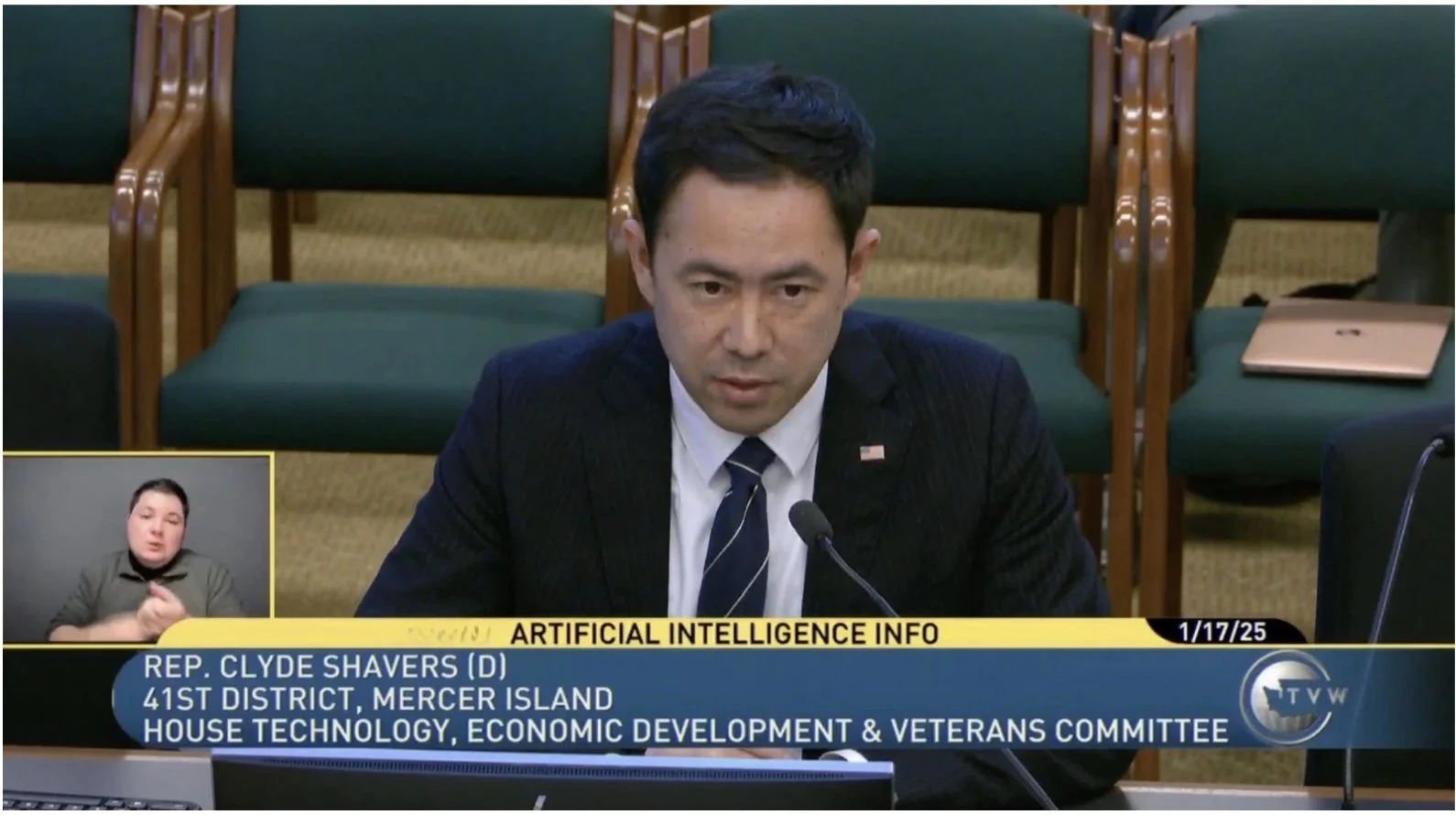
HB 1170 is an AI disclosure measure that would inform users when content is developed or modified by artificial intelligence. (Rep. Shavers, et al.) Approved by the House, 56-37, on Feb. 13, approved by the full Senate on March 4, and delivered to the governor on March 11.
SB 5395 concerns improvements to transparency and accountability with the use of AI in the prior authorization determination process, with regard to health insurance and managed care organizations. (Rep. Rule, Sen. Orwall, et al.) SB 5395 was approved by Senate on Feb. 11, approved by the House on March 4, and sent to the governor on March 11.
HB 2225 and SB 5984 are companion bills regarding AI chatbot safety bill that include a number of safety measures for kids. (Rep. Callan, Sen. Wellman, et al.) Both bills were approved by their original chambers, and ultimately HB 2225 became the vehicle to contain them both and move forward. HB 2225 was given final approval and sent to Gov. Ferguson on March 11.
SB 5886 amends existing law to include “forged digital likeness” as something in which every individual has a property right in the use of his or her name. Approved by the Senate on Feb. 5, by the House on March 4, and sent to the governor on March 9.
West Virginia
HB 4770 establishes regulations regarding the use of AI in the delivery of mental health care. Sent to House Finance Committee on Feb. 3 and seems destined to die there, as the legislature is scheduled to adjourn on March 14. (Del. Worrell, Del. Hite)
wisconsin
HB 963, concerning large social media platforms and the safety of minors. Approved by House, 60-35, on Feb. 19. The Senate Utilities, Technology, and Tourism Committee considered it in a March 4 hearing but did not vote it out of committee. Legislators are scheduled to adjourn on March 19. (Rep. Goeben, et al)
Track AI legislation in 2026